

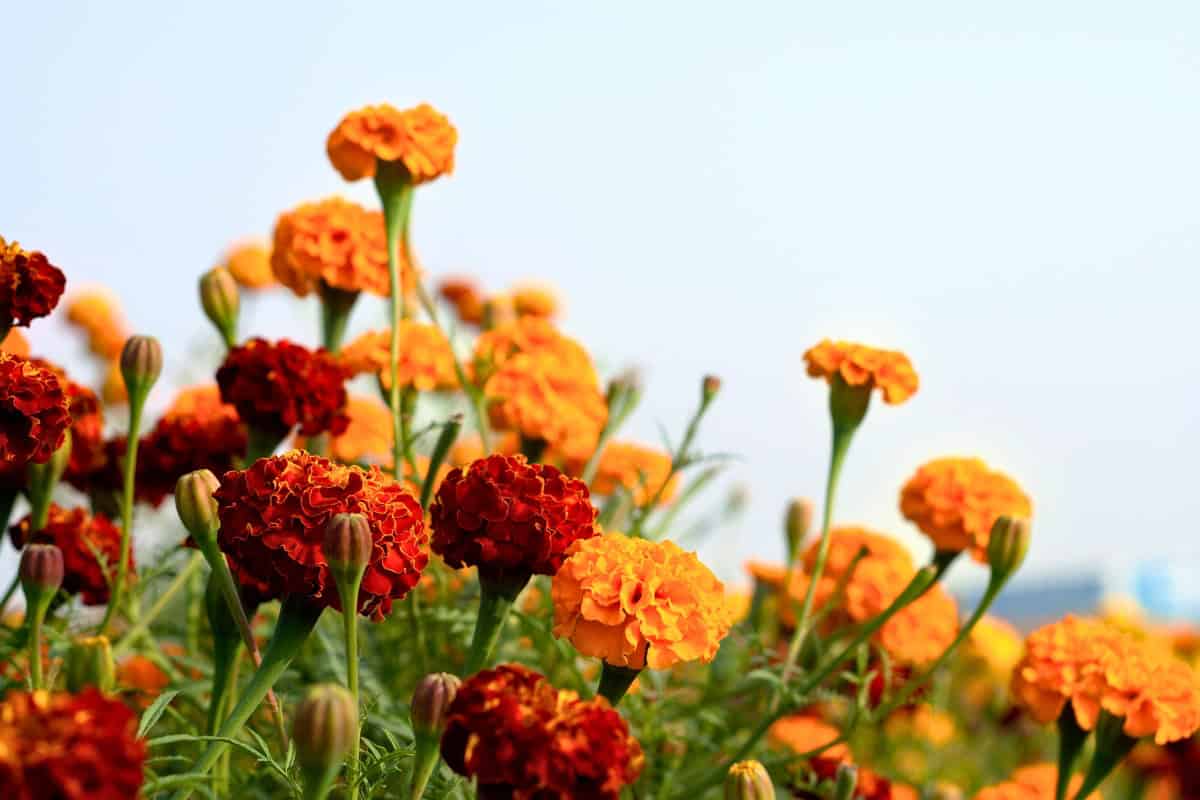
Marigolds have a reputation for being foolproof: Just sprinkle some seeds in the dirt, and you’ll get a bed of flowers. That reputation is mostly deserved, but it’s worth noting that some plants end up disappointing with more leaves than blooms.
In this guide, we’ll cover the essentials of marigold care, including:
- Why the ‘African’ and ‘French’ labels are both wrong.
- The one pest job marigolds handle well (and the ones they don’t).
- How to save next year’s seed.
- When you might need to take cuttings.
Ultimately, marigold success comes down to a few early decisions: What you plant, why and where you plant it, and how you feed and water it.
Tip #1: Choose the Right Marigolds
The common name ‘marigold’ doesn’t speak to just one plant; it actually covers several species in the genus Tagetes. These range from ankle-high signets to waist-tall African types. Height, flower size, scent, and rain tolerance vary by group.
If you choose the wrong variety (or plant marigolds in the wrong spot), you’ll end up fighting it all summer.
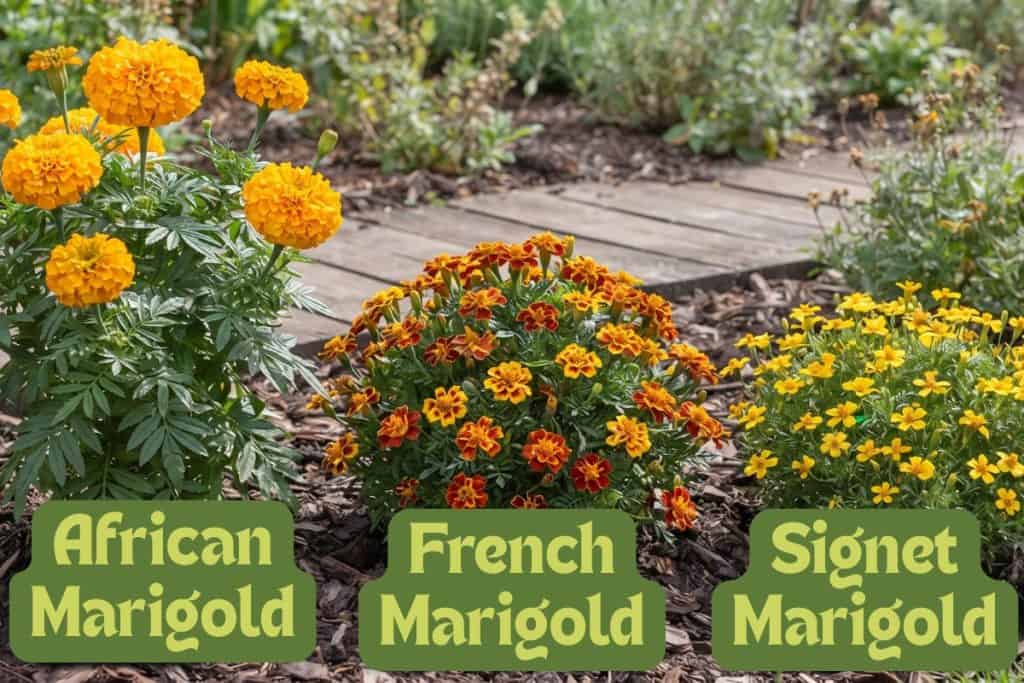
Additionally, not all marigold varieties are as straightforward as their name suggests. For example, despite their labels, African and French Marigolds both come from Mexico and Central America.
The suggested varieties below include All-America Selections (AAS) winners proven in growing trials across the United States.
African or American Marigolds (Tagetes erecta)
These marigolds are the tallest. Some cultivars can reach 3 feet tall or more, carrying dense, double flowers up to 5 inches in diameter in shades of yellow, gold, and orange.
Those blooms are heavy, and once rain adds water weight, a mature plant can lean or fall over. Tall cultivars usually need staking, especially in rich or sandy soil or in a windy location.
Recommended varieties:
- Big Duck Gold F1 (AAS 2019) is less prone to leaning and flopping.
- Siam Gold F1 (2024 Winner) offers double, globe-like golden flowers and doesn’t need staking.
French Marigold (Tagetes patula)
Compact and bushy, roughly 6 to 18 inches, this group offers single or double flowers to about 2 inches wide in a broad color range that includes red, mahogany, and bicolors.
This is the most rain- and weather-tolerant group, and these plants hold their shape along a path edge. Its scent is stronger and more herbal than sweet. If you want a marigold that performs without babysitting, start here.
Recommended varieties:
- Marigold Mango Tango (AAS 2025 winner) features dark yellow and red bicolor blooms on compact, 8- to 10-inch bushy plants.
- Super Hero Spry (AAS 2018 winner) is a maroon-and-gold marigold that’s self-cleaning.
Signet Marigold (Tagetes tenuifolia)
Signet marigolds are not as commonly grown in flower beds. They are low mounds of fine, ferny, lemon-scented foliage covered in small single flowers, usually under 1 inch wide in yellow, gold, or orange. The flowers are edible, which makes signet the culinary marigold.
Recommended varieties:
- Gem series (Lemon Gem, Tangerine Gem, and Red Gem)
Interspecific Triploid Hybrids (Tagetes erecta x patula)
This is a class of hybrids with large, African-style flowers on a sturdier, French-type plant that grows to about 14 inches tall. These marigolds offer the best of both worlds, and they are sterile. These plants can’t set seed, so they put their energy into constant blooming, and they’re self-cleaning (so they require little or no deadheading).
The catch is you can’t save seed from them, but you propagate them from cuttings.
Recommended varieties:
- Zenith Marigold produces large, frilly, double 3-inch blooms.
- Nugget grows in dwarf mounds loaded with double flowers that bloom continuously.
Naming Note: Botanical authorities now file French (T. patula) as the same species as African (T. erecta), though the seed trade still sells them separately. When in doubt, trust the mature size on the tag over the name on the front.
For another great backdrop plant, read our beginner’s guide to hydrangeas.
Tip #2: Best Uses in the Garden
Marigolds are sold as a companion-plant cure-all, supposedly driving off everything from rabbits and deer to cabbage moths. However, most of that hasn’t been proven.
What marigolds do is more specific and useful. So, you should decide what you need from this plant first, and that will tell you which type to buy.

Controlling Soil Nematodes
This is the one marigold benefit with real science behind it. The roots release compounds, chiefly alpha-terthienyl, that suppress root-knot nematodes, but the repellent effect stays in the roots and the soil right around them, so one marigold plant beside a tomato does next to nothing.
How well these plants control soil nematodes depends on other factors, like soil temperature, cultivar, and nematode species (some nematodes aren’t affected at all).
Before planting for nematodes, send a soil sample to a lab to identify the pest.
The 4-Step Method that Works
- Use French marigolds (Tagetes patula), as cultivars like ‘Single Gold’ are documented against root-knot nematodes.
- Grow them as a thick stand over a full season, right where the susceptible crop will go later.
- At the end of the season, cut the tops and leave the roots, or turn them in as green material.
- Expect suppression, not eradication, since nematode populations can return along with susceptible crops.
Attracting Beneficial Insects
Among other pollinators, marigolds attract honeybees, butterflies, and hoverflies.
Hoverfly larvae are particularly beneficial, as they eat aphids and other soft-bodied pests on nearby plants. Single-flowered and signet marigold types work best, since African double pompons lock insects out of the nectar.
Cut Flowers and Edible Signets
Most people don’t think of using marigolds as cut flowers, but they last several days in a vase. There are other decorative use cases, too; signet petals are used on cakes and in salads, though you should only use flowers you grew yourself and know were never sprayed.
Safety Note: Tagetes are mildly toxic to dogs and cats and can cause mild stomach upset. The sap can also irritate skin, so you may want to wear gloves if handling.
Tip #3: Sun & Soil Needs
Whether a marigold blooms well depends primarily on two factors: sunlight and soil drainage.
Marigolds are full-sun plants, and even if you read that a specific variety is shade tolerant, that usually means survival, not performance. This plant needs the energy that only full sun can provide to keep flowering.
How Much Sun Do Marigolds Need?
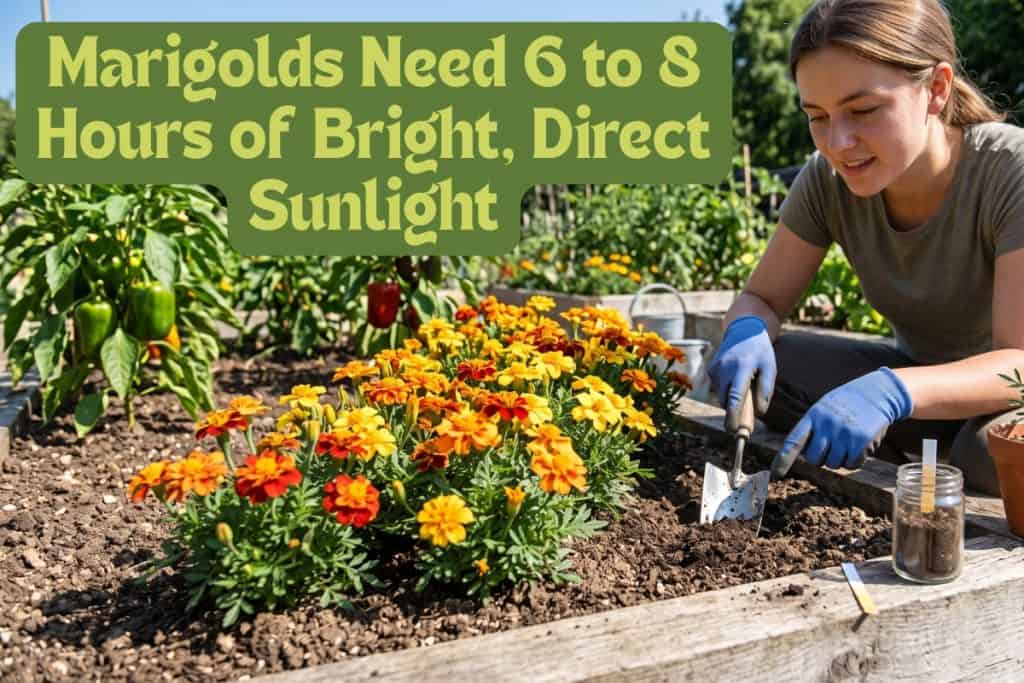
Marigolds should get at least 6 hours of direct sun, though 8 hours or more is better.
In less light, they stretch and barely flower. Leaves also stay damp, which encourages powdery mildew. Bright shade will only be enough to keep them alive.
Keep these tips in mind:
- Watch a potential planting location over the course of a whole day before you commit. A fence, tree canopy, or row of tall tomatoes can block some of the light you were counting on.
- In regions with long-term high heat, a little afternoon shade may actually be beneficial.
- If a plant is getting taller but flowering less, check the light before you reach for fertilizer.
Like marigolds, other flowering plants need a lot of sun. Learn about the bright sunlight requirements of another kind in our bird of paradise growing guide here.
What Type of Soil Is Best?
Gardeners often think richer soil helps flowering and growth, but soil that is too wet or too heavily fed can lead marigolds to produce a lot of leaves and few flowers. Instead, give them moderately fertile ground and little else.
As long as the soil has good drainage, marigolds will grow well. They handle dry soil far better than wet, so prioritize drainage after sunlight, and keep these tips in mind:
- Target a soil pH around 6.0 to 7.0. The foliage can develop a bronze speckling at 5.5 or below.
- Work finished compost into heavy clay soil to open it up and improve its structure.
- When a bed stays wet after rain, don’t try to fix it. Grow marigolds in a raised bed or a container instead.
Tip #4: Don’t Plant Marigolds in Spring
Marigolds look like spring flowers, but they’re actually warm-season annuals. Cold spring soil slows their growth down. A plant set into cool ground just sits, is more likely to develop disease issues, and loses the head start you were hoping for.
How to Time Planting in 5 Steps
- Start seeds indoors about 4 to 6 weeks before your last expected frost. (Give African types 8 to 10 weeks, since they’re slower and taller.)
- Hold off on transplants and direct sowing until all frost danger has passed and the soil has warmed.
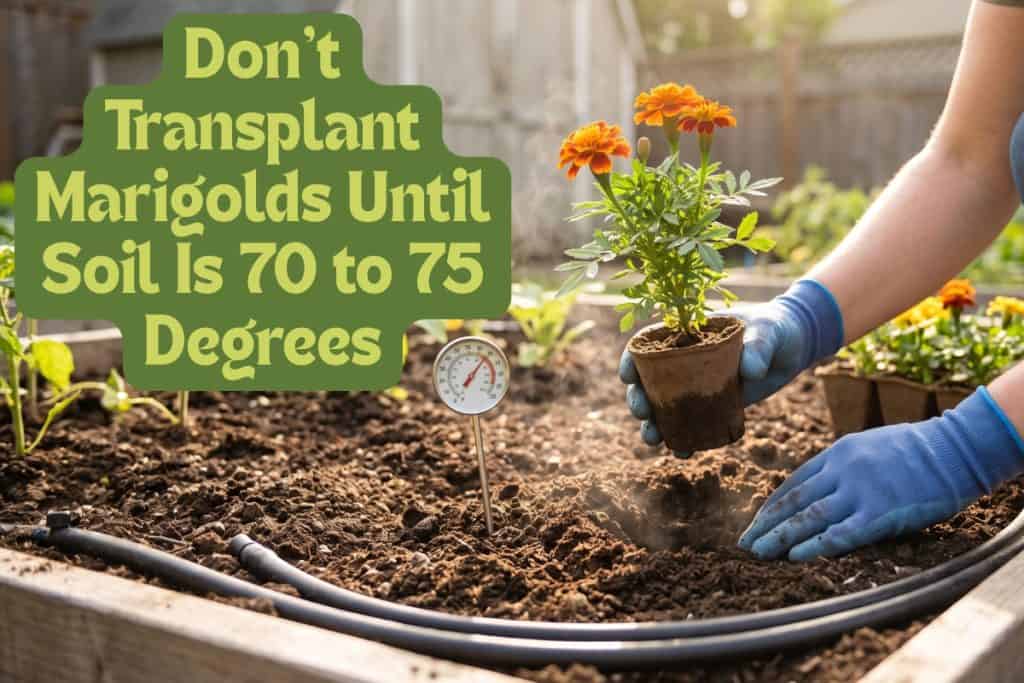
- For direct sowing, wait for soil to reach 70 to 75 degrees Fahrenheit.
- Sow a second batch a few weeks after the first if you want color to carry into autumn.
- In Zones 9 and 10, you can wait to plant in June or July and still have flowers into fall.
Tip #5: Growing From Seed
Few flowers are easier to raise from seed than marigolds. One cheap seed packet can give you a lot of flowers. They’re easy to germinate, but paying attention to details will determine whether you end up with sturdy seedlings or thin, small ones.
The most common mistake is burying seeds too deep. A marigold seed is slim and light, so there isn’t any reserve energy to push up through a heavy layer of soil.
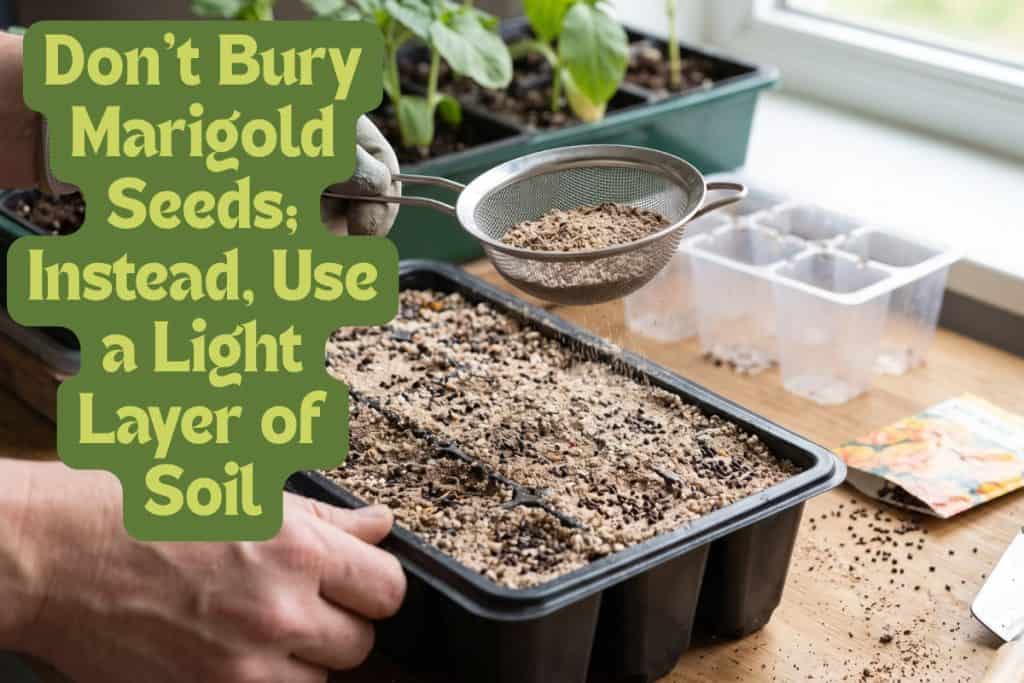
In warm conditions, around 70 to 75 degrees Fahrenheit, marigold seeds sprout fast, usually in 5 to 7 days. In cold soil, it will take much longer. Seeds may even rot before they can germinate.
Additionally, marigolds grow fibrous roots rather than a single taproot, so crowded seedlings pull apart easily if you sow in a large tray.
Start Seeds Indoors in 6 Steps
- Fill cells or a tray with a fine, pre-moistened seed-starting mix.
- Set seeds on the surface and cover with only about 1/4 inch of mix.
- If possible, sift a thin layer of soil through a kitchen strainer so no chunks land on top of a seedling.
- Mist the seeds, or bottom-water by resting the tray in a shallow pan of water until the water is wicked up to the seedlings.
- Keep the soil mix evenly damp until seedlings appear.
- Thin to the single strongest seedling per cell once the first true leaves show.
Direct Sowing Outdoors
You can skip the indoor steps above and sow marigold seeds straight into a warm bed once frost has passed. Water the soil well, then scatter or space the seed, and keep the surface evenly moist while it germinates.
Then, thin to the variety’s mature spacing once the seedlings are up. Cut the seedlings with scissors; don’t try to pull up the extras.
Begonias, another flowering plant, can also be grown from seed. Learn how to do this in our begonia growing guide here.
Tip #6: Transplant and Space Carefully
There are two important steps that can make or break your planting. First, skipping the hardening-off period can send a soft, indoor-grown marigold seedling straight into full sun and wind, where it can scorch.
The second is crowding. Young marigolds look small, which makes it tempting to plant them close together, but a mature plant needs room to branch. Crowding results in smaller plants and fewer flowers. They also need airflow to avoid insect and disease issues.
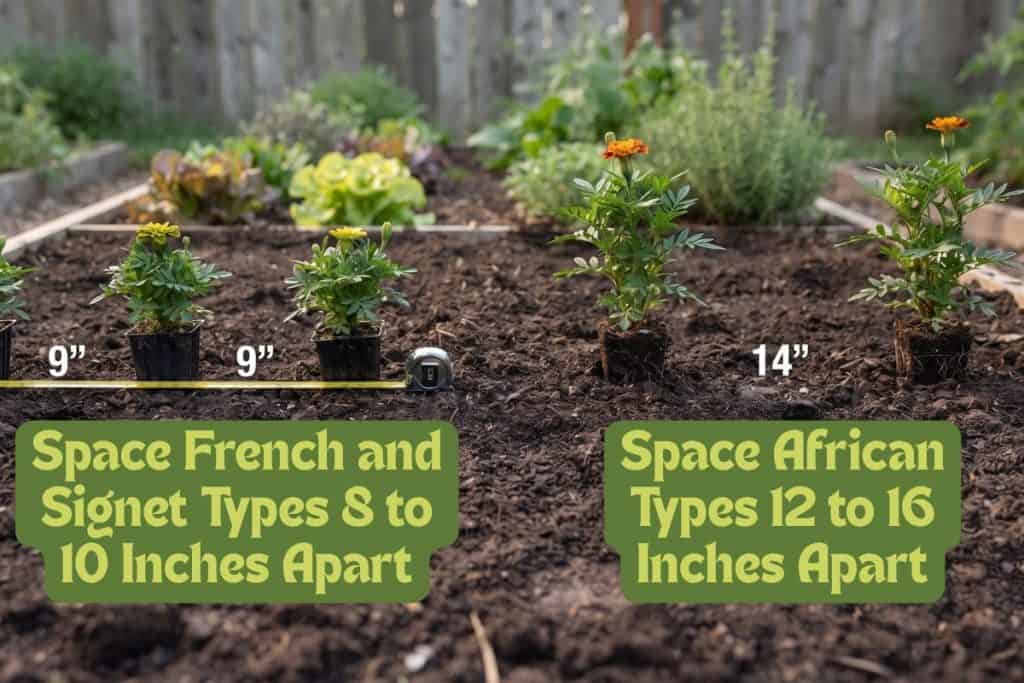
Nursery plants often come out of the cell as a square of circling roots. Loosen the outer roots by hand, or the roots will continue to circle, stalling growth.
7 Steps to Transplant Correctly
- Harden off over several days, starting in partial sun with some wind protection. Increase exposure a little at a time.
- Plant in the evening or early morning, not the middle of a hot, bright day.
- Pre-water the entire bed, not just the planting spot. A wet hole ringed by dry soil will dry quickly.
- Set the transplant at its original soil line (or slightly deeper for tall African types). A buried lower stem will root and anchor the plant.
- Space French and signet types 8 to 10 inches apart and Africans 12 to 16 inches apart.
- Water thoroughly to settle the soil around the roots.
- Expect transplants to droop for a few days after planting before they perk up and grow.
Support Tall Varieties
Tall African and cut-flower marigolds get top-heavy as their stems stretch and blooms fill out. That’s why you should add support before the plant needs it.
A thin bamboo, wooden, or metal stake can hold the stems without crushing them. Guiding a young stem upward on a stake is easier than rescuing one that has fallen. You can use green Velcro as ties, which blends in and can be used for several seasons.
Tip #7: Basic Maintenance
Marigold care doesn’t require much. In fact, you’ll mostly ignore them.
Overwatering and overfeeding both seem like kindness, but they aren’t. A marigold treated like a thirsty, hungry vegetable turns into a lush green plant with hardly any flowers. Give this plant less of everything you provide to others, and it’ll bloom for months.
Limit Watering
Most marigolds only need about 1 inch of water per week. Let the soil dry down between watering, then water deeply rather than sprinkling often. Before you water:
- Check moisture near the roots, not at the surface; the top can look dry while the root zone is still soaked.
- Once established, marigolds are genuinely drought-tolerant, so refrain from scheduled watering.
When you do water, do so at the base using a soaker hose or drip irrigation if possible. Overhead watering leaves foliage wet, which encourages powdery mildew. In humid weather, the dense heads of African types can trigger gray mold and petal rot when watered overhead.
Don’t Overfeed Fertilizer
The “all leaves, no blooms” complaint almost always traces back to too much nitrogen if marigolds are growing in full sun. Nitrogen drives green growth and will cause a plant to spend its energy on foliage and weak stems instead of flowers.
- A slow-release annual fertilizer, or a light 5-10-5 formula applied at label rate during planting, is all most marigolds need.
- If you top dress with compost annually, you may not need to fertilize marigolds at all.
- Big Africans need more fertilizer than French or signet types, but even they don’t want heavy feeding.
Deadhead and Pinch to Shape
Pinching shapes a young plant; deadheading keeps a flowering plant producing. They’re related jobs, but the timing and purpose are different, and most gardeners do them together.
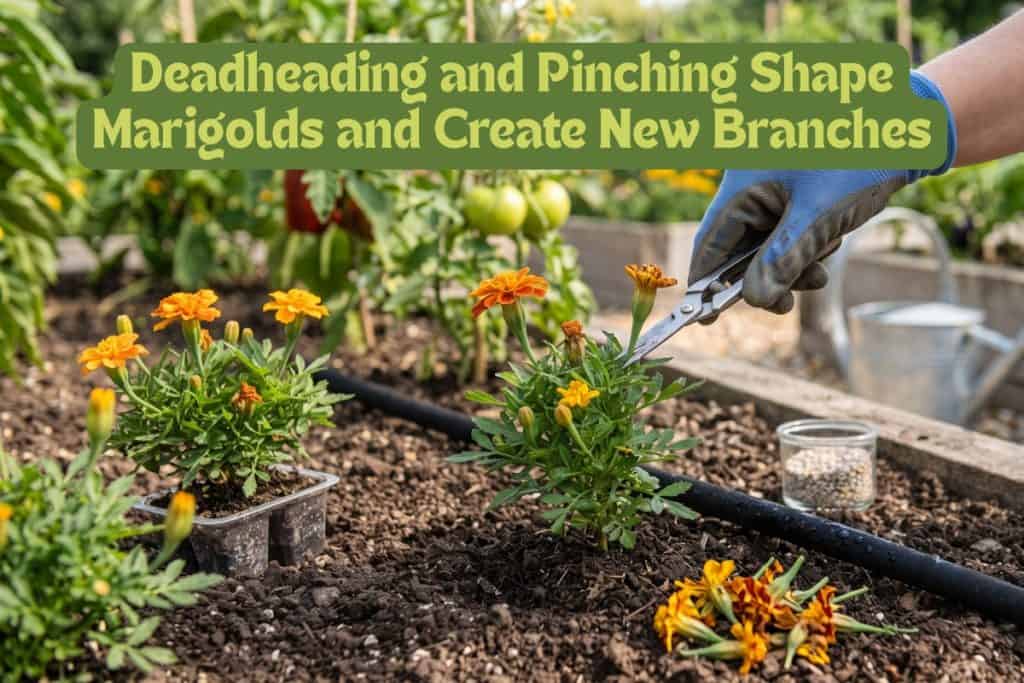
- Pinch young plants back early to force them to branch, creating more stems and flowers later.
- When deadheading, cut spent stems back above the first set of leaves so a new branch forms instead of simply pulling dead petals off the top.
- Triploids clean themselves, so they don’t need deadheading.
- If you fall behind in deadheading, yellow finches will tear open flower heads to get at the seeds. Cut those back during your normal cleanup.
Dealing With Pests and Diseases
Marigolds have few pest and disease issues. Most plants will survive the whole season without problems; the diseases that typically show up are caused by the plant staying wet. Only two are worth watching for:
- Spider mites, which usually show up on signets first as leaf stippling and webbing.
- Aster yellows, which are spread by leafhoppers, has no cure and appear as yellow, distorted new growth.
You can treat pests and diseases with these tips:
- If you see signs of spider mites, blast leaf undersides with a hard jet of water every few days to knock the population down.
- Follow up with insecticidal soap or horticultural oil if the stippling keeps spreading.
- Aphids, thrips, and leafhoppers may show up, but rarely in numbers worth spraying.
- If you see signs of aster yellows, pull out the plant and throw it away.
Tip #8: Container Gardening
Growing marigolds in pots changes everything. The root zone is small, and there’s no surrounding soil to buffer it. That means soil dries fast and swings between wet and bone dry more drastically than a bed does.
Fortunately, French and signet types grow well in that environment. A full-size African variety can go in a container, but only a big one that’s heavy enough to stay stable as the plant grows and offers room for roots.
7 Container Planting Basics
- Use a pot with drainage holes for fast drainage.
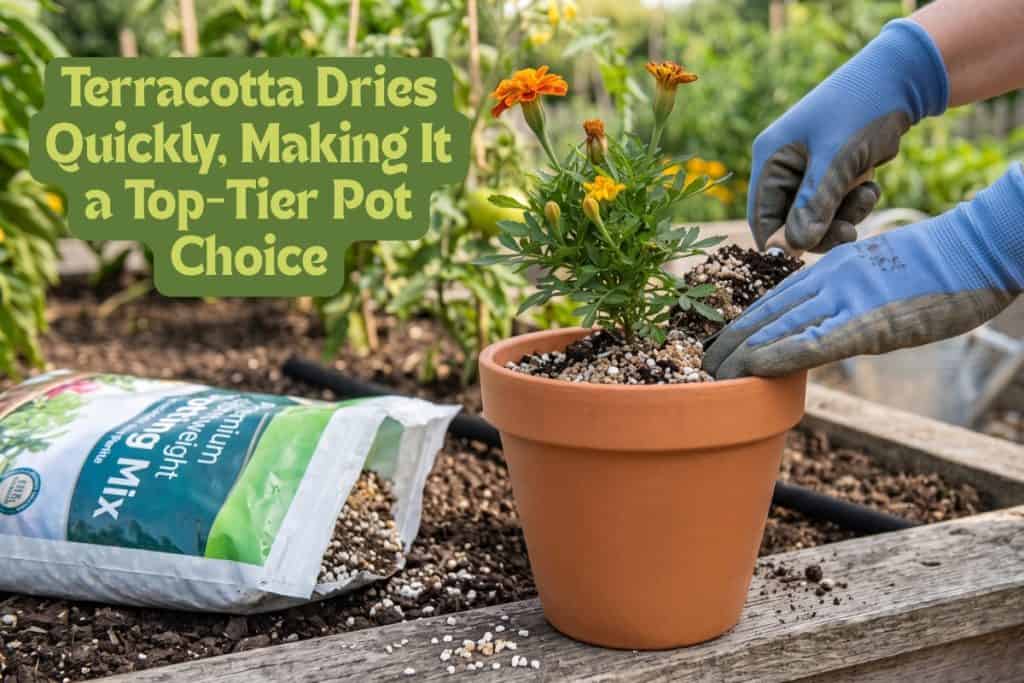
- Terracotta breathes and dries faster than plastic, which helps prevent overwatering and makes it the best choice.
- Use a quality lightweight potting mix with an extra handful of perlite or coarse sand to improve drainage. Don’t use garden soil, which can compact and introduce disease and insects.
- Always replace last year’s potting mix with fresh potting mix before planting.
- Match the pot size and shape to the type of marigold.
- Place the pot where it will get full sun and be easy to water.
- Check the soil by feel often; a pot in sun or wind can dry in a single day.
Tip #9: Extending The Bloom
Flowering lasts for several weeks, but the middle of summer isn’t always the best growing time, especially in the South. Peak heat can slow growth and flowering, especially on the big African types. That pause doesn’t mean the plant is failing.
Once the weather eases, a healthy plant usually puts out a fresh flush of color.
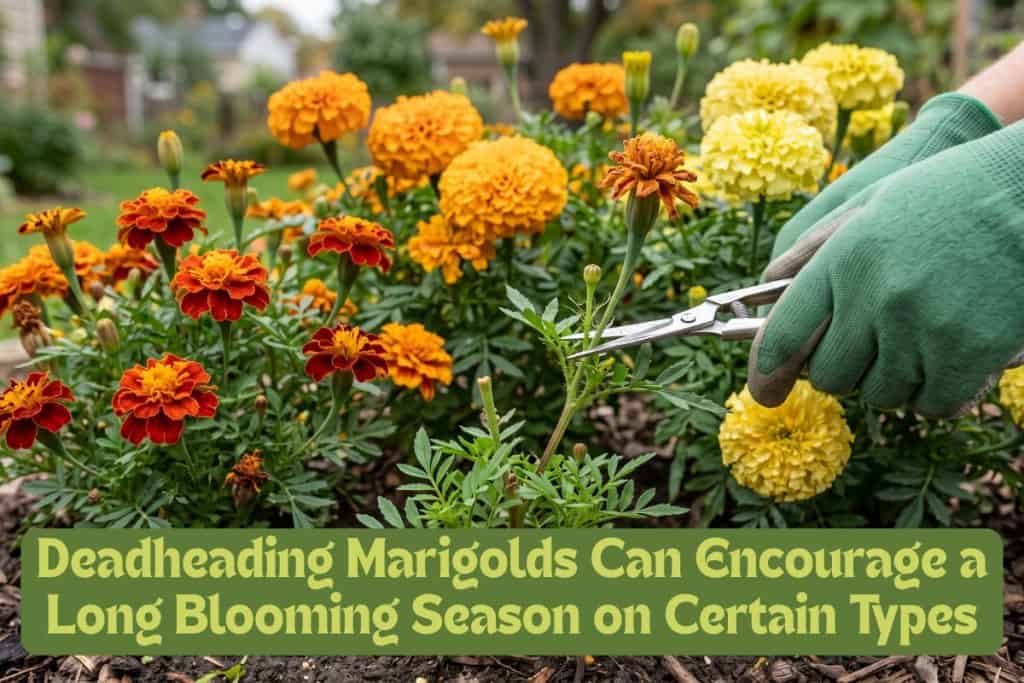
- Flowering typically lasts from summer until a hard freeze, as long as you deadhead French and signet types.
- Keep spent blooms from setting seed heads, especially on large African types. If a plant gets damaged, cut it back hard rather than pulling it out. It should grow back fast.
- Cool autumn days deepen the reds, coppers, and oranges; blends like Strawberry Blonde look their best once the heat breaks.
For more tips on extending flower lifespan or increasing blooms, read our guide to growing tulips here.
Tip #10: Harvesting Marigold Seeds
Saving marigold seed is easy. Let a few heads stay on the plant instead of deadheading and wait until they’re brown and fully dry to harvest.
However, the new plants that come from that seed may not look exactly like the original source. Open-pollinated types look close to the parent, but hybrids will vary. Sterile triploids won’t give you anything usable at all.
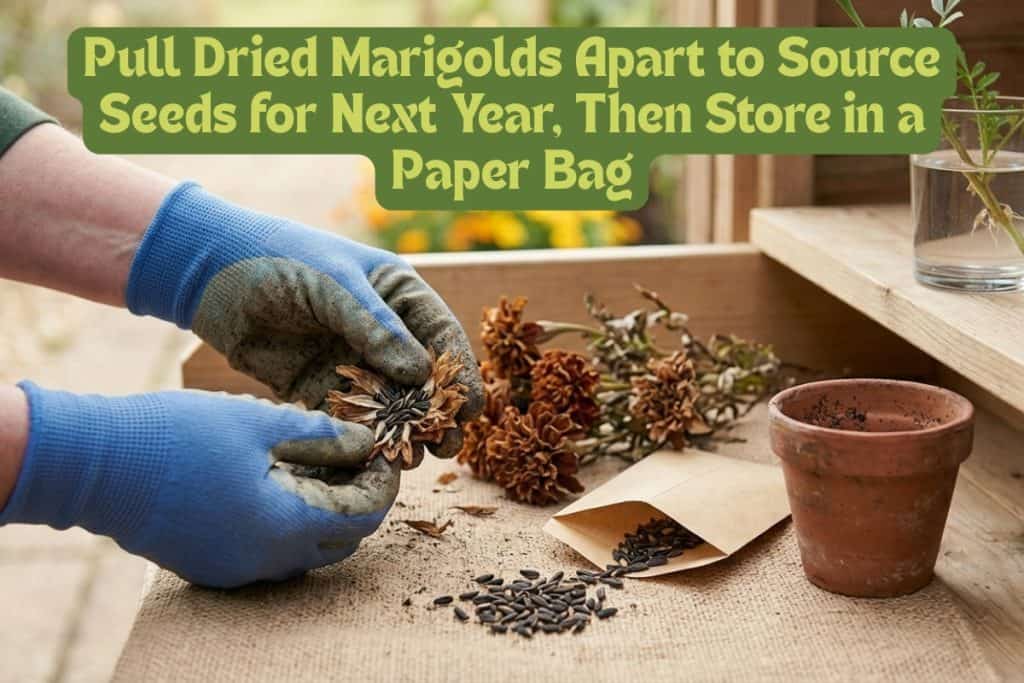
Collect Seed in 4 Steps
- Look for mature seed, which is dark and nearly black. Pale or whitish seed is immature.
- Pull the dried flower apart and store the seed in a paper bag, which lets any leftover moisture escape.
- Label it with the variety and the year for easy identification. Keep in a dry, cool spot.
- To get the best variety, save seed from several good plants, not just the first head that dries.
What About Marigold Cuttings?
Marigolds also root easily from cuttings, which is the only way to copy a plant exactly or propagate a triploid type.
To take a cutting:
- Take a 4- to 6-inch piece of non-flowering stem.
- Set it in a glass of water or push it into moist potting mix.
- Place it somewhere warm and bright but out of direct sun.
- Roots usually form in about 2 to 4 weeks; from there, pot like any young transplant.
Final Advice
Marigolds chosen for their ultimate purpose and planted at the right time are mostly set-it-and-forget-it flowers. Try different types and colors to explore the variety, and you’ll probably find new garden plants you love. The best marigold in your garden may not be the one you expected to choose.
Marigolds are recommended for several uses, so plant a few and see if they work for you. Remember to plant them close to others if you’re using them as companion plants. Treat any animal or insect deterrence as a lucky bonus; don’t depend on it.
You can’t go wrong with marigolds. If you haven’t tried them, this should be the year.