

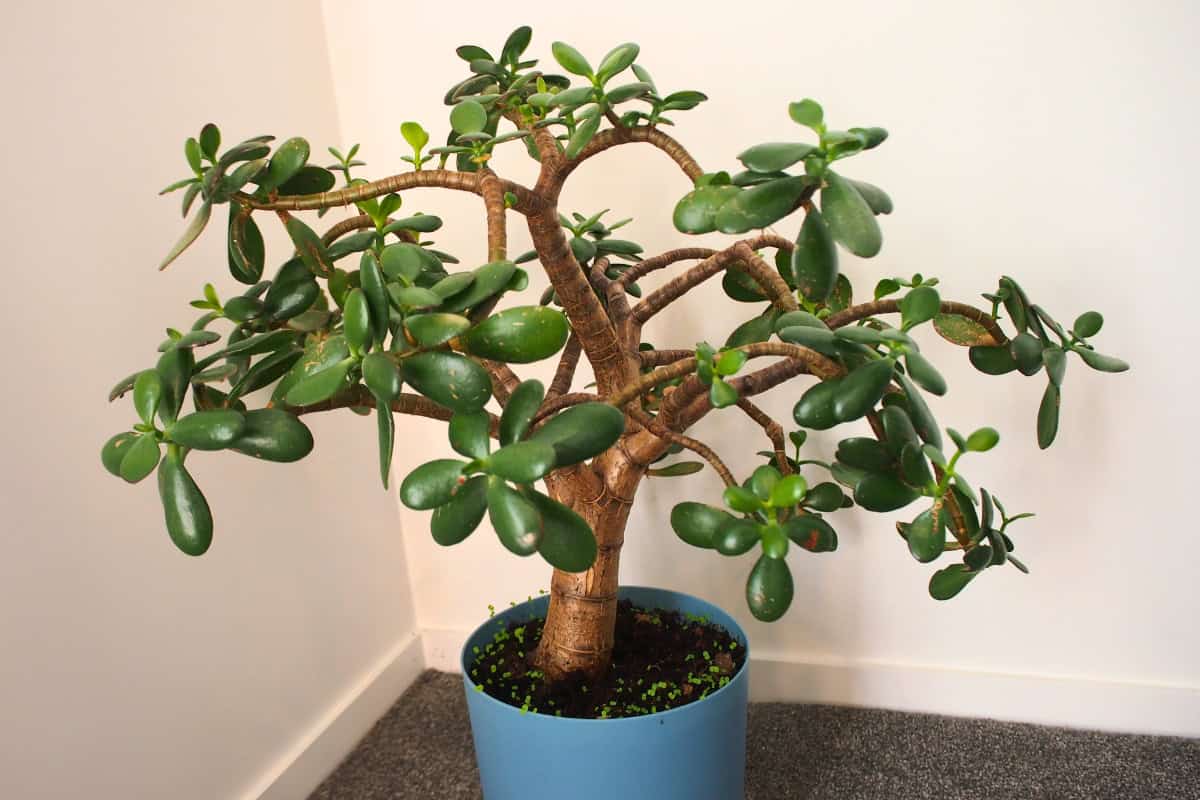
Looking for a little luck? For centuries, jade plants were grown in square porcelain tubs with lion feet to bring financial luck — which is why it earned the names “dollar plant” and “tree of happiness.”
Now, jade plants are better known for what they can become: plants that can live 100 years. In this guide, you’ll learn key growing and care tips like:
- Why red edges on leaves are good news.
- What to do when you spot brown patches.
- What corky brown scabs on old leaves actually are.
- How to get a jade plant to bloom indoors during winter.
Overall, jade plants don’t ask for much beyond a bright window and soil that dries completely between waterings.
Choose a Jade Plant
Most jade problems are bought, not caused, so it’s important to be picky from the start. Pick up a jade plant that already has stretched stems and wide gaps between its leaves, and you’ll be correcting that shape for about a year.
As you shop, judge each plant by its structure, then its color. Tight leaf spacing and sturdy stems mean it’s had good light over time.
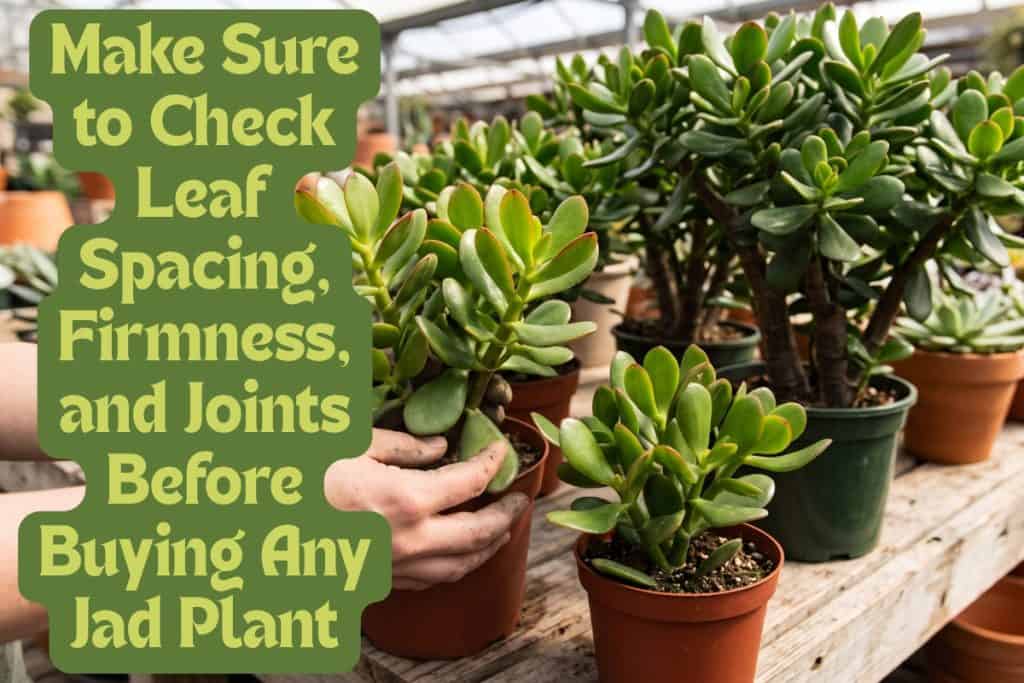
Keep an eye out for red leaf edges, too. These fade when light decreases, so this clue tells you where the plant has been sitting recently.
You may have to ignore the name you see on a store label. Jade plants are sold under their current botanical name, Crassula ovata, as well as three retired botanical names: C. argentea, C. portulacea, and C. obliqua.
5 Details to Check Before You Buy
- Look at leaf spacing. Pairs should sit close together along the stem.
- Squeeze a leaf gently to check if it feels firm and full.
- Skip any plant with soft, dark, or collapsing tissue at the base of the stem.
- Avoid plants with white, cottony specks (mealybugs) on the leaf joints.
- Check the pot’s drainage holes. Roots poking through mean you’ll be repotting soon.
Jade Plant Varieties Worth Knowing
In addition to the common jade plant, there are some other interesting colors and forms. The cultivars are split into color forms, tubular-leaf forms, and dwarfs, including options like:
- ‘Hummel’s Sunset’: Gold-edged leaves tinged with red.
- ‘Gollum’: Tubular leaves with hollowed-out, suction cup-like tips.
- ‘Hobbit’: Spoon-shaped leaves that curl inward, often with reddish tips.
- ‘Crosby’s Compact’: A dwarf plant with tiny rounded red and orange leaves.
Gollum and Hobbit jade varieties come from a mutation in which each leaf rolls inward and fuses to itself. Specialists call them the Crassula ovata Tolkien Group. Expect the occasional branch to revert to ordinary flat leaves. That’s built into the mutation, not a care failure.
But no matter what variety you choose, all jade plants need the same care.
Understand How a Jade Plant Grows
Jade plants have the ability to store water, which makes them forgiving but also creates a vulnerability.
The roots need air as much as they need water, and roots sitting in soggy mix will get smothered. Trouble starts underground while the leaves look fine. By the time the top of the plant shows any effects, the root system has been struggling for weeks.
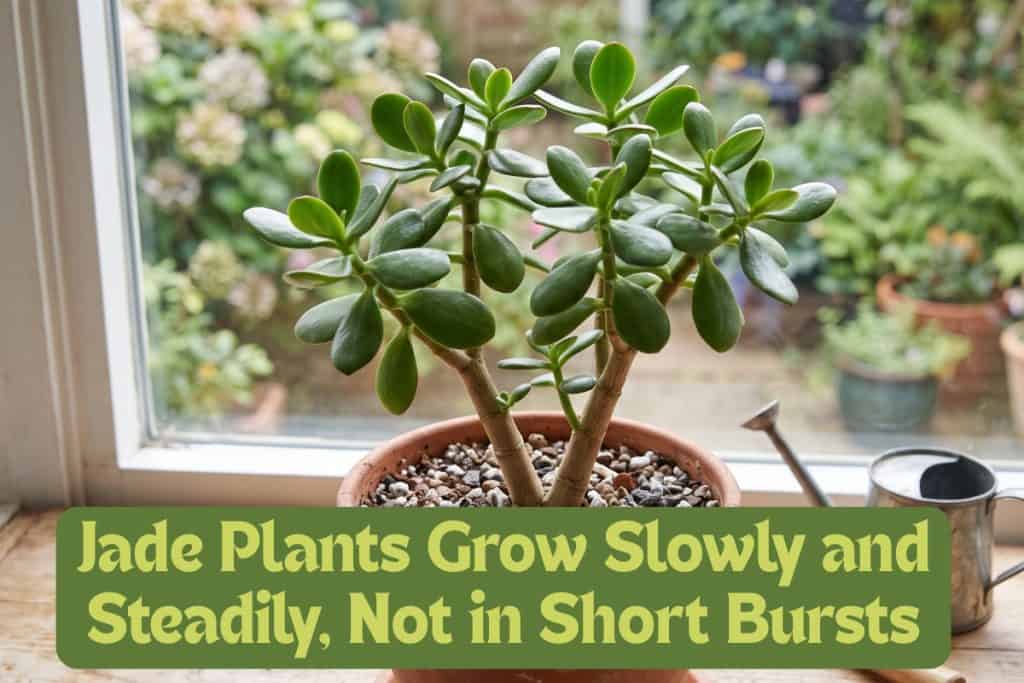
It’s also important to know that jade grows slowly and steadily rather than in bursts. Stems thicken and turn woody over the years, and bark on old plants peels in brownish strips.
Why Jade Plants Survive
Jade plants use CAM photosynthesis, the same system cactus plants use to survive hot, dry places. They open the pores on their leaves at night, not during the day like most plants, so they lose far less water.
In a drought, a jade plant stops opening those pores altogether. Growth halts, but the plant recycles air inside its own cells to stay alive.
Offer the Right Light and Placement
Lack of light will start a slow decline in jade plants. As your plant tries to reach for the light it needs, its stems will lengthen and leaf gaps will widen. Growth turns soft and floppy, the whole plant leans, and eventually, the top will get heavy enough to tip the pot over.
Bright, indirect light is what jade needs to survive; direct sun is what it requires to thrive.
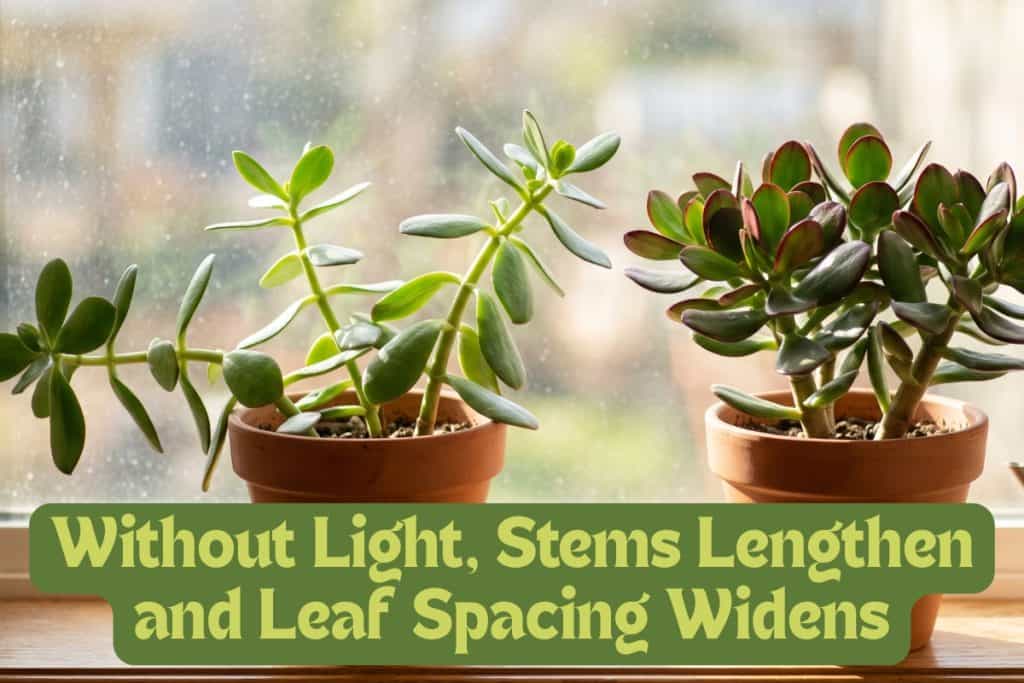
A jade that’s getting enough light will feature a red or burgundy rim along its leaf edges. If leaves are entirely green, with long bare stems, the plant is telling you it’s short on light.
6 Steps to Get the Light Right
- Aim for 4 or more hours of direct sun a day.
- Place plants within 1 to 2 feet of a south- or west-facing window.
- Bright, indirect light will keep a jade alive, but expect stretching and flat green leaves.
- Increase strong light in stages over a week or more, never in one move.
- Rotate the pot a quarter turn every time you water to keep light even.
- Move it outdoors for the summer in part sun. Bring it in before the first frost.
Should Jade Be Kept Away from Pets?
The best spot for a jade plant is usually a high shelf or a plant stand, which is convenient, because it’s toxic to dogs and cats.
The substance responsible for its toxicity in pets hasn’t been identified, but the effects are well documented. Jade can cause vomiting, lethargy, and loss of coordination.
Like jade, pothos plants should be kept away from pets; learn more about them in our guide here.
Choose the Right Soil and Pot
Drainage is the most important part of caring for a jade plant. The pot and soil work as one system, and a mistake with either manifests as soil that stays wet.
For example, a dense, peat-heavy soil mix in a plastic pot can hold moisture for weeks, long after the plant has stopped drawing on it. A terracotta pot, on the other hand, dries quickly.
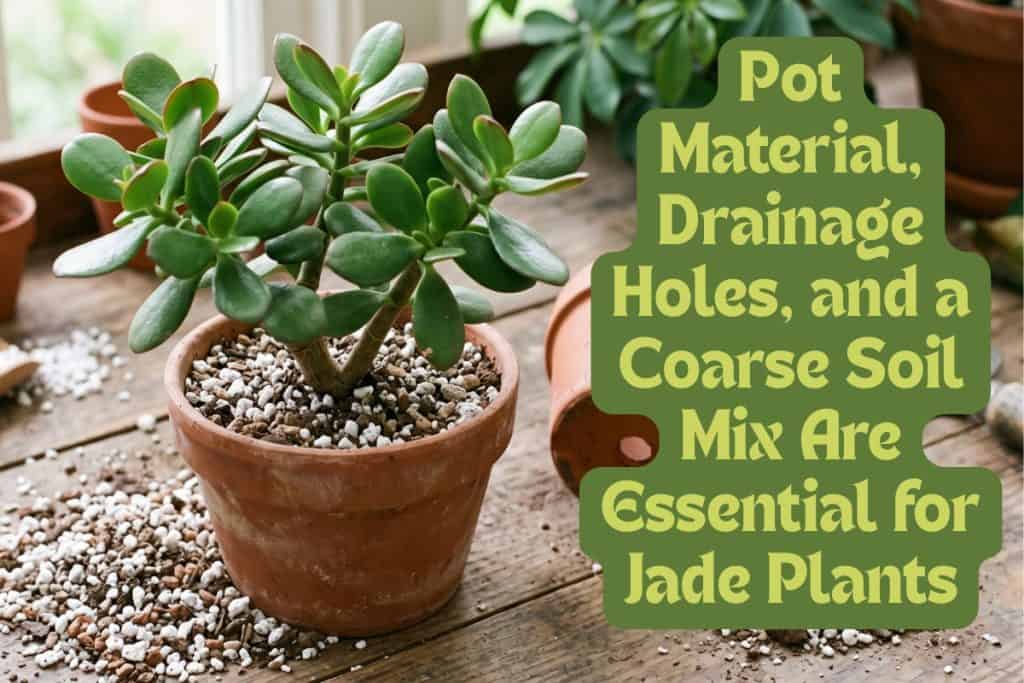
Jade plants have a small root system for their size and tolerate cramped roots well. A big pot typically holds a large volume of soil and water that roots won’t use. Plus, the unused soil dries slowly.
Additionally, you don’t need to worry about soil pH. Acidic, alkaline, and neutral soil all suit jade plants.
3 Common Soil and Pot Mistakes
- When you repot a jade plant, never move up two or three sizes.
- If a decorative pot has no hole, keep the plant in a plain nursery pot and set it inside.
- Never use garden soil, which compacts and drains poorly, in a container.
How to Create a Well-Draining Soil Mix
- Start with a commercial cactus and succulent mix.
- Add perlite or pumice if it still feels fine and dense.
- Build your own with one-third organic material, such as potting soil or pine bark, and two-thirds mineral material, such as perlite, coarse sand, or pumice.
Whatever soil mix you choose, judge the finished texture rather than the recipe. Moisten a handful lightly. It should feel open with coarse, identifiable particles.
If it packs into a ball, add more mineral material.
Know When to Repot Jade Plants
Jade plants, when mature, are content even when root-bound and will happily sit in the same pot for four to six years. Young plants, on the other hand, need repotting every few years.
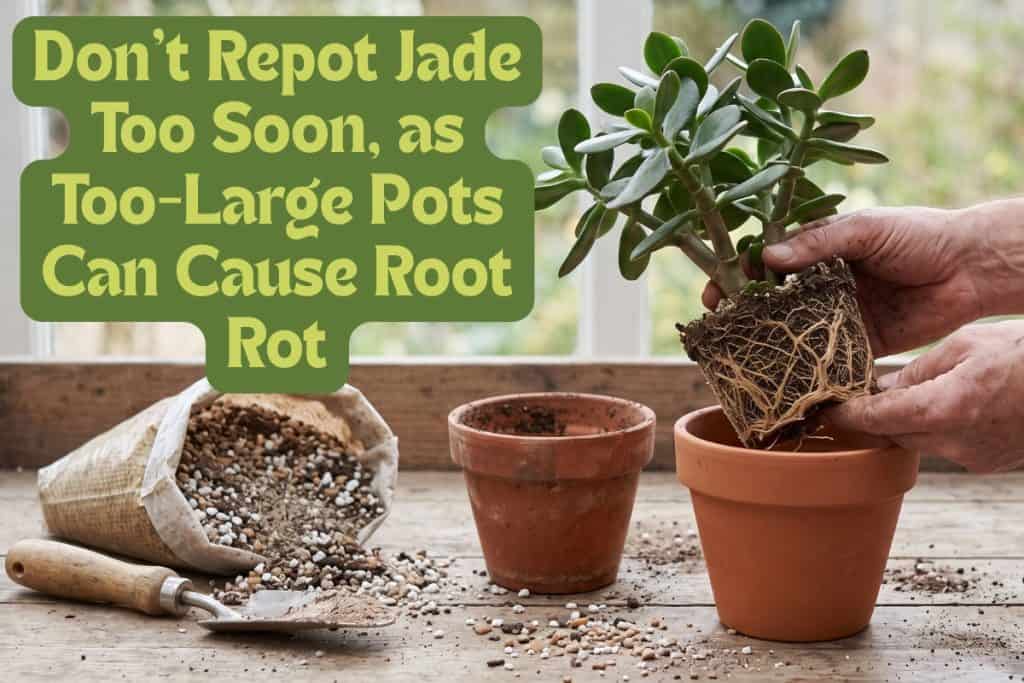
3 Signs It’s Time to Repot
- The plant is top-heavy enough to tip.
- The soil mix has broken down and drains slowly.
- A young plant has filled its container.
How to Repot Jade Plants
Repot in early spring as new growth starts. Choose a pot only 1 inch wider than the root ball, and set the plant at the same depth it was growing before.
Let the soil dry out after repotting. Water sparingly until the plant has settled in.
For a large, unstable plant, a heavy ceramic or clay container will keep it upright without holding water at the roots.
Fiddle leaf fig plants have similar repotting needs, which you can learn about in our guide here.
Water Sparingly
A jade plant doesn’t use water at a steady rate. When light drops or the room cools, it slows down and may stop drawing much moisture from the soil. If you water on a fixed schedule while this happens, the extra water will sit in the soil.
Light, frequent watering does more harm than a full soaking. A splash wets the top inch of soil and never reaches the bottom of the root ball, so the surface stays damp. Rot can start while the deep roots stay dry.
The opposite mistake matters, too. Jade is so drought-proof that sometimes people leave it dry for too long. If that happens, the plant will drop leaves, stop growing, and eventually die.
When you do water, use filtered water or let tap water sit out overnight. This reduces salts and mineral accumulation.
After watering, always check inside any decorative outer pot to ensure water isn’t sitting at the bottom.
Read the Leaves Before Watering
A jade plant’s leaves will tell you if it’s time to water. A jade sheds leaves when it’s too dry and when it’s too wet, so leaf fall alone only tells you something is off.
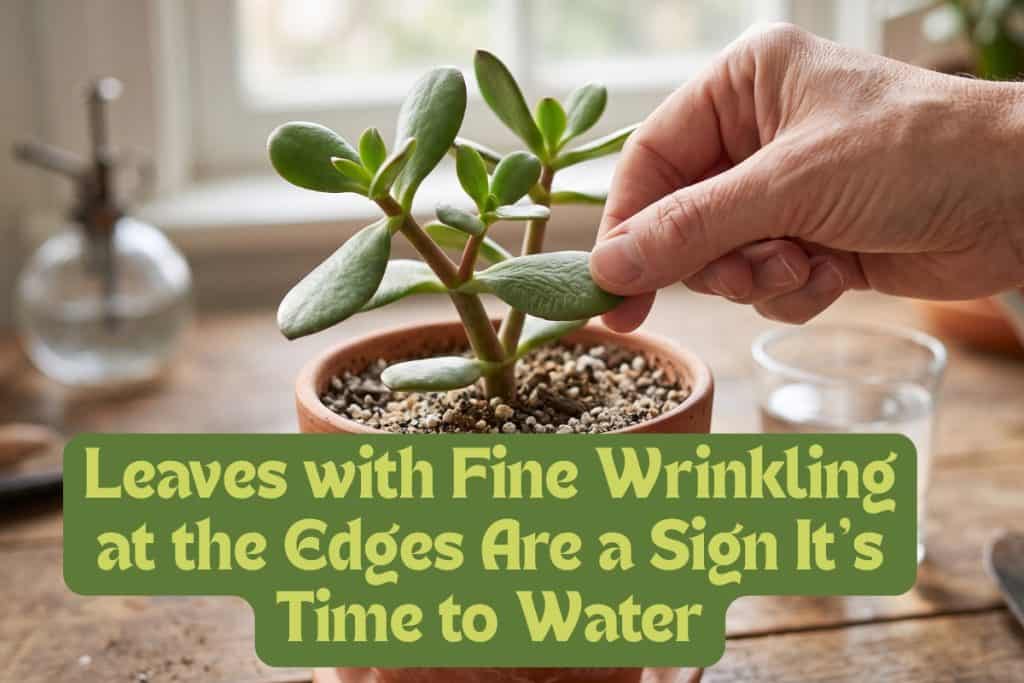
Press a leaf gently between your finger and thumb and read the leaf by feel:
- Firm with Almost No Give: Don’t water; reserves are full.
- Fine Wrinkling at the Edges: Water; reserves are running down.
- Soft Like a Half-Filled Water Balloon: Don’t water; this is waterlogged tissue.
- Yellow and Limp: Don’t water; the roots are in trouble.
Fine wrinkling is a signal rather than an emergency. You have days to act on it, not weeks.
Try the Wet-Dry Cycle
- Lift the pot. A plant holding moisture is noticeably heavier than a dry one.
- Check the leaves. Firm and full means watering can wait.
- Not sure? Stick a finger 2 inches deep near the edge of the pot.
- Soak soil deeply and water until it runs out the bottom.
- Stay away until the pot is light again.
If water runs straight through, the soil mix has become water-repellent. Poke several holes down through the soil to break it up so the whole root ball can get water.
Manage Temperature and Humidity
Two things make life harder for a jade: Nighttime temperature and cold weather.
Jade does better when nights run cooler than days. A house held at one steady temperature feels comfortable to people but slightly wrong to this plant. This won’t kill a jade, but you’ll see less compact growth and weaker color.

Similarly, jade shrugs off a chilly room and may survive a light frost, but a real freeze kills it outright. Any plant that spends the summer outside needs to come indoors before frost.
Most houseplants want higher humidity, but jade wants the opposite. Dry indoor air helps the soil dry at a healthy pace, which is exactly what this plant needs.
Temperature Targets
- Keep daytime temperatures between 62 and 79 degrees Fahrenheit.
- Let nighttime temperatures drop to 50 to 55 degrees Fahrenheit if possible.
- Bring outdoor plants in before temperatures approach freezing.
- The winter minimum is 32 to 35 degrees Fahrenheit.
How to Get a Jade to Bloom Indoors
Flowers on a jade plant are a special event. Most indoor plants never produce them (and that has nothing to do with health). Blooms are triggered by night length, and even a lamp in your living room can interrupt the darkness needed for them to occur.
If you want to encourage blooming, stop watering your jade plant in fall and keep the plant cool, near 55 degrees Fahrenheit, especially overnight. Put it where it gets no artificial light at all after sunset so the season’s naturally short days can do their work.
Give it several weeks of that cold, dark, dry treatment, then return to normal watering.
The payoff is worth the trouble. When it blooms, jade produces clusters of small, star-shaped white to pink flowers. When a plant grows in strong light, the clusters can almost completely cover the foliage.
Fertilize on the Right Schedule
A jade plant in fresh potting mix has all the nutrition it needs, sometimes for years. So, when it comes to adding fertilizer, how much you should (or if you should feed at all) depends on how fast the plant is growing — and growth depends mostly on light.
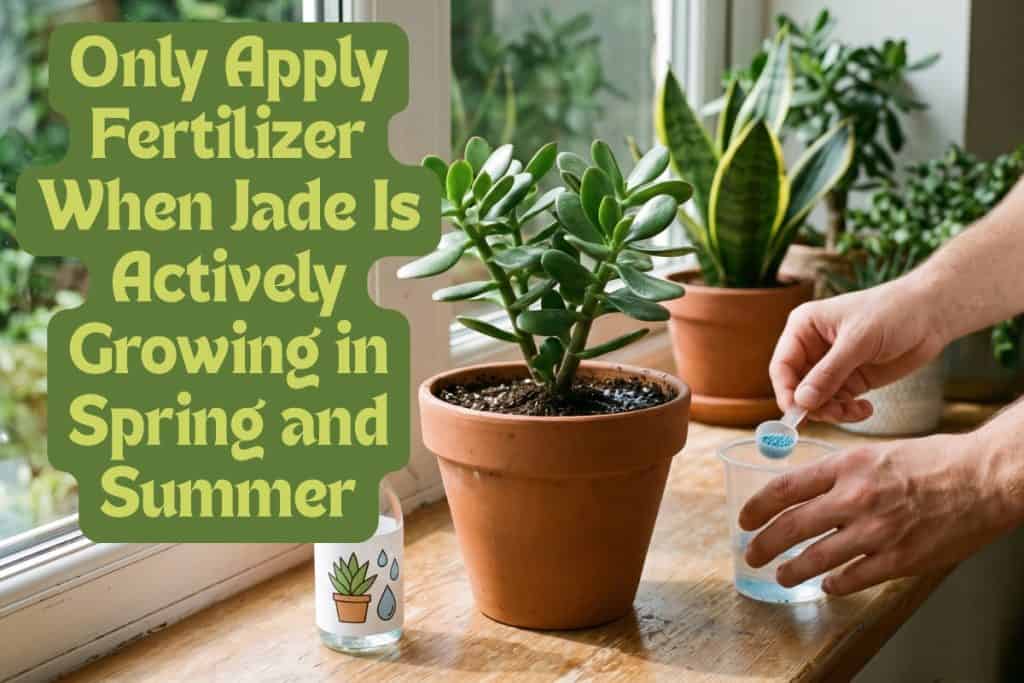
A plant in a bright south window during a long summer needs more fertilizer than one in a north window. Overall, though, less is more with jade plants. Too much fertilizer burns roots, so use fertilizer at half the label rate.
Remember, no amount of fertilizer will fix a light or watering problem. It only adds stress to a plant that’s already struggling.
Feed a Jade Plant in 6 Steps
- Water a dry plant first, then feed it a day or two later.
- Use a balanced NPK fertilizer or one made for cacti and succulents.
- Wait about 4 months before feeding a freshly repotted plant.
- Feed only during active growth (spring and summer).
- Space feeding 1 to 3 months apart, guided by light and visible growth.
- Stop fertilizer completely in fall and winter.
Prune and Shape Your Jade Plant
If left untrimmed, a jade plant will continue to extend its existing stems, even if leaves are sparse. Cut it, however, and everything changes.
When a growing tip is untouched, it dominates. Once you remove it, the hormone that tells the tip to keep getting longer disappears, activating the dormant buds below. These buds will become your new branches.
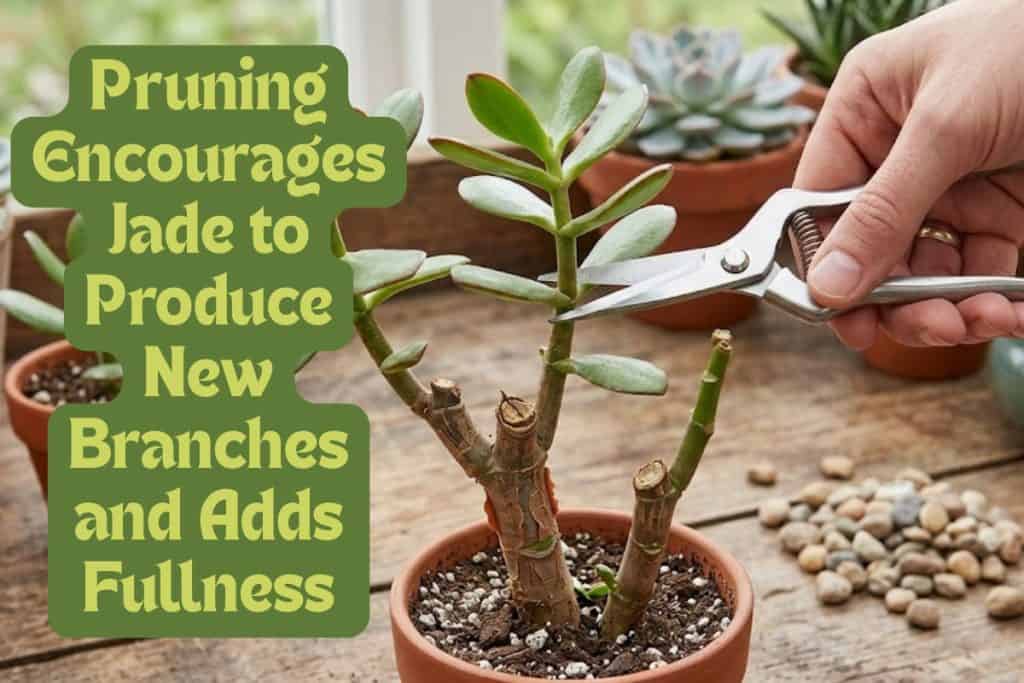
There’s also a structural payoff. A jade that branches builds a thicker trunk to support the weight of all those stems and leaves. Pruning also encourages root growth. A regularly pruned jade is a sturdier plant, not just a prettier one.
4 Pruning Tips
- Prune in spring, when the plant rebounds fastest.
- Fix poor lighting or wet roots before pruning.
- Cuts seal over in a few days and produce new shoots in a few weeks.
- Jade compartmentalizes its wounds; a stub will dry back and drop off cleanly.
A jade holds the shape you give it for years, so the first cuts on a young plant matter more than any that follow.
How to Prune a Leggy Jade Plant
- Choose stems with wide gaps between leaves or growing past the canopy.
- Cut just above a pair of leaves or where the stem meets a lateral branch.
- Leave at least one pair of leaves on the stem below your cut.
- Cut low on a young stretched plant; several branch points will look best and be more stable.
Jade Plants as Bonsai
Jade plants work great for bonsai, which you can read about in our guide, because they arrive with the features you’d otherwise spend years developing: small leaves, a thickening trunk, and that peeling bark.
Work the roots and the top at the same time, cutting both back and returning it to the same size container.
Propagating and Creating New Plants
Jade roots from almost any piece of itself, including leaves that fall right where they land. It’s a survival strategy: In its natural habitat, jade plants get grazed, trampled, and knocked over, and they come back.
The trick is rooting before rotting. A fresh cut is an open wound of water-filled tissue, and pushing that straight into moist soil invites decay. Letting the cut end dry and seal first prevents most propagation failures.
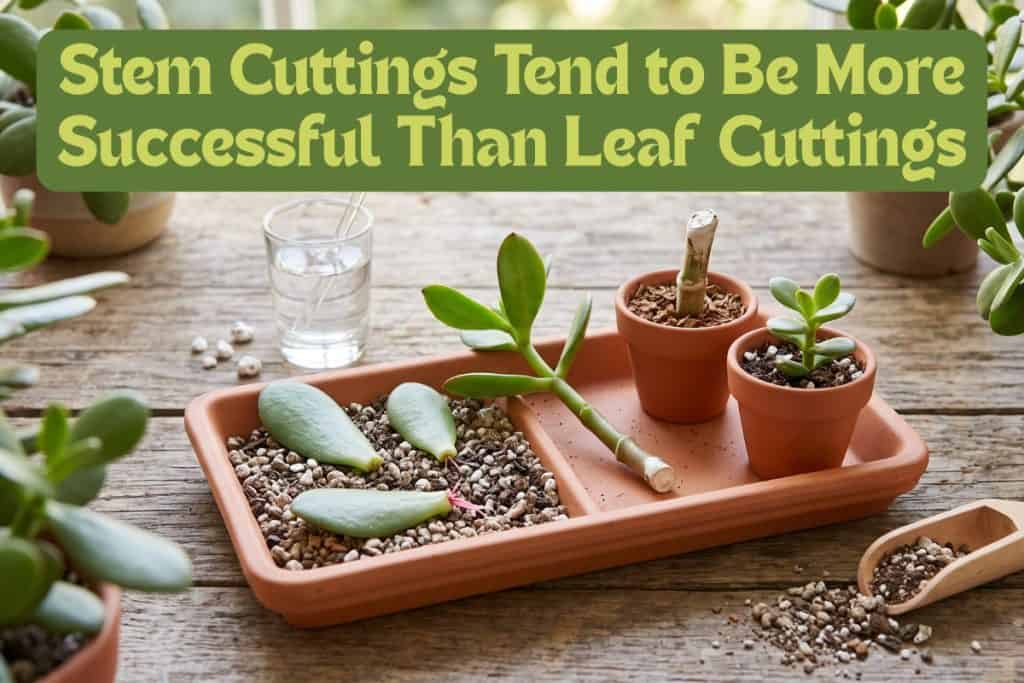
Don’t make the mistake of treating cuttings like vulnerable seedlings. They don’t need a humidity dome, heat mat, or daily misting. A jade cutting arrives with its own water supply and mostly wants to be left alone somewhere bright and dry.
Tips for Propagation Success
- Cuttings root fastest in summer, but will root any time.
- Repotting day is the natural time to propagate.
- Separate rooted stems at repotting.
Stem Cuttings
Stem cuttings are the most reliable propagation method.
- Using clean, sharp pruners, cut a 3- to 6-inch-long section.
- Strip the leaves from the lower half of that stem.
- Set it aside for several days until the cut surface dries and seals over.
- Insert the callused end into dry, fast-draining soil mix, deep enough that the cutting stands up on its own.
- Keep the mix barely damp and give it bright light.
- Test with a soft pull after a few weeks. Resistance means roots have taken hold.
Rooting hormone is optional. You can expect roots in about 2 weeks and a well-established cutting in 6 to 8 weeks.
Leaf Cuttings
Leaf propagation is slower, and one small mistake can cause failure. The whole leaf has to come off, including the base where it joins the stem. That attachment point has the meristem tissue, the cells capable of generating new growth.
A torn leaf, or one snapped off and without its base, will sit there indefinitely and eventually shrivel.
- Remove a plump, undamaged leaf so it detaches cleanly at its base.
- Let it callus for a few days.
- Lay it flat on lightly damp, well-drained mix, with the attachment end resting at the soil surface.
- Mist the surface instead of watering so the mix stays barely damp.
- Provide bright light out of harsh sun.
Roots and a tiny plantlet should form at the leaf base over several weeks to a few months. The parent leaf feeds it, then shrivels once its job is done.
Dealing with Pests, Rot, and Corky Spots
Disease is rare on an indoor jade plant. Problems usually come down to watering (which we covered), mealybugs, or spotting.
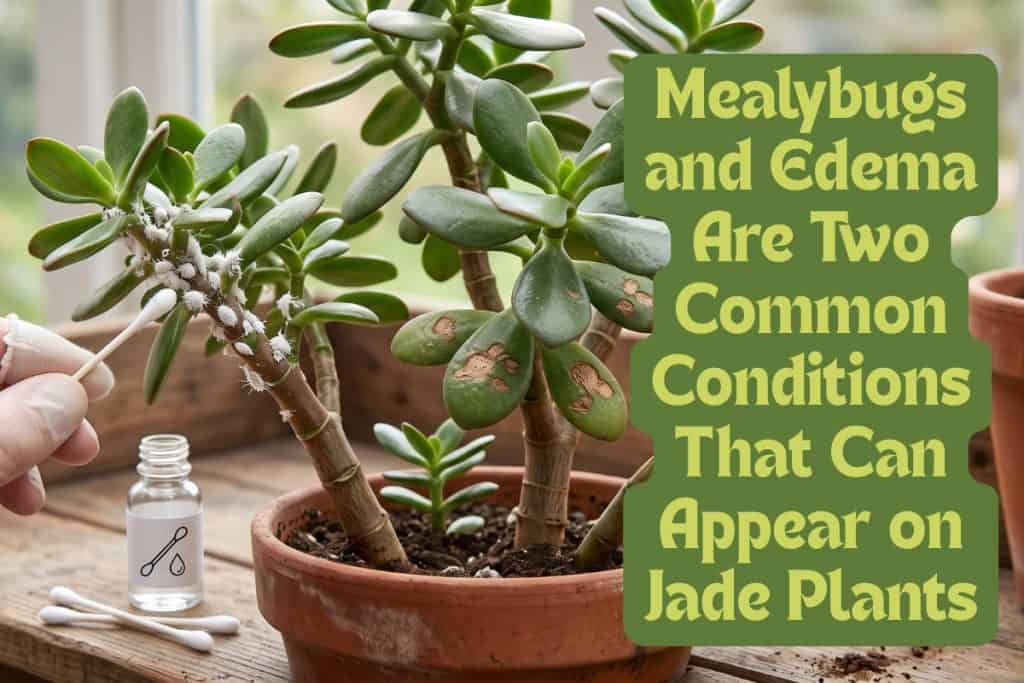
Mealybugs are the most common pest. Nothing freezes indoors to knock populations back, so they multiply fast, but they’re easy to spot and easy to control.
The same five checks you’d run at the garden center before buying a jade plant work as a monthly once-over at home to watch for issues.
How to Clear Mealybugs
- Isolate the affected plant.
- Dip a cotton swab in rubbing alcohol.
- Wipe each insect off directly, working into the leaf joints and branch forks.
- Repeat every few days until you no longer find them.
Note: Don’t use insecticidal soap on jade. It can damage the foliage, and succulent leaves are broadly prone to injury from soaps and oils.
Rot and Other Issues
Rot is the other serious threat for jade plants. By the time you see it above the soil, the fix is in the pot, not a spray bottle.
Scabby brown patches on old leaves look serious and infectious, but usually they’re neither. Bacterial soft rot, on the other hand, collapses the stems and turns the tissue inside mushy. There’s no cure, so you’ll have to discard the plant.
Powdery mildew shows up as scabby or corky areas, but it’s uncommon indoors.
Tiny white or black dots are pores that release water, not disease.
Corky Brown Scabs (Edema)
Edema is the most misdiagnosed issue for jade plants. People may treat it for months without realizing nothing is wrong.
Edema is physiological, not a pest or pathogen. The roots take up more water than the leaves can use or release; pressure builds, and cells rupture. The leaf heals by forming corky scab-like tissue over the damage, usually on the lower, older leaves first.
Sunscald and old physical injuries can leave similar marks.
Aloe vera plants, like jade, rarely face diseases and pests, but you can learn how to keep an eye out in our guide here.
Final Advice
Think of jade plants not as a houseplant you tend, but rather a small tree you’re building. Trees get shaped over years, so a cut made this spring decides where a branch sits years from now.
A well-kept jade outlives the windowsill it starts on. Take a cutting, give it away, and you’ve done the thing that earned this plant the name of friendship tree. Even the one on your counter might belong to someone else many years from now, still carrying the shape you gave it.
Happy growing!
10 thoughts on “Jade Plant Care Guide: 10 Tips for Growth, Pruning, and Propagation”
Like may of the comments above I have had jades for decades. The information in this article is excellent. I would like to add one thing and that is about when to bring your Jade in and when to bring them back out again. I use the 50/50 method. When it gets below 50 degrees on average bring them in, and conversely, when it the average is above 50 degrees bring them back out.
That has worked for me for 40 years.
Good Luck and enjoy
That is great advice. Thank you for sharing your experience!
I have a jade plant from a cutting that originated in California. I’m in Michigan. I received it in the 1970s, it has blossomed a few times, been knocked over and it is still doing well.
That’s great. I remember trading plants like jade plants in the 70’s and it is amazing you still have it. I hope it continues to stay healthy for many more years.
Diane, this article is so educational. I love my Jade’s and now I know how to take proper care of them. Someone gave be a beautiful Jade and I had it for a while, then it started to look sad and in the process I was able to salvage some of the plant which I have now. Under your instructions, I now can start forming another bigger plant.
Thanks Diane.
YOur welcome. Thank you for coming to the site. Best wishes with the new jade babies.
I have a jade plant for more than 15 years. I put it out on the back porch (facing west ) and then we had 3 hot sunny days over 100 degrees. It started to limp and shed all its branches. I brought it back inside (under a/c 78degrees ) but did not help. Branches and leaves kept falling. I salvaged some of the small branches with leaves and re-potted them. Should I keep them inside or in the house.? Hot and humid outside. A/C inside 78deg.
I kept the mother leafless plant…will she rejuvenate? I do not want to lose her…she was given to me by a friend,
.
Hi, Sorry to hear about your jade plant. I would keep the mother plant and just wait and see if it can put out new growth. Eventually, it will either shrivel up or put out new leaves. It doesn’t have leaves, so be careful not to overwater. I would keep everything in the house. It has had the stress of the high temperatures and then the leaf drop; it needs to stay consistent from now on.
Thank you for this article Diane. It’s just what I needed. I’ve inherited three beautiful very large jade plants and I wanna make sure I’m taking care of them properly is especially helpful on watering which I find. I’m probably overwatering them.
Best wishes with the Jade plants, I hope they stay healthy and will pass down from you some day to other generation.