
Before you can start growing gorgeous hibiscus, you need to know which kind you actually have.
Hibiscus is not one plant; the name covers several shrubs and perennials that grow in completely different ways. That’s why one gardener can say hibiscus is fine sitting outside all winter while another finds theirs limp and black after the first frost.
In this guide, you’ll learn how to care for any type of hibiscus with tips like:
- How to tell the three main types apart.
- When to pinch and prune without losing flowers.
- Why your plant may look dead but still be alive.
Once you know which hibiscus you’re working with, proper care will fall into place.
Hibiscus Identification
Most hibiscus trouble starts with a case of mistaken identity.
Even a simple online search for a care tip on “hibiscus” can send you in the wrong direction. Leave the wrong one outside in a hard freeze, and it’s gone by spring.
Usually, one look at the leaves, stems, and flowers is enough to tell you which type you have. Few other common plants have flowers as big as hardy hibiscus.
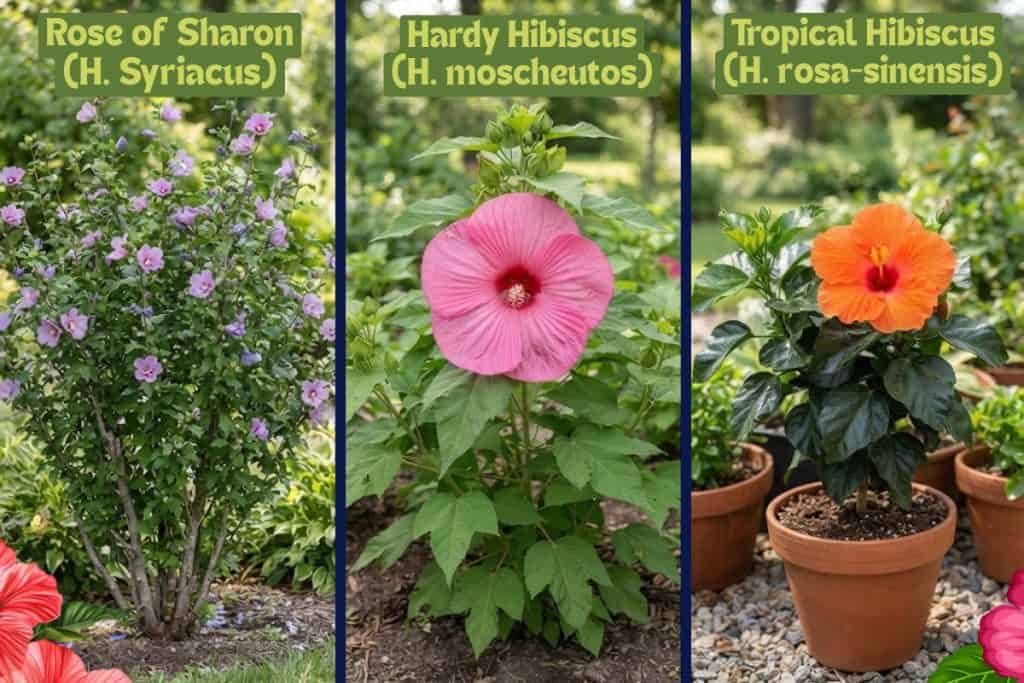
Below, learn how to tell the different types of hibiscus plants apart.
Rose of Sharon (Hibiscus syriacus)
- Woody shrub
- Bare branches in winter
- Small flowers
- Blooms on new growth
- Grows in Zones 5-9
Expert Tip: If you choose a Rose of Sharon plant, check the tag for a sterile variety or low-seed cultivar. Older varieties are notorious for seeding themselves all over the yard, though newer selections like Aphrodite, Diana, and Helene are sterile.
Hardy Hibiscus (Hibiscus moscheutos)
- A perennial plant
- Dies to the ground in winter but returns in spring
- Very fast-growing
- Huge dinner-plate-sized flowers
- Prefers moist soil; tolerates swampy soil
- Grows in Zones 4-9
Tropical Hibiscus (Hibiscus rosa-sinensis)
- A seasonal tropical plant
- Glossy evergreen leaves
- Cannot tolerate frost; needs temperatures above 50 degrees Fahrenheit
- Usually grown in containers
- Grows in Zones 9-11
How to Care for Cold-Hardy Hibiscus
Rose of Sharon and hardy hibiscus have a lot in common: Both are cold-hardy, both live outdoors in the ground year-round, and both save their big show for mid-to-late summer.
As a result, most of their care overlaps, too. The following information through the insects and diseases section applies to both Rose of Sharon and hardy hibiscus.
Tropical hibiscus is different, and it has its own section further down.
Exact plant type matters for other flowers, too, and you can learn more in our tulip care guide here.
Placement & Planting
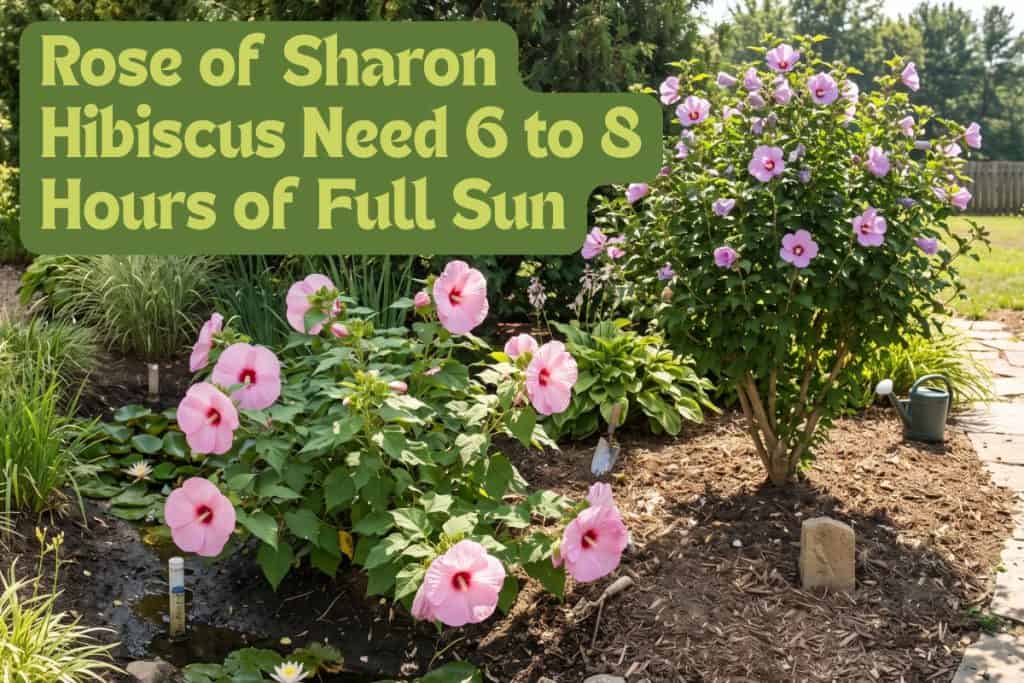
Sunlight is the first detail to get right, because hibiscus plants need a lot of energy to produce flowers. A hibiscus builds its blooms from sugars it makes through photosynthesis, so light feeds flower production.
When placed or planted in shade, both Rose of Sharon and hardy hibiscus make enough energy to grow leaves, but not enough for heavy flowering. Hardy hibiscus is the more sun-reliant of the two. Producing those giant flowers and tall stems in one season requires significant energy.
Plan for the eventual size, since these plants fill out fast. The small plant you set out in spring is nowhere near the size you’ll have come fall.
Rose of Sharon flowers best in climates where winters are cold for at least a couple of months. In Zones 8 and 9, it doesn’t get as big and blooms less.
Where to Place Hibiscus for the Best Flowers
- Rose of Sharon: This type needs at least 6 hours of direct sun. Full sun creates the fullest, best-flowering shrub.
- Hardy Hibiscus: This type needs 6 to 8 hours of full sun to build the sturdy stems its heavy flowers need.
- In Hot Climates: Both types can work with a little afternoon shade, but all-day shade trades flowers for foliage.
- Wet Spots: These can be perfect for hardy hibiscus, specifically the kind sold as swamp rose mallow. It’s a wetland native that grows in marshes, ditches, and along pond edges. Rose of Sharon, on the other hand, needs good drainage.
- Spacing: Leave room for mature width. That’s about 6 to 10 feet for Rose of Sharon and 3 to 6 feet for hardy hibiscus.
Soil Requirements
Soil is where Rose of Sharon and hardy hibiscus differ. Each type’s roots are built for different conditions.
Rose of Sharon grows well in sand, loam, or heavy clay, and it tolerates a wide pH range. This includes alkaline soils that hold back many shrubs. The one must-have is good drainage.
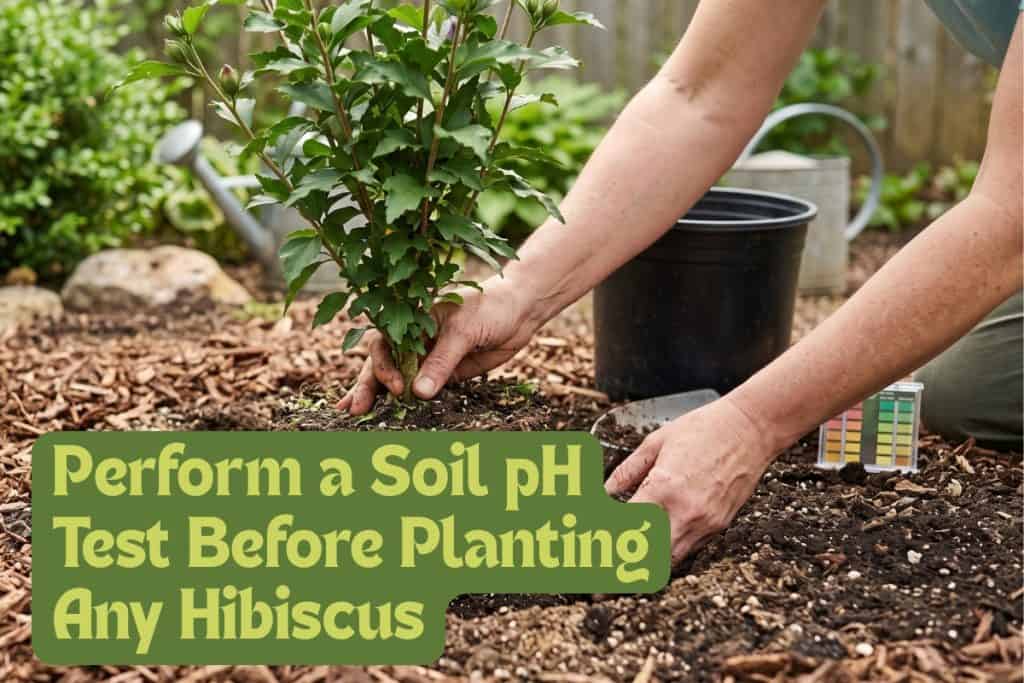
Hardy hibiscus wants rich, moisture-holding ground, such as loam, silt, or sandy soil loaded with organic matter. It prefers slightly acidic to neutral soil pH, somewhere in the range of 5 to 8. Add fertilizer, and it’ll grow fast and cover itself with flowers. Plant it in poor, dry soil, and it’ll stall.
Expert Tip: A cheap pH test kit will give you a fairly good reading before you plant. It’s worth doing for hardy hibiscus, which is the pickier of the two types. You can then add lime to raise the pH or sulfur to lower it, following the label rates.
How to Plant Hibiscus
- Rose of Sharon: Dig a hole twice as wide as the root ball (and no deeper) in a spot you know drains well.
- Hardy Hibiscus: Work a generous amount of compost or leaf mold into the area first, since it benefits from organic matter.
- Either Plant: Set it at the depth it grew in its original pot, backfill with the loosened soil, and firm it gently.
- Either Plant: Plant in spring or early fall while the weather is mild. Water in well, then mulch 2 to 3 inches deep, keeping a couple of inches back from the stems.
Watering Guidelines
Once your hibiscus plant is established, it’s important to know that Rose of Sharon and hardy hibiscus prefer different watering approaches.
The most important period is the first season or two after planting, before the roots have spread and gone deep. After that, Rose of Sharon becomes drought-tolerant and takes heat and humidity in stride, while hardy hibiscus shows dry, brown leaf edges when it goes too long without water.
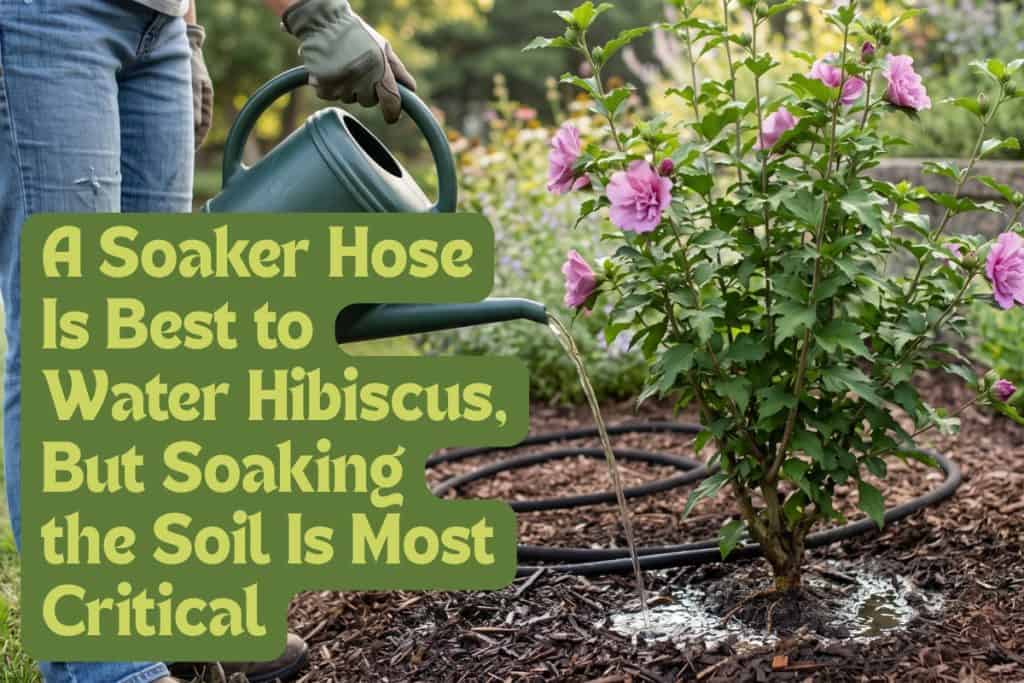
Ideally, you’ll want to water hibiscus with soaker hoses or other non-overhead methods. But if you use a hose, how you water matters as much as when.
Aim to cover the soil around the plant. A long, deep soaking draws roots down to cooler, steadier moisture while a quick daily sprinkle keeps them shallow. Shallow-rooted plants are the ones that struggle when drought comes.
Watering Hibiscus Through the Seasons
- Established Rose of Sharon: Water only during long, hot dry spells. Let rainfall take care of the rest.
- Established Hardy Hibiscus: Keep the soil evenly moist. A potted plant may need water daily.
- Any Hibiscus: Water at the base, not over the leaves, to avoid disease.
Pruning and Pinching
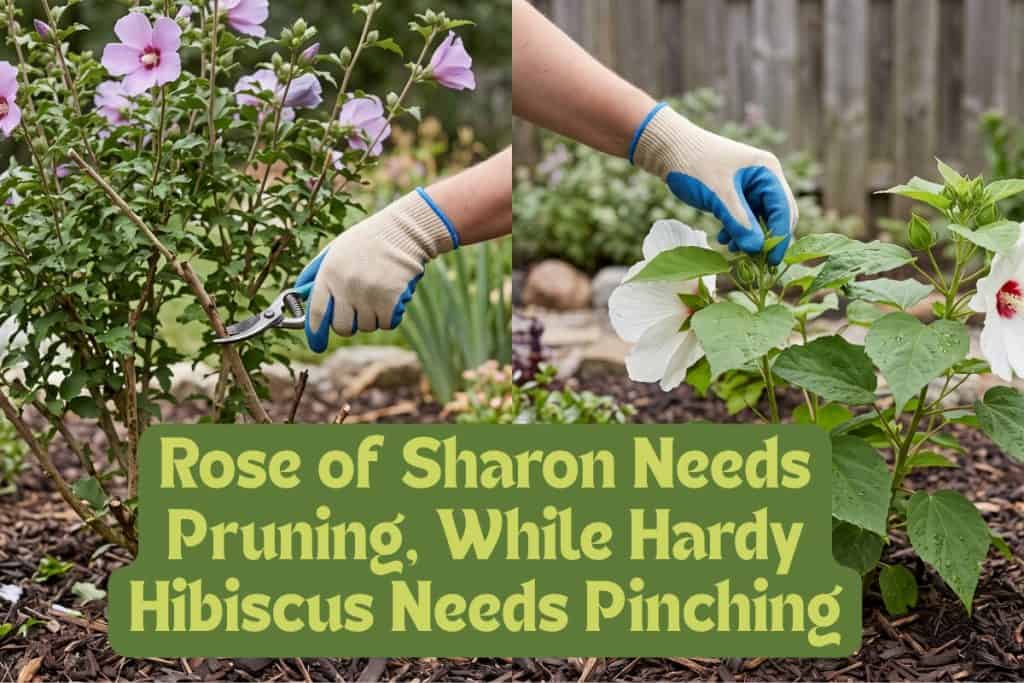
Rose of Sharon is a woody shrub with a permanent framework, so you’ll prune this plant for the same reason you’d prune any flowering shrub: to shape it, maintain its size, and encourage new growth.
Hardy hibiscus has no permanent framework to shape. Instead, it dies to the ground every winter and regrows from the crown. Just pinch the soft new growth in spring to build a fuller, more flower-covered plant, then cut the dead stems down after frost.
Pruning Rose of Sharon
Because this type of hibiscus flowers on new growth produced the same year, late-winter pruning carries no risk and does two jobs: It encourages branching and new growth that carries summer’s blooms.
You can also train it into a small single-trunk tree by keeping one to three main stems, removing the lower branches, and trimming the top so it fills into a ball.
Follow these steps to prune Rose of Sharon:
- Clear out dead, broken, crossing, and weak branches first.
- Cut the whole shrub back by up to a third each year to hold its size.
- Make each cut just outside the collar where a branch meets a bigger limb.
- Prune young plants harder than older ones; this thickens the lower stems into a fuller shape.
- Prune in late winter or early spring when you see buds swelling, but before new growth begins.
Pinching Hardy Hibiscus
For a perennial, pinching is the closest thing to pruning you’ll ever do. More stems mean more flowers, since a single tall shoot blooms mostly at its tip. If you pinch that shoot while the plant is young, it branches.
Every new branch becomes another place for buds. Cut one branch, and it doubles; two branches will become four, and so on.
That’s how you turn a skinny first-year plant into a full, flower-loaded one. Once the hardy hibiscus is full, you can stop pinching. The only other cut you’ll need to make is pure cleanup after frost takes the top down.
How to Pinch and Cut Back Hardy Hibiscus
- In spring, pinch the new terminal growing tip off a young stem, cutting just above a leaf node, to make it branch.
- Let it recover, then pinch the new shoots again if you want it bushier.
- Stop pinching by about mid-June so it still blooms.
- On a very young plant, pinch off the first flower buds to push energy into branch growth. Stop any debudding by mid-July.
- After fall frost blackens the top, or in late winter, cut the dead stems down, leaving about 6 to 9 inches standing. These stems can help hold leaves or other winter mulch in place.
Fertilizing and Blooms
Neither Rose of Sharon nor hardy hibiscus is a heavy feeder, and over-fertilizing these plants usually backfires. Too much nitrogen produces lush leaves rather than flowers.
For a hardy hibiscus covered in large blooms, it’s best to use two different formulas of fertilizer. The ratios depend on your priorities.
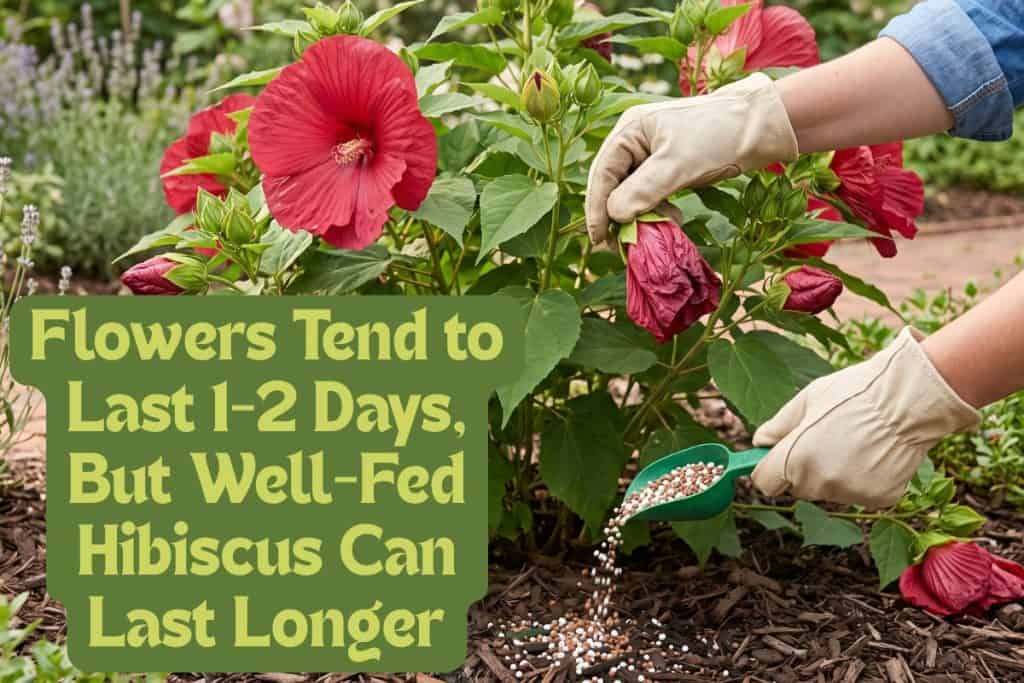
When to Fertilize Based on Priority
- Spring: If you want to grow leaves and stems.
- Summer: If you want to support flowers.
- Late Season: If you want to prepare roots for winter.
When I managed commercial propagation of Rose of Sharon, we would feed sections of container-grown plants with high-nitrogen fertilizer so they would put on big flushes of foliage rather than flower. We took soft cuttings from those plants, then eventually changed the fertilizer to let them bloom, and shipped them out in the early fall.
A Simple Hibiscus Feeding Plan
- Rose of Sharon: Apply one dose of slow-release, 3-month balanced granular fertilizer in spring.
- Hardy Hibiscus, Spring: Start with a balanced time-release fertilizer, like a 10-10-10, while it’s leafing out.
- Hardy Hibiscus, After Buds Form: Switch to a higher-phosphorus formula, like 5-10-10, to fuel flowering.
- Hardy Hibiscus, Late Summer: Keep the phosphorus and potassium up and the nitrogen down (0-10-10), which helps the plant store energy in its roots instead of growing soft shoots that frost will kill.
How Long Do Hibiscus Flowers Last?
A single hibiscus flower is short-lived, often open for just a day or two before it folds up and drops.
However, a healthy plant keeps opening fresh flowers for weeks. A big, well-fed hardy hibiscus can stay in bloom for a couple of months.
Pinching off the spent flowers keeps things tidy and, on hardy hibiscus, nudges the plant toward creating more blooms rather than seed pods. The spent flowers also detract from the look of the plant, so plan to remove them regularly.
Different flowering plants have blooms that appear for different lengths of time. Learn about chrysanthemum flowers in our mum care guide here.
Winter Care
Rose of Sharon and hardy hibiscus also differ when it comes to winter care.
Rose of Sharon goes dormant, drops its leaves, and stands bare until spring. Hardy hibiscus leaves yellow as cold temperatures start, then collapse after the first hard freeze. Underground, everything stays alive, so the purpose of winter care is to protect that crown.
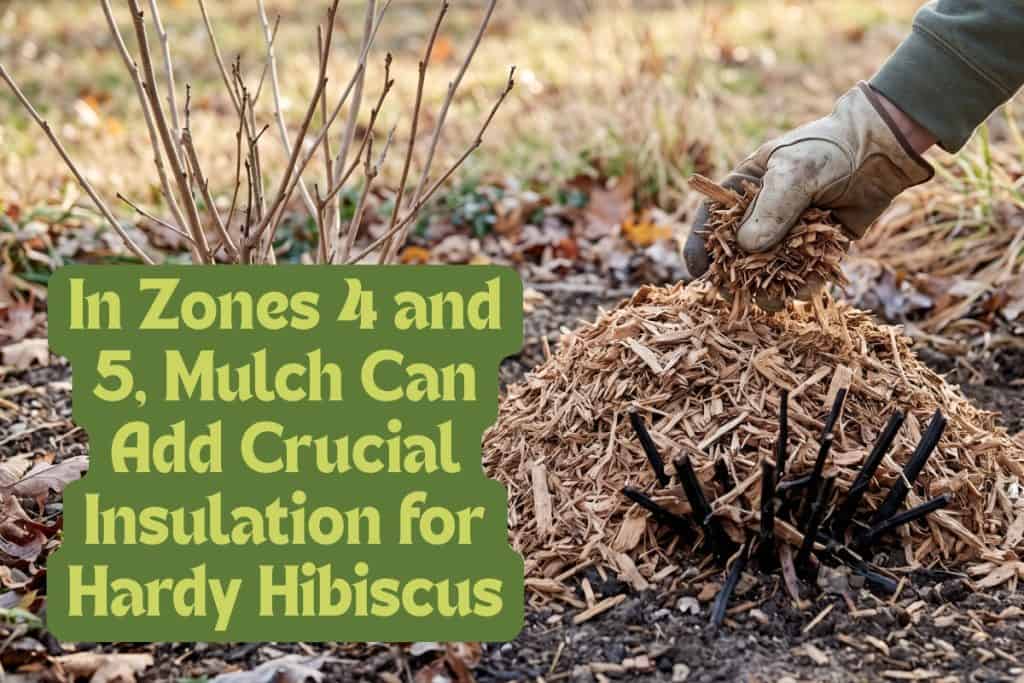
Overwintering Rose of Sharon
This hibiscus type handles winter on its own. The bare branches are alive and will leaf out when they’re ready, which tends to be later than most of the surrounding shrubs.
- Leave the woody stems standing as a permanent structure.
- Skip winter protection when it’s growing inside its hardiness range.
- Give it time to leaf out in spring. It can look bare into April or May.
Overwintering Hardy Hibiscus
As fall cold sets in, a hardy hibiscus draws sugars and nutrients from its leaves and stems down into the crown and roots. The first hard freeze ruptures the cells of the top growth, and the stems blacken and collapse. As a result, everything above ground dies, but the crown and roots stay alive and dormant under the insulating soil.
In Zone 6 and warmer, established plants usually come through winter fine with no mulch at all.
- In Zones 4 and 5, mound 4 to 8 inches of shredded leaves or bark over the crown once the ground cools.
- Pull that mulch back off the crown in early spring so new shoots aren’t smothered.
- Don’t expect to see stems until late spring (sometimes not until June).
- Don’t plant anything on top of or close to the crown while it’s dormant.
Pest and Disease Control
Both Rose of Sharon and hardy hibiscus are tough and mostly carefree when it comes to insects and diseases. However, you should check the undersides of the leaves and the new growth every week or so.
If problems do appear, start with gentle methods. Try hand-picking, blasting pests with water, or using insecticidal soap before resorting to anything stronger. This spares any ladybugs or parasitic wasps that may be helping you. Never spray an open flower, either; you’ll kill the bees and butterflies working it.
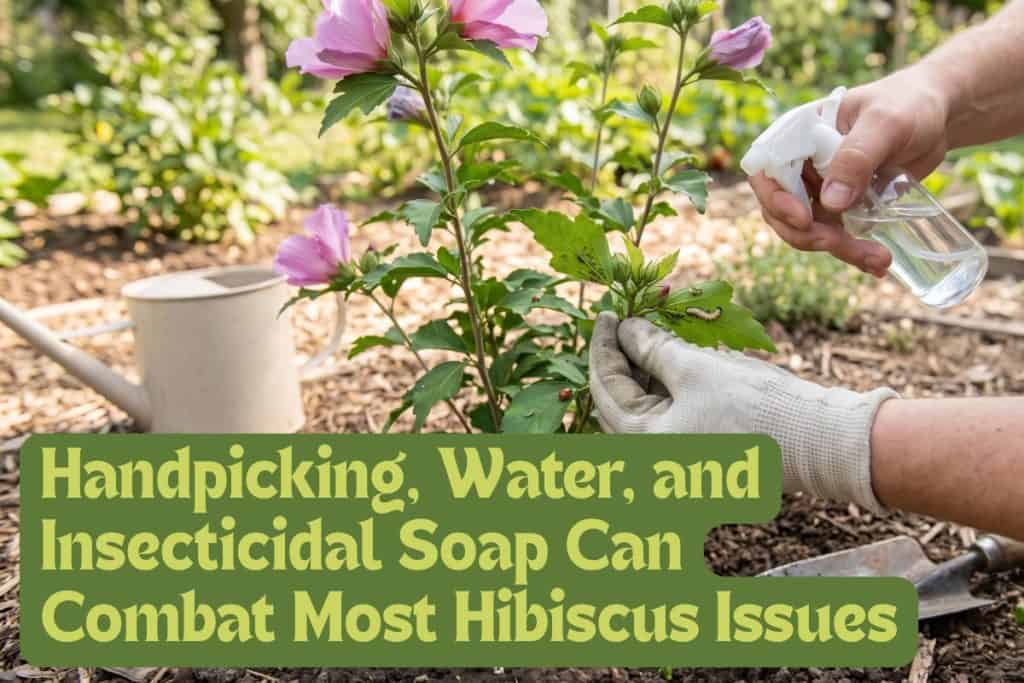
Common Hibiscus Insect Issues
- Hibiscus Sawfly: This is the main pest of hardy hibiscus, but it mostly leaves Rose of Sharon alone. The pale, black-headed larvae eat the leaves down to a skeleton. Hand-pick them or spray with water, horticultural oil, or Spinosad for a heavier hit.
- Japanese Beetles: These metallic-green, half-inch beetles chew leaves and flowers from mid-June into August. Pick them off and skip the pheromone traps, which pull in more beetles than they catch.
- Aphids: These are soft-bodied insects with a little tailpipe on their backside that usually appear on new growth. A hard jet of water knocks them off. Use horticultural oil for a continued problem.
Hibiscus Diseases
Nearly every hibiscus fungal problem comes down to moisture and airflow. Water the soil rather than the leaves, give the plant room to breathe, and rake up fallen leaves in fall so rain can’t splash spores back onto the plant.
That routine heads off most of what follows. Using mulch will also reduce splashing up on foliage.
3 Potential Problems to Watch For
- Powdery Mildew: A grayish-white dust on the leaves of both plants in humid, shady, crowded spots. Open the plant up, keep it in the sun, and it usually fades once hot, dry summer weather sets in.
- Rust: Yellow-orange spots on hardy hibiscus leaves that worsen in warm, wet-leaf weather. Pull off affected leaves, water at the soil line, and cut the plant down and clear it away in fall.
- Leaf Spots: Circular spots caused by a few common fungi. They’re usually more of an eyesore than a threat. Remove the affected leaves and debris.
Keeping pests away is key for other flowering plants, too, like you’ll learn in our guide to growing begonias here.
Managing Tropical Varieties
Tropical hibiscus is the dark, glossy-leaved species with brilliant flowers that you see on summer patios; it originates in places that never freeze (a hard frost kills it outright).
Unless you live in zone 9 or warmer, tropical hibiscus should be grown in a pot and moved inside for winter, which makes its care more similar to that of a houseplant than the two shrubs discussed above.
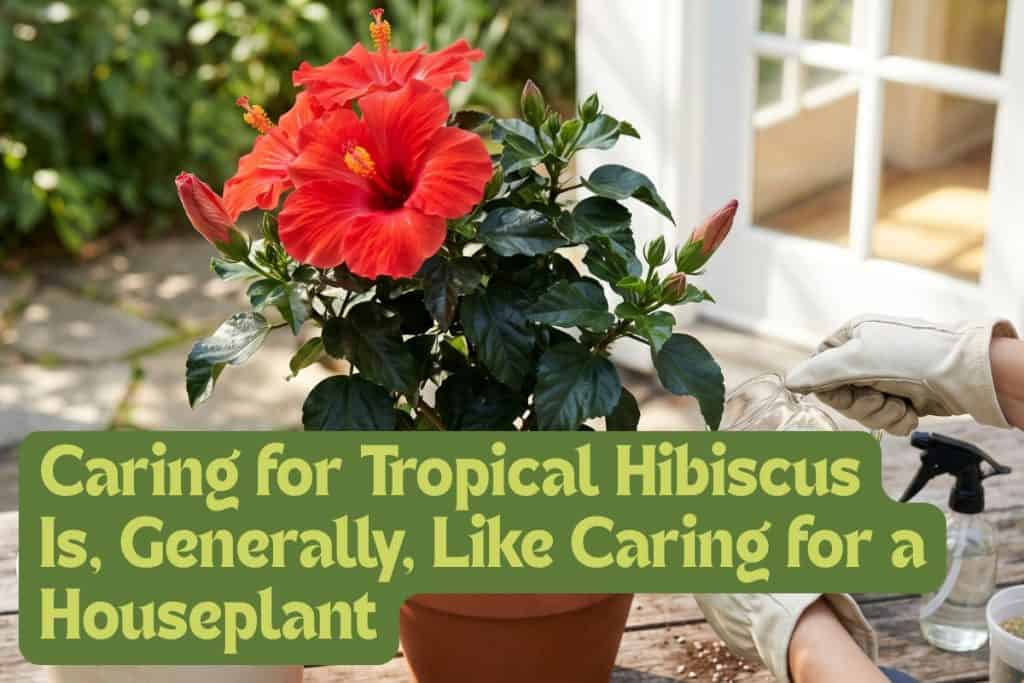
What Tropical Hibiscus Needs
- Provide full sun outdoors in summer and the brightest window you have indoors.
- Keep the potting mix evenly moist, never bone-dry.
- Feed through spring and summer with a low-phosphorus fertilizer such as 12-4-8 or 7-1-2. The high-phosphorus bloom boosters sold for other flowers cause yellowing here.
- Pot it in a container with drainage holes, in a soil mix that holds moisture but still drains (about 2 or 3 parts potting soil to 1 part perlite).
- In a heat wave, set the dark nursery pot inside a larger, light-colored one so the roots don’t bake.
- Repot only when the roots fill the pot, moving up just one size; a much larger container invites rot.
- Shape it in early spring, cutting it back by about a third to keep it full.
- Handling makes buds drop, so once they appear, stop moving or rotating the pot. A change in light or a jostle is enough to shed them.
- Bring it inside before night temperatures fall into the low 50s. Keep it in bright light, and water less while it rests; some leaves may drop as it adjusts.
- Check the undersides of the leaves for whitefly, aphids, mealybugs, and spider mites, and treat with insecticidal soap or horticultural oil. Never use malathion on hibiscus.
Propagating All Types of Hibiscus
Making new hibiscus plants is easy, and there’s a good reason to do it from cuttings rather than seed. Seedlings don’t come true to the parent, so a cutting is the only way to copy a plant whose exact color or flower form you like.
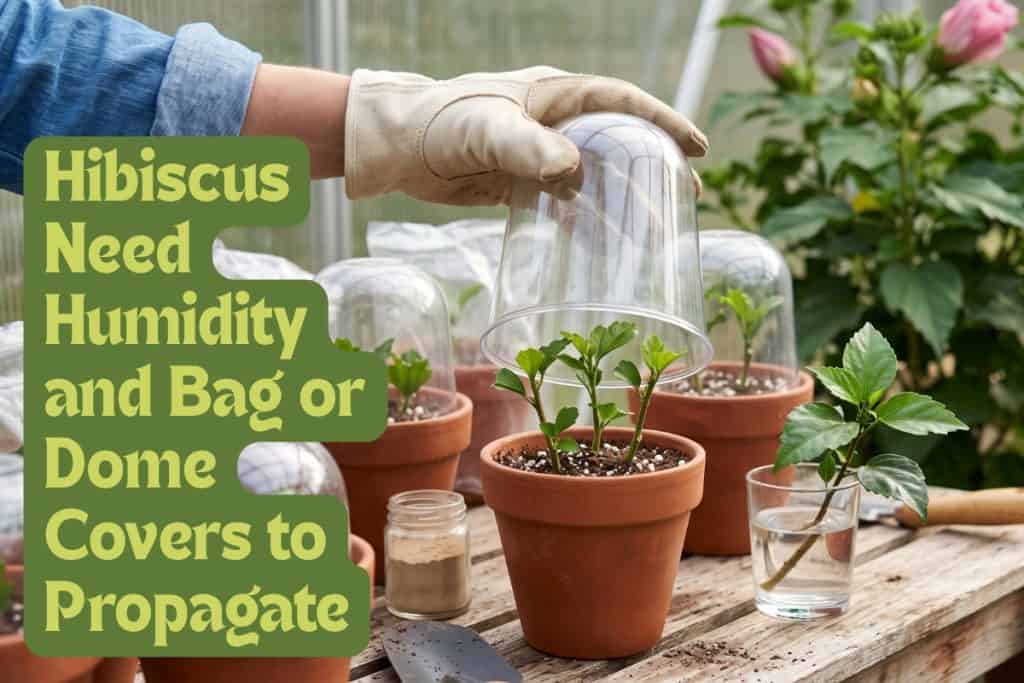
You’ll need to keep humidity high and the leaves from wilting, so cover a fresh cutting with a clear plastic bag or dome and vent it if condensation starts to build up.
Propagation by Hibiscus Type
- Rose of Sharon: In summer, take a soft green cutting with about four leaf nodes, strip the lower leaves, dip the cut end in rooting hormone (optional), and keep it warm and humid until roots form. You should have several roots within a month. Plant 2 to 4 rooted cuttings together in a pot for a fuller plant.
- Hardy Hibiscus: Grow from cuttings, or dig and divide an established crown in spring. It comes fairly true from seed, though seedlings can still vary.
- Tropical Hibiscus: Cut a 4- to 6-inch piece just below a node, root it in a moist, well-draining mix or a glass of water, and be patient. Rooting can take 2 to 3 months.
You can propagate non-flowering plants, too, and learn the steps in our rubber tree care guide here.
Final Advice
Once you know which type of hibiscus you have, caring for it becomes much easier. Watering, feeding, pruning, and winter care all fall into place.
When it comes to those impressive blooms, there are some beautiful new Rose of Sharon colors now, in both singles and doubles, with the added bonus that they won’t spread seedlings all over your garden bed and lawn. Hardy hibiscus also has singles and doubles and even bicolors that will be the biggest flowers you’ll ever grow. Dinner-plate size isn’t an exaggeration.
Just be patient in spring while you wait for your Rose of Sharon to put on leaves or your hardy hibiscus to break ground. More hibiscus are dug up alive than die over winter, mostly because a bare stem or an empty patch of soil looks like a lost cause. Don’t panic; just give it another few weeks. It’s probably just late to bloom.