
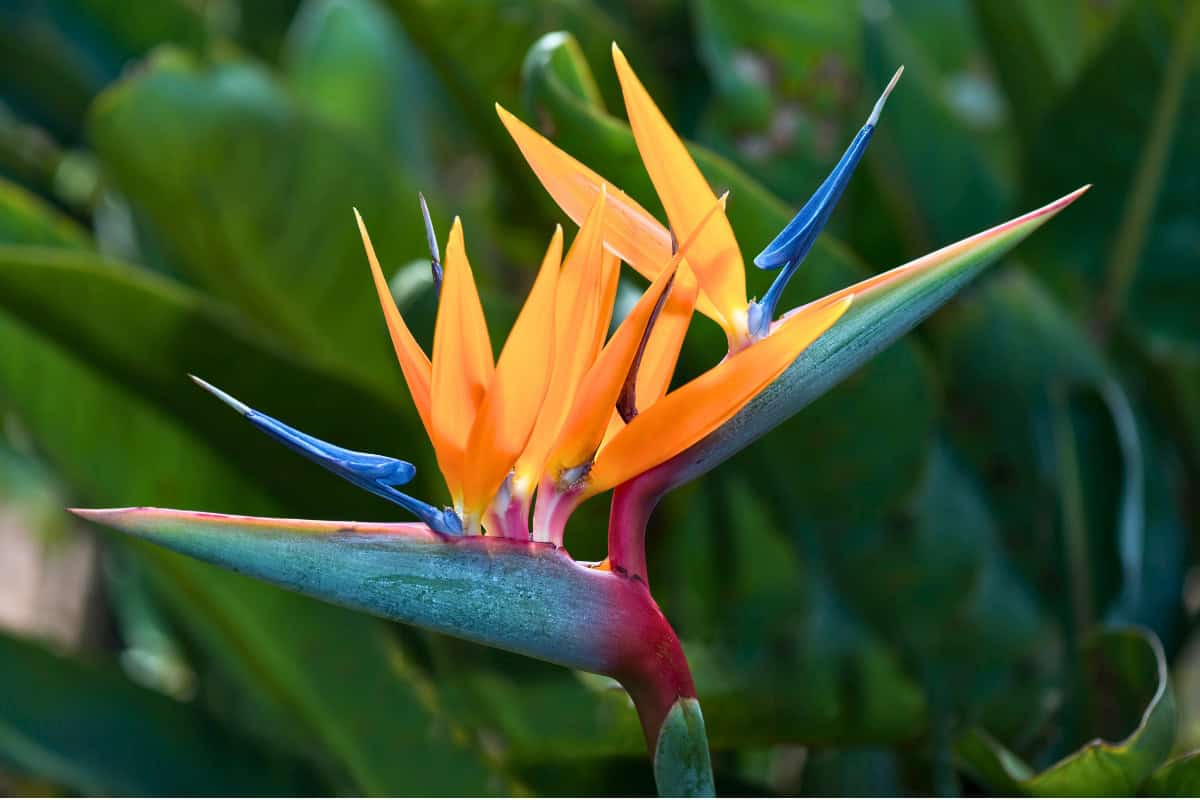
The bird of paradise plant is iconic, thanks to its famous orange flowers that resemble a tropical bird in flight (or, depending on your perspective, blooms that look like a bird’s head and beak).
The most important thing to know is that sometimes the big leafy plant with the Bird of Paradise label people bring home from the store will almost never bloom indoors.
There are two main types of bird of paradise plants: one blooms indoors, but the other doesn’t. In this guide, you’ll learn:
- How to tell in 15 seconds which bird of paradise you own.
- Ways you can stress a mature plant to encourage blooming.
- Why trimming off a split leaf can set your plant back.
Once you know what you have, the rest will fall into place.
Identification & Varieties
Starting with plant identification can save you months of frustration later.
At least three different plants can be sold under the bird of paradise name, and the tag in the pot is often wrong.
There are five species in the genus Strelitzia, but only two are commonly sold in nurseries and big-box stores. One is grown for its flowers; the other is grown for its large leaves. These plants grow to very different sizes and have other differences. And a third plant with the same nickname isn’t a Strelitzia at all.
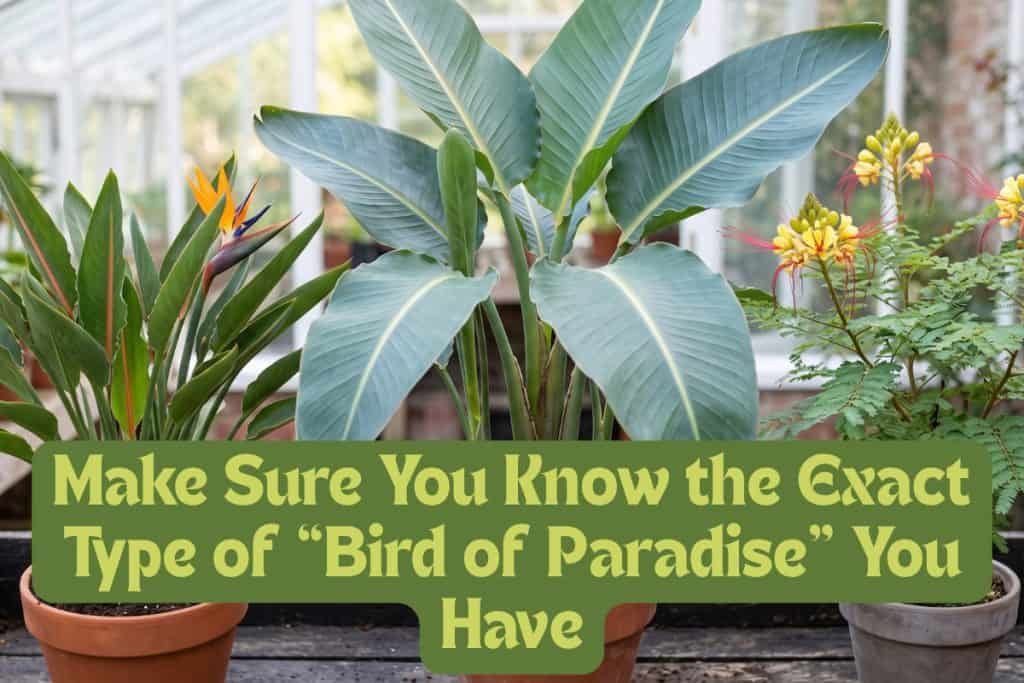
The good news: You don’t need the tag. You can tell different bird of paradise plants (and others) apart by looking at the plant itself.
3 Ways to Identify Strelitzia reginae vs. Strelitzia nicolai
- Check the midrib first; it’s the most reliable clue.
- Indoor bloomers (S. reginae) will have a reddish stripe down the leaf midrib, a low, fan-shaped clump, and stiffer leaves. Flowers are often bird-like.
- Giant white (S. nicolai) plants will have a pale or yellow midrib on their leaves, tall woody stems, and big, wide bluish leaves.
Other Plant-Specific Differences
The leaves of any potential bird of paradise will tell you which plant you have. Look for:
- Size: The orange flowering type will stay in a 3- to 5-foot clump. The giant white variety reaches 6 to 8 feet indoors and gets much taller outside.
- Cold: The giant white can take more cold, but the flowering type loses its flower buds in a chill.
- Roots: The giant white’s roots are strong enough to break pots and nearby paths outdoors.
- Flowers: The Strelitzia reginae bloom is the iconic showy orange-and-blue bird. The giant white’s flower is larger but pale (and far less striking).
The Desert Lookalike
There’s a third plant people often call bird of paradise: The shrub bird of paradise (Erythrostemon gilliesii).
This is not a Strelitzia plant at all. It’s a lacy, fern-leaved shrub with yellow flowers and red stamens, and it’s common in the Southwest. If your plant looks like a shrub covered in feathery leaves, it isn’t a true bird of paradise.
Is Bird of Paradise an Indoor or Outdoor Plant?
If you live in Southern California or Florida, you will see both types of bird of paradise planted as ornamental outdoor plants. However, they can also be grown indoors.
The advice in this guide is for the rest of us who grow it inside.
Other plants can have confusing and similar varieties, too, like the types explained in our Christmas cacti guide here.
Lighting Requirements
Birds of paradise are bright-light plants. The flowering type needs strong light to have a shot at creating buds.
The giant white variety will survive in less light thanks to its large leaves, but it will have thinner, floppy leaves in dim conditions.
3 Signs Your Plant Needs More Light
- Little or no new growth over a long period.
- New leaves are smaller than the previous leaves.
- Long, weak-looking leaf stalks lean toward a light source.
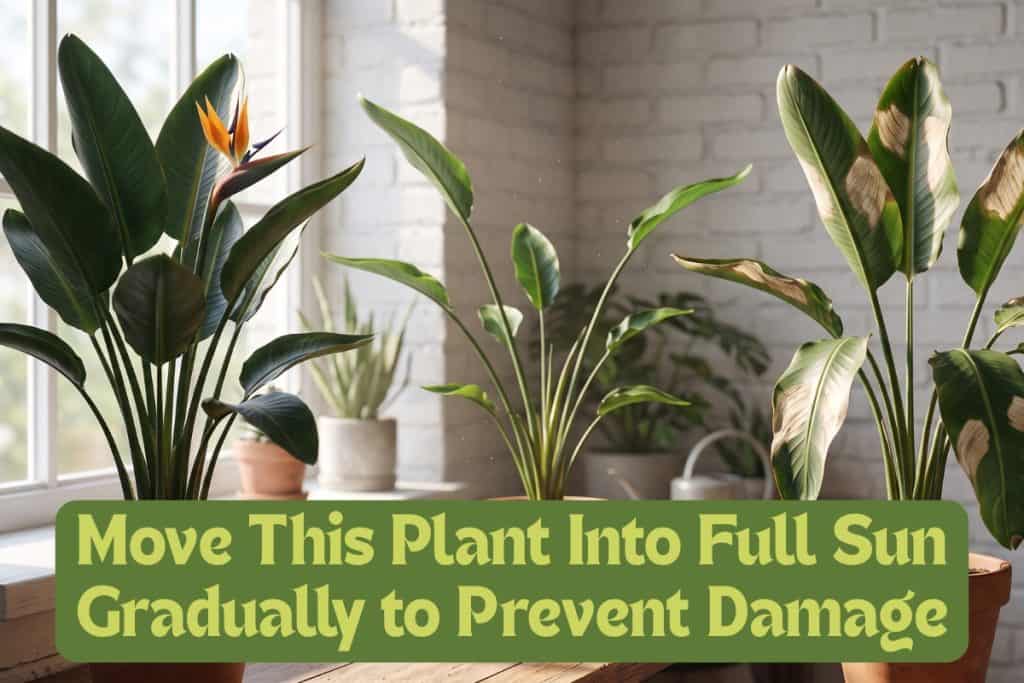
When you need to move your plant into different lighting, make the adjustment gradually. The biggest risk is moving a plant straight from a dim corner into hot afternoon sun.
Move your bird of paradise too quickly, and the leaves will sunburn because they haven’t had a chance to adjust and toughen up. Sunburn will show up as pale or brown patches on the side facing the window.
How to Provide the Right Light for Bird of Paradise
- Put it next to your brightest window.
- Ease the plant into direct sun over 1 to 2 weeks.
- Rotate the pot a quarter turn each week for even growth.
- Add a grow light for 8 to 10 hours a day in winter if natural light is low (or 12-plus hours for flowering).
- Move the plant outdoors during the warm months in a protected area.
Temperature & Humidity
Bird of paradise plants like the same temperature and humidity that’s in most homes: between 65 and 80 degrees and 50 to 70 percent humidity.
What these plants don’t like is a draft. Placing your bird of paradise beside a heating or air-conditioning vent will dry out the leaves and cause swings in soil moisture levels. Instead, put this plant in the most stable area possible.
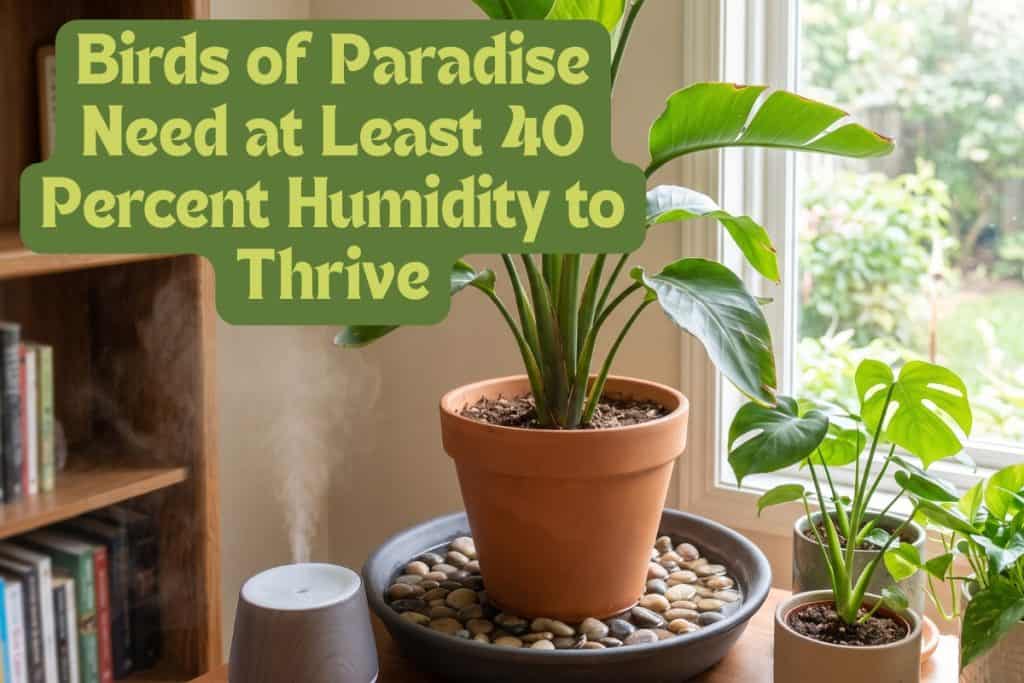
As the plant grows, its leaves will naturally split. Dry indoor air makes this worse. Humidity that falls below 40 percent will also impact the leaves and turn the edges and tips brown.
If your home’s air runs dry, consider running a humidifier close to your plant. Grouping indoor plants together or placing your plant on a pebble tray with water below the rocks will also help raise humidity. Misting helps, but it doesn’t last long enough to make a difference.
Learn how to achieve the right humidity for other indoor plants in our guide to growing orchids.
Watering Guide
More bird of paradise plants die from overwatering than from under-watering.
When soil stays soggy, the pockets that should hold air fill up with water, and the roots can’t breathe. Roots that can’t breathe start to rot quickly, and by the time the leaves show damage, rot has taken hold.
Let the plant tell you when to water. A plant sitting in bright light in July will need more water than the same plant in cloudy, cool January. Even a week of rain can change your plant’s needs.
Be wary of too-dry soil, too. When soil dries out, a bird of paradise plant shrinks and pulls away from the sides of the pot. Water runs down that crack and straight out the bottom. This leaves the root ball almost dry, even though the plant looks watered.
Water Correctly in 5 Steps
- Check the soil and water only when it’s dry about 2 inches under the surface.
- Press the soil back against the pot wall before watering to close any open spaces.
- Pour slowly and evenly, covering the surface until water runs from the drainage holes.
- Empty the saucer after 15 minutes.
- Cut back frequency in winter, when the plant uses less water.
Use a Moisture Meter in Big Pots
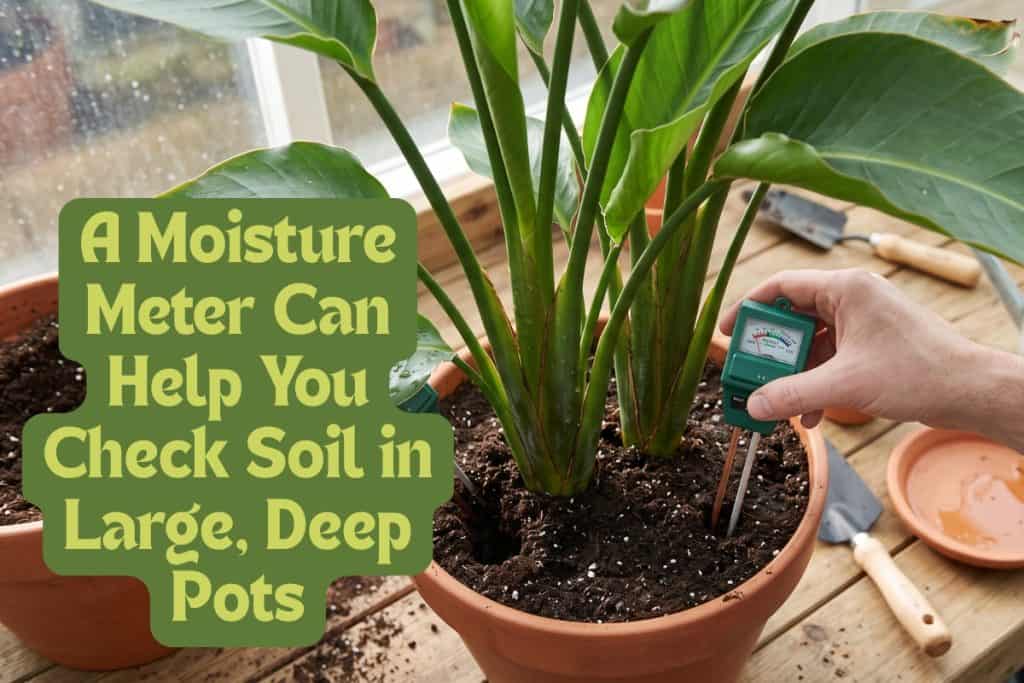
For birds of paradise, the roots that matter most sit low, especially inside big, tall pots. This makes it difficult to check them.
A cheap soil moisture meter makes your job easier. Push it deep into the mix in a couple of spots, and you’ll know what’s actually happening in the lower root zone.
After you water, that same moisture meter should read wet down deep.
Soil & Pot Mix
Birds of paradise want access to moisture and air, but that doesn’t mean they need heavy, wet soil.
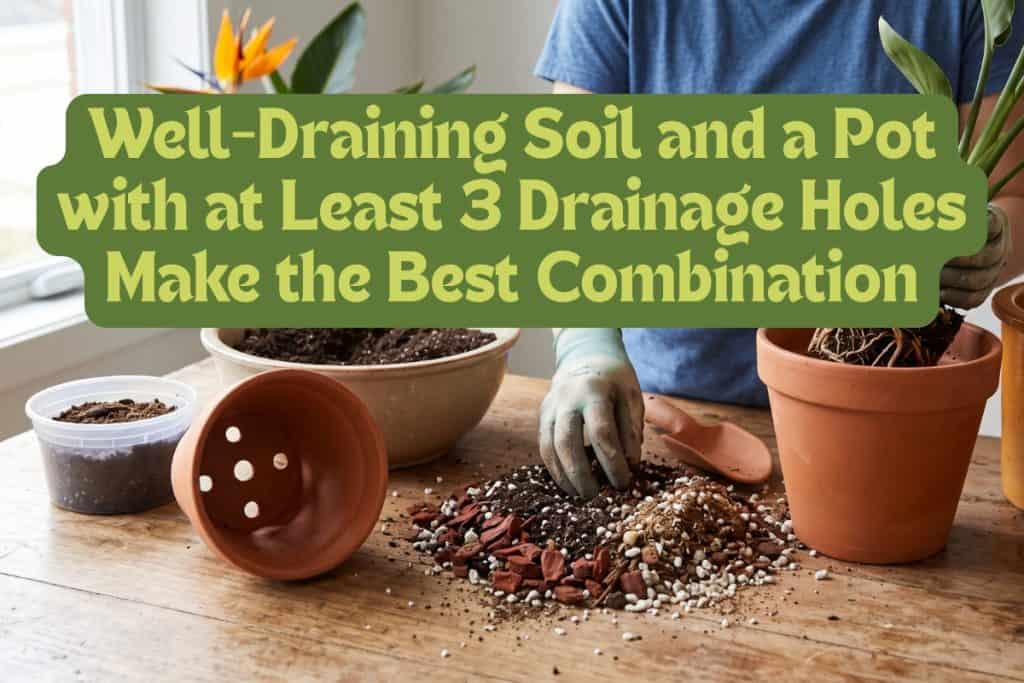
Dense potting soil holds water and prevents air in between waterings — and roots need air as much as they need water. So, it’s important to use well-draining soil.
The best soil mix for bird of paradise plants holds enough moisture and nutrients to keep the plant growing and drains fast enough so roots aren’t sitting in water.
Never use garden soil, which packs down and stays wet (and can introduce insect and disease issues).
The pot you plant it in matters, too. The giant white variety has roots strong enough to crack a plastic pot as it grows. This type needs a thick clay or ceramic pot. However, a flowering variety should be safe in any large pot.
Soil and Pot Selection
- Start with a quality palm potting mix as your base.
- Mix in orchid-type bark, coarse sand, or perlite for faster drainage.
- Add compost, bone-meal, or worm castings for natural slow-release nutrition.
- Use a pot with three or more drainage holes.
Fast-draining soil is also important for other plants, like you’ll learn in our hydrangeas guide here.
How To Repot
Bird of paradise is a fast-growing plant, and a healthy one fills its pot with roots in a couple of years.
Once this happens, water runs straight through the soil, and the plant dries out almost immediately. That’s a sign it’s time to move into a bigger pot.
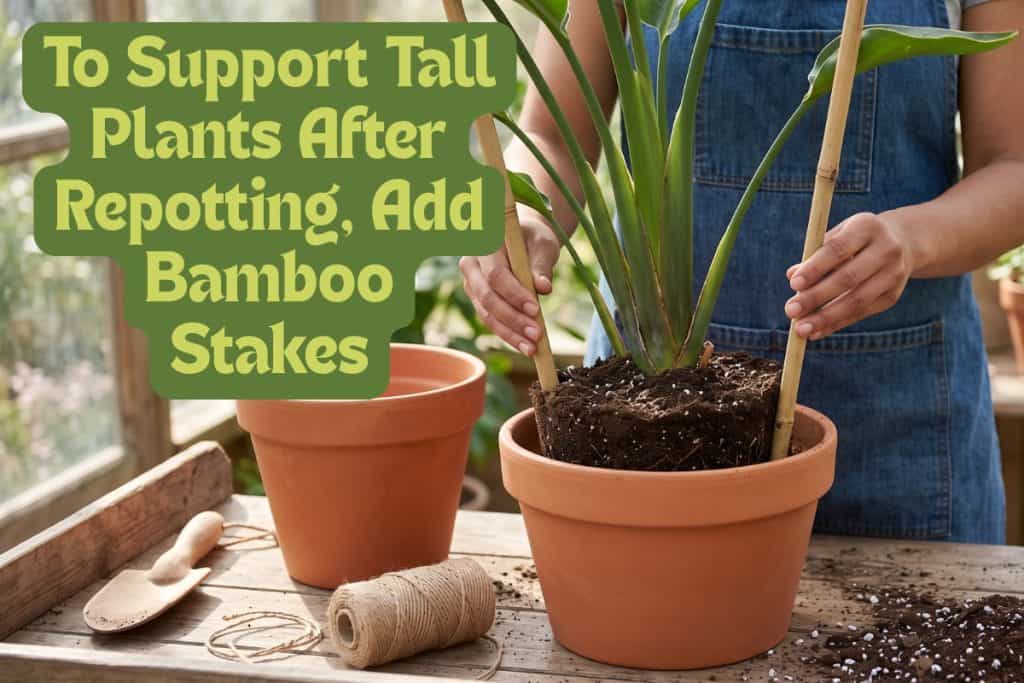
Resist the urge to jump immediately into a giant pot. All that extra soil around a small root ball will stay wet long after the plant uses what it needs. It’s also harder to keep tall birds of paradise from leaning.
There’s another upside to a snug pot: A slightly root-bound plant produces more flowers, so don’t rush to repot a mature plant if you’re hoping it’ll bloom.
5 Steps to Repot Birds of Paradise
- Repot about every 2 years.
- Repot sooner if roots grow out of the drainage holes.
- Move up just one pot size, choosing a pot that’s 2 to 4 inches wider.
- Settle the plant at the same crown depth as it grew before.
- Top off the soil if it settles low so the roots stay covered.
Expert Tip: If you want to use a large decorative pot, set a pot with good drainage inside the larger pot along with a saucer you can empty.
Add Stakes for Leaning Plants
A big bird of paradise can lean after repotting, especially if it was already leaning in its previous pot. This is because the fresh soil hasn’t settled yet, and the plant is top-heavy compared to the roots.
Use a bamboo stake or two to hold it upright while the roots take hold. Leave the supports in until the plant stands on its own, which can take several months.
Supports like stakes can benefit other tall plants, too, as you can read in our guide to pothos plants here.
Fertilization Schedule
Producing those big leaves and flowers requires a lot of energy, so bird of paradise plants feed heavily while growing.
But food, or fertilizer, can only help a plant that’s ready to use it. Fertilizer won’t rescue a plant that’s stuck in a dark corner or wet soil. Fix the light and the roots first, then feed during growing season.
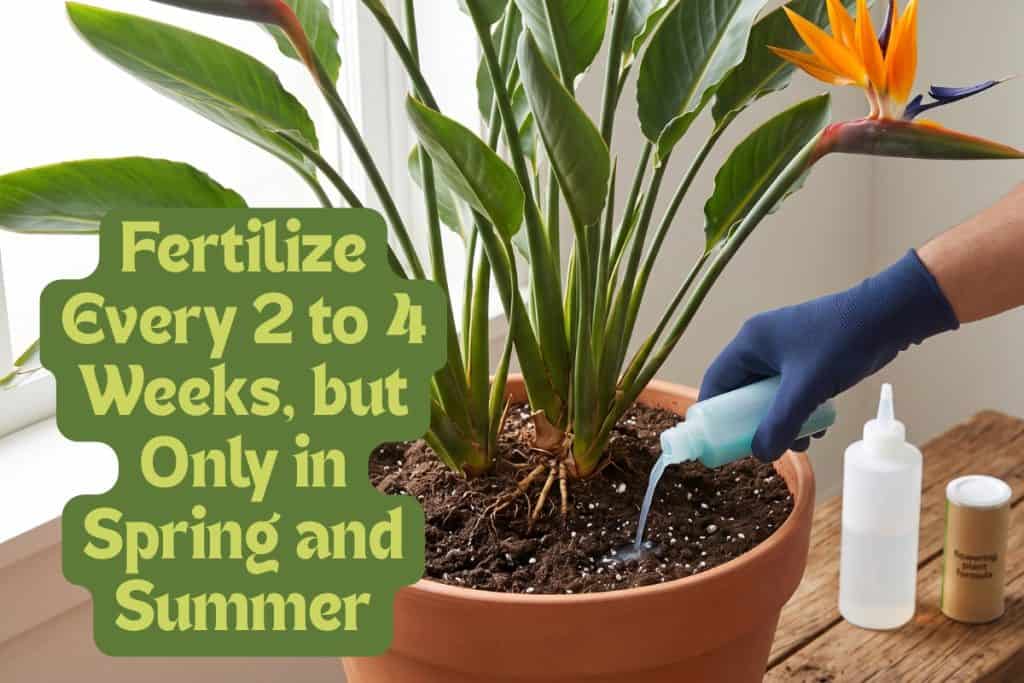
If you want flowers, just make sure to go easy on the nitrogen. Too much nitrogen will give you lush leaves but few, if any, blooms.
Additionally, fertilizer leaves salts in the soil over time, and that buildup can cause spotting and brown leaves that look like a disease. To flush these excess salts out, drench your soil heavily with water every couple of months.
6 Steps: Fertilize a Bird of Paradise
- Feed every 2 to 4 weeks in spring and summer, while the plant is actively growing.
- Use a liquid indoor plant formula to boost foliage.
- Choose a fertilizer for flowering plants to encourage blooms.
- Alternatively, use a controlled-release fertilizer that will run out in fall.
- Ease off fertilizer in the fall and stop altogether in winter.
- Cut back feeding about 6 weeks before moving a plant indoors for the season.
Pruning & Maintenance
When long splits down the leaves appear, don’t worry; they’re normal and even useful in nature.
These tears let wind pass through rather than shred the leaves entirely, which is a design feature of the bird of paradise, not a flaw.
A split leaf that’s still green is still providing energy to the plant, so pruning it for appearances will sacrifice energy production that could be used to grow more leaves.
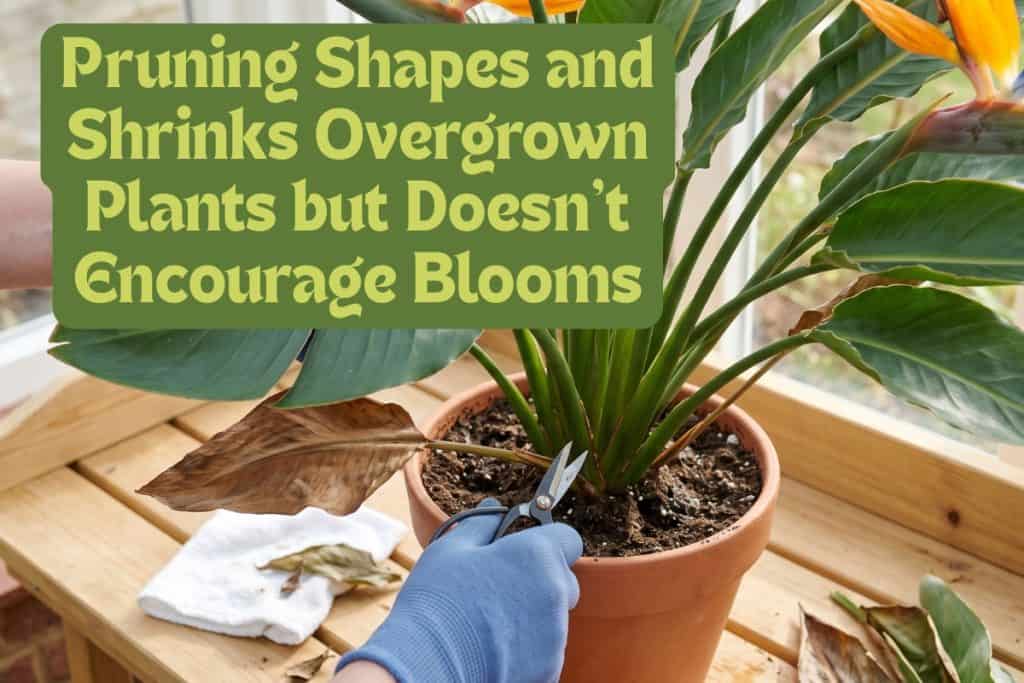
In general, pruning won’t stop new growth for birds of paradise. New leaves push up from the plant’s base, between the existing stems, no matter what you trim off. You can shape or shrink an overgrown plant without shutting down next season’s leaves.
The broad leaves that act as solar panels for the bird of paradise do have one grooming need: They collect dust, and a dusty leaf can’t use light as well. A quick wipe makes them more efficient at generating energy.
How to Trim and Clean Birds of Paradise
- Remove a leaf only when it’s turning brown or badly damaged.
- Cut close to the base with clean, sharp scissors.
- Wipe the leaves with a damp cloth every couple of weeks.
- Trim to shape or shrink an overgrown plant.
- Leave older stems; that’s where blooms will form.
- Older, dried-up flowers can be removed as newer flowers emerge.
Encouraging Blooms
The most common question about the bird of paradise is, “Why won’t it bloom?”
For Strelitzia reginae, the trick is usually adjusting to its needs: providing more light and warmer temperatures, leaving it pot-bound, and being patient.
Leaving the plant slightly pot-bound works because the growing tips of the roots make a hormone called cytokinin, which encourages new leaves. When the roots fill the pot, the tips run out of room, and cytokinin production drops off. This is a signal for the plant to stop putting energy into foliage and start focusing on flowers instead.
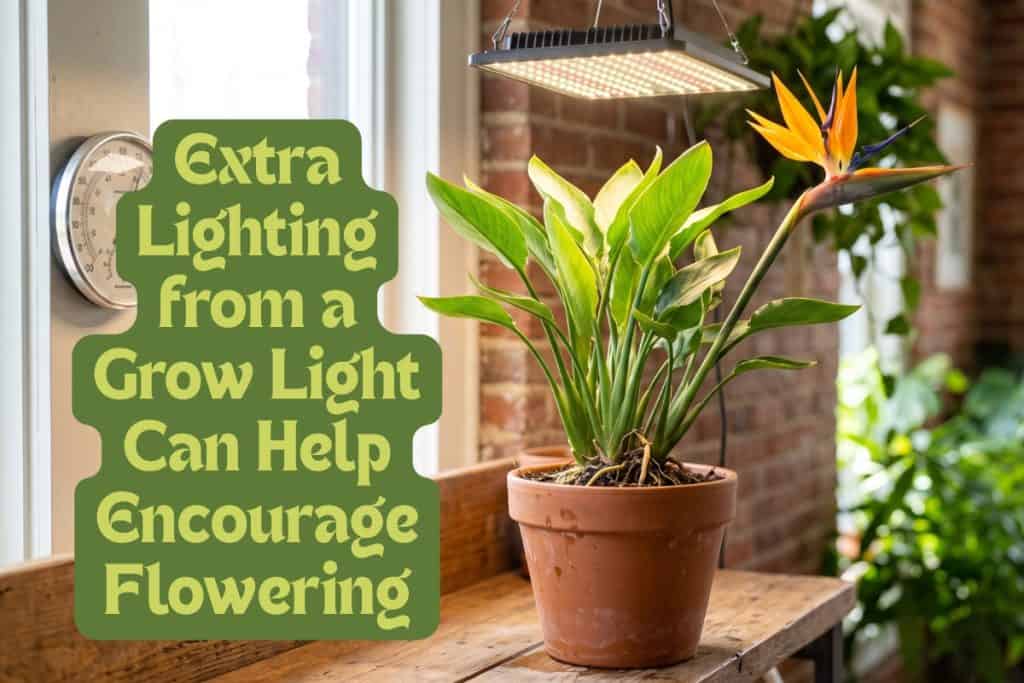
That’s why a slightly root-bound bird of paradise will bloom better than one you keep repotting. There’s a limit, though: A plant that’s choked by roots and starving is too stressed to bloom at all.
Aim for a snug pot that allows enough food, water, and air to reach the roots, but avoid one so small it strangles the plant.
Age, Light, and Temperature Matter
Plant age directly impacts flowering. It takes years for a bird of paradise to reach blooming size — and every time you divide or repot a mature plant, you reset that clock by 2 to 3 years.
Flowers form on older stems, so heavy pruning also delays flowering.
Light plays a key role in blooming. A bird of paradise blooms based on the strength of the light it collects, not on day length. It needs strong light (close to full sun) for many hours.
If your brightest window can’t deliver that, a full-spectrum grow light can make up the difference. Lights help most in winter and dim rooms, where short, cloudy days stall blooming.
Temperature also matters. The flowering type is best with cool but not cold nights. Several nights in the 50s and low 60s with warmer days will encourage a mature plant to bloom. Keep it above 50 degrees Fahrenheit, though; any cooler, and the bird of paradise will stall.
When it does finally flower, a healthy bird of paradise plant can send up a couple dozen spikes in a year. Each cut stem can last up to 2 weeks in a vase.
7 Ways to Trigger Blooms
- Plan to wait 4 to 7 years from seed or 1 to 2 years from division.
- Keep plant slightly root-bound.
- Leave a mature plant undisturbed.
- Restrict nitrogen in fertilizer blends.
- Avoid planting too deeply, which can block the flower stalk.
- Add a bright full-spectrum grow light 12 or more hours a day.
- Give a mature plant cool but not cold nights, staying above about 50 degrees Fahrenheit.
If your plant is the giant white type, indoor flowers probably aren’t going to happen. This bird of paradise variety needs 5 or 6 years outdoors before it blooms; an indoor environment won’t meet its needs.
How to Propagate
There are two ways to propagate bird of paradise, and they’re not equal.
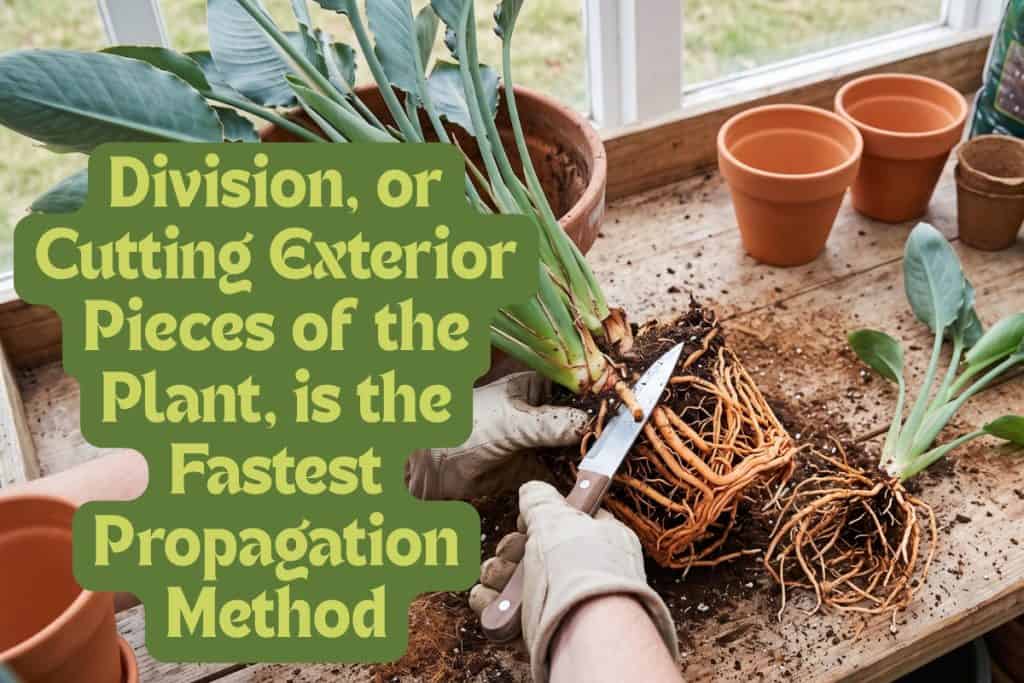
Division is usually the most successful approach, since it involves splitting an established clump into rooted pieces. Each piece is already a rooted plant that’s identical to the parent and should flower in a couple of years.
Dividing an Established Plant
- Divide during the active growing season, when the plant recovers fastest.
- Lift the whole clump out of the pot.
- Separate it into good-sized pieces, each with roots and a few shoots.
- Take the divisions from the outside.
- Repot the mother plant back in the same pot at the same depth with new soil.
- Keep the soil evenly moist for the first few months.
- Start fertilizing at half the label rate once the division takes hold.
Growing Birds of Paradise from Seed
Propagation from seed is possible but slow. You will need to buy seeds or hand-pollinate your plants to produce seeds. For most people, division is the best option.
If you do want to start from seed:
- Soak the hard seeds for a day or two before sowing.
- Nick with a knife or scratch the seed coat lightly with sandpaper so water can get in.
- Rub off seeds’ orange tuft; it carries a sprout-blocking chemical.
- Shallowly sow the seeds in a light, damp soil mix.
- Keep the soil warm, around 75 to 90 degrees Fahrenheit, to speed sprouting.
- Expect sprouts in a few weeks.
- Pot a few sprouts into a starter container to grow a fuller plant faster.
Common Problems and Pests
Most bird of paradise problems can be traced back to water, light, or air, and the leaves will point to which one is the root cause.
It’s a mistake to treat every single symptom as an emergency. Look at the whole plant before reacting to one ugly leaf; the overall pattern will tell you what’s needed.
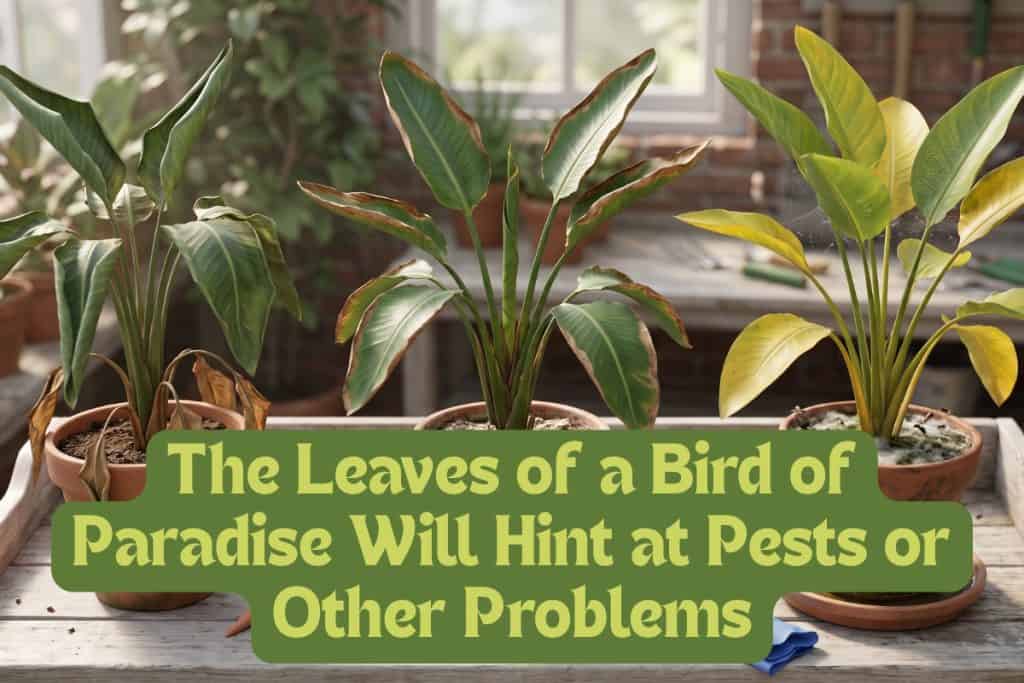
Attempting too many quick fixes with fertilizer, increased light, or more water can stress the plant more than the original problem. The best approach is to look for a pattern, make one careful change, then wait and watch.
6 Symptoms and Their Causes
- Curling leaves usually mean the plant is too dry.
- Brown, crispy edges point to dry air or a draft.
- A new leaf that won’t open can mean that the plant is root-bound.
- Yellowing with soggy soil points to overwatering.
- Mold or fungus gnats on the soil are also a sign of overwatering.
- Stippled leaves are caused by spider mites removing the chlorophyll.
Do Birds of Paradise Attract Pests?
Bird of paradise plants don’t usually have many insect issues, but they are possible.
When they do appear, the most common insects are mealybugs (which are white, fuzzy, and cottony) and spider mites (which appear as stippled leaves and webs). Check leaf undersides and new growth for insects every couple of weeks.
If you do see signs of pests, here’s how to treat them:
- Rinse the plant with a strong spray of water to knock off early pests.
- Hand-remove mealybugs with alcohol on a cotton swab.
- Treat active bugs using insecticidal soap or neem oil.
- Isolate an infested plant so it doesn’t spread.
Are Bird of Paradise Plants Toxic?
Bird of paradise is a mildly toxic but generally not dangerous plant. It’s worth keeping out of reach if you have pets or small kids.
The fruits and seeds of Strelitzia plants cause stomach upset if eaten. Dogs and cats are at the highest risk for this. Additionally, the sap of the giant white type can irritate skin, so wear gloves when you cut or divide it.
The leaves of Erythrostemon gilliesii do contain hydrogen cyanide, and the green seed pods are high in tannins. Eating these can cause severe vomiting.
Final Advice
Now that you know about the two main types of bird of paradise plants, you can choose the right one from the beginning to achieve those tropical blooms. But both are worth growing: The giant white type offers some of the most dramatic foliage of any plant you can grow indoors.
Keep a close eye on your plant’s behavior and growth, and your bird of paradise can become an indoor showpiece you will enjoy for many years.
Happy growing!