

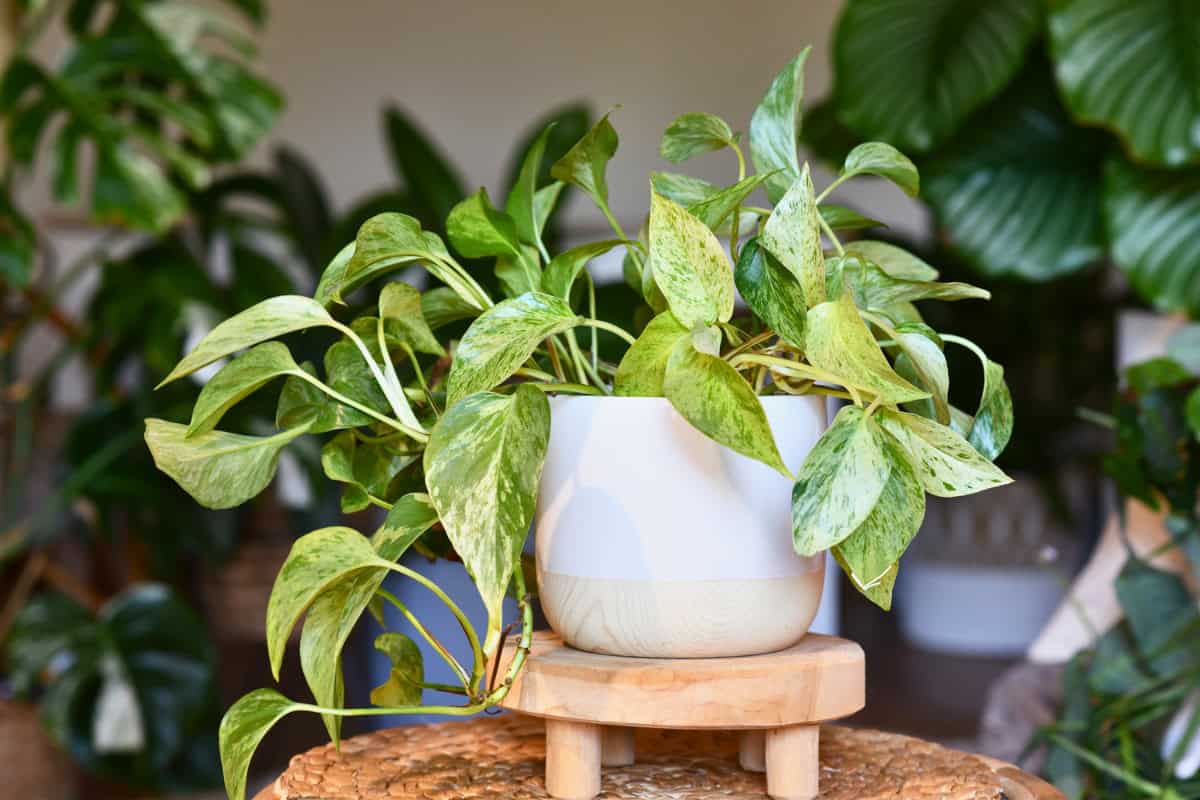
Pothos (Epipremnum aureum) has a reputation as the plant you can’t kill. That’s mostly true, but that reputation can backfire if you give a pothos plant so little care that it limps along with thin, stretched vines instead of living its best full, glossy life.
In this guide, you’ll learn the ins and outs of caring for pothos, like:
- How low light can cost your pothos its color and fullness.
- Why the node matters to create a new plant.
- How pot size can cause more root problems than watering.
- Why trailing or climbing changes as your pothos’ leaves grow.
If you want your pothos to thrive, not just survive, success depends on a handful of choices, starting with the plant itself.
Choose a Pothos Variety That Fits Your Home
Different pothos varieties have different needs. For example, a heavily-variegated pothos is beautiful, but it will need more light than an all-green one. The pale parts of the plant’s leaves have little or no chlorophyll, so they can’t make food from light as well.
Picking a pothos variety isn’t solely about which leaf pattern you like best. You should also consider how much light your home can provide, then fit the plant to that reality rather than the other way around.
Check a Plant’s Label and Leaf Stalk
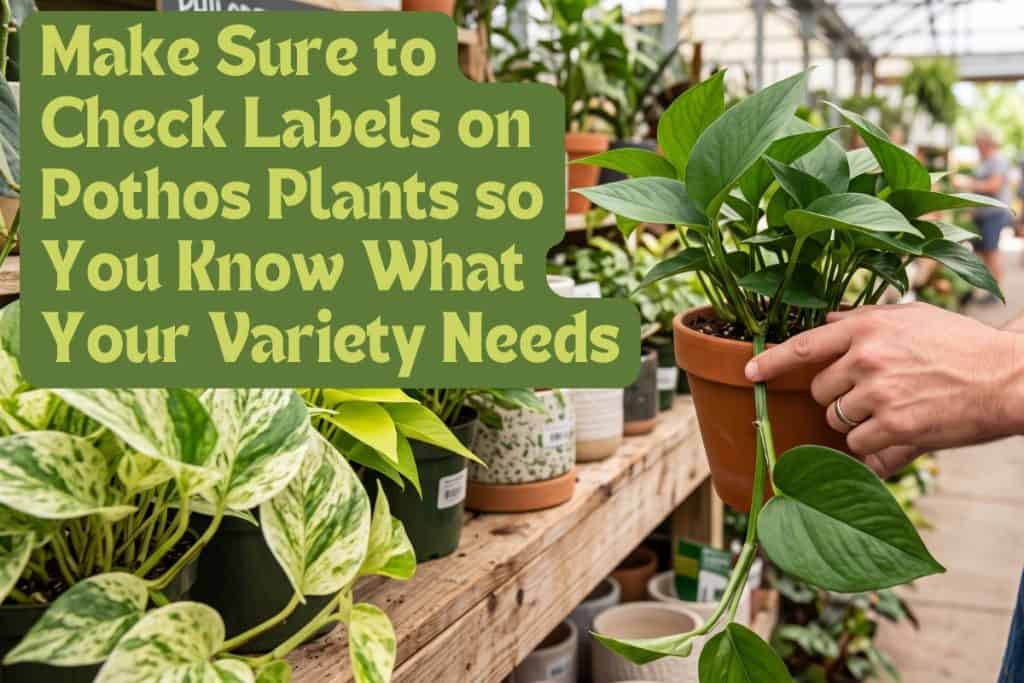
When considering different pothos plants, always check the label. Pothos are sold as devil’s ivy, hunter’s robe, or Ceylon creeper.
If you encounter satin pothos (Scindapsus pictus), this actually isn’t a pothos, though it is grown the same way. Green pothos and philodendron are often misidentified.
Unsure which one you’re holding at the store? Run a finger down the leaf stalk. If it’s grooved, it’s a pothos. If it’s smooth all the way around, it’s a heartleaf philodendron.
Garden centers sometimes shelve the two side by side under similar tags, so this quick check saves you from bringing home the wrong plant.
Where Different Pothos Varieties Thrive
- Golden Pothos: A green plant with gold splashes that’s widely available and forgiving of low light.
- Marble Queen: Features white and cream variegation and needs bright light to keep its pattern.
- Neon Pothos: Has solid chartreuse (yellow-green) leaves without variegation and requires moderate light.
- Jade Pothos: A solid deep green plant and the most low-light tolerant of the common pothos.
- Pearls and Jade: Has small leaves with white margins and is a slow grower for tight spaces.
Different mums thrive in different environments, too, and you can master chrysanthemum care by reading our guide.
Find the Right Location
How quickly your chosen pothos variety fills out, spreads, or keeps its variegation depends on how much light actually reaches its leaves. Signs of too little light usually show up slowly, so it’s easy to blame a sparse, slow-growing pothos on the plant rather than its location.
If your pothos is thinning out, growing slowly, or losing color, you should reassess where it’s placed. Move it to a sunnier spot and watch whether the color and growth improve.

Place Pothos Away from Pets and Kids
Expert Warning: Always keep pothos plants out of reach. Pothos is mildly toxic to pets and kids if chewed, so you should place this plant on a high shelf or in a hanging basket.
Pothos have calcium oxalate crystals on their leaves and stems. These needle-like crystals irritate the mouth, throat, and digestive tract, so even a small nibble can cause:
- Drooling.
- Pawing at the mouth.
- Upset stomach.
Symptoms are rarely serious and usually pass on their own within a day. But it’s worth a quick phone call to your vet if your pet seems very uncomfortable.
Give Your Pothos the Right Amount of Light
- Place pothos near an east-facing window or several feet back from a south- or west-facing window.
- Provide bright, indirect light most of the day.
- Avoid direct afternoon sun.
- A little morning sun is fine; ease into 1 to 2 hours over a week or two. Back off if leaves look bleached.
- Give variegated types like Marble Queen your brightest available light.
- Rotate the pot a quarter turn weekly for even growth.
- Add a grow light in winter if natural light runs low.
- Move pothos outdoors for the warmer months, gradually easing it into direct sun for a boost in growth.
Plant and Repot Pothos
Although pothos are typically grown in pots, you’ll still need to plant and repot them. Good drainage is important for pothos. Roots will suffocate and rot in airless, wet soil. You’ll see this in yellowing leaves or a wilting plant.
Your pothos’ soil also affects its oxygen. Roots need to breathe between waterings, and a heavy, dense soil mix lets the air pockets fill with water.
The Best Soil and Pot for Pothos
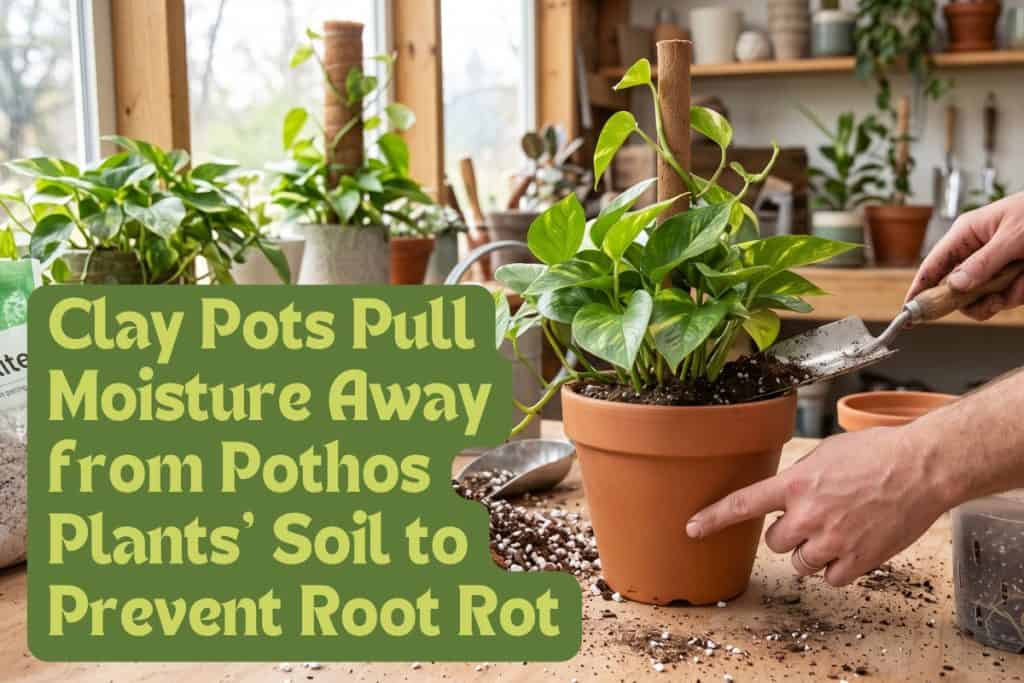
Pothos planted in a container with too few drainage holes will sit in wet soil for weeks. A clay pot is a good choice for pothos because it helps pull moisture away from the soil; alternatively, a clear pot lets you check moisture and roots at a glance.
When it comes to soil, you can start with a standard potting mix for indoor plants, then add amendments to improve drainage.
Do not use potting mix with water-holding crystals; it may stay too moist.
7 Steps for Soil and Pot Success
- Water before you repot (moist roots bend rather than break).
- Mix potting soil with perlite, orchid bark, or coarse sand at roughly a 60:40 ratio for faster drainage.
- Choose a pot with several drainage holes, not just one small hole.
- When repotting, choose a pot that’s 1 to 2 inches wider.
- Repot roughly every 2 years, or sooner if roots circle or grow out of the drainage holes.
- Pour water through the pot for several minutes twice a year to flush out built-up salts.
- Perform an annual root check for brown or circling roots.
Staking a Climbing Pothos
If you’re training your pothos to climb rather than trail, you should set up support at potting time, before the vines get long and brittle. The plant’s aerial roots do more than grip; they actually draw moisture directly from a damp pole, so support can double as an extra water source.
A moss or coconut coir pole works best, since pothos anchors to these surfaces with small aerial roots. Garden centers also sell tall, thin slabs of bark that work well, too.
Water Consistently
Like all plants, pothos need consistent water. However, your pothos’ water needs will change throughout the year. The amount it’ll need is determined by its pot, soil mix, and light level.
Over-watering causes far more damage than under-watering. Dark, water-soaked spots on leaves mean the soil’s stayed too wet. Pothos handles periods of dry soil just fine. A droopy pothos that perks up fast once watered isn’t in danger.
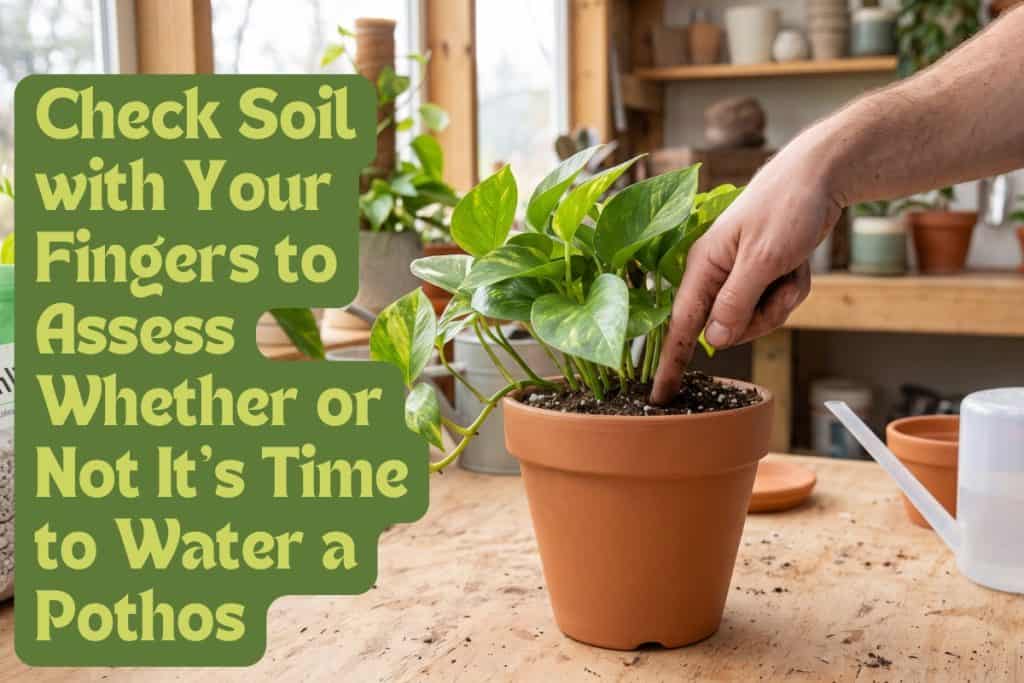
If you’re unsure when to water, read the soil. Following the plant’s cues will help you avoid making the all-too-common mistake that can kill pothos.
5 Steps to Water Pothos Correctly
- Check the top 2 to 3 inches of soil with your finger.
- Water thoroughly until it runs from the drainage holes.
- Water less frequently when fall arrives and growth slows.
- Resume watering when you see new growth in spring.
- Use pot weight, a moisture meter, or soil pulling away from the rim as backup moisture checks.
- Empty the saucer so your plant never sits in standing water.
A balanced approach to watering benefits other houseplants too; learn how to grow, care for, and water succulents here.
Keep an Eye on Temperature and Humidity
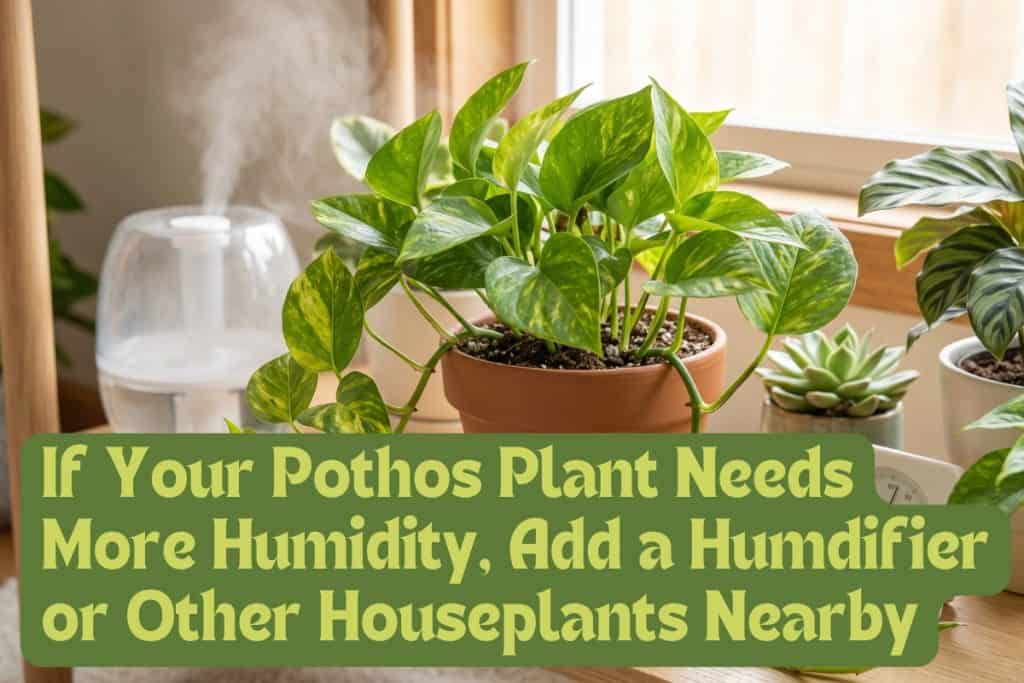
Pothos is a forgiving houseplant when it comes to temperature and humidity. It typically remains alive and healthy without any special equipment. However, humidity is worth the extra effort if you want bigger, lusher growth.
Pothos comes from humid tropical forests and responds well to high humidity. If you’ve been to South Florida or Hawaii and seen the huge pothos growing outside year-round, you know the difference is night and day.
Cold is a bigger risk. Sudden temperature swings and cold drafts stress pothos more than dry air. If leaves turn dark or mushy after a cold snap, the plant is reacting to the cold and may need to be moved farther away from a window or door.
How to Manage Temperature and Humidity
- Keep the room between 60 and 90 degrees Fahrenheit.
- Keep pothos away from cold drafts, heating vents, and air conditioning units.
- Add a humidifier, occasional misting, or group with other plants to increase humidity.
Fertilize Pothos in Spring
Pothos plants don’t need much fertilizer, but providing the right amount at the right time can make a visible difference in how fast and full they grow.
Fertilizer only helps when a plant is actively growing and able to use those nutrients, so feeding pothos year-round isn’t helpful. It can actually stress the plant during its slower months. Like watering, feeding should correspond to the plant’s needs.
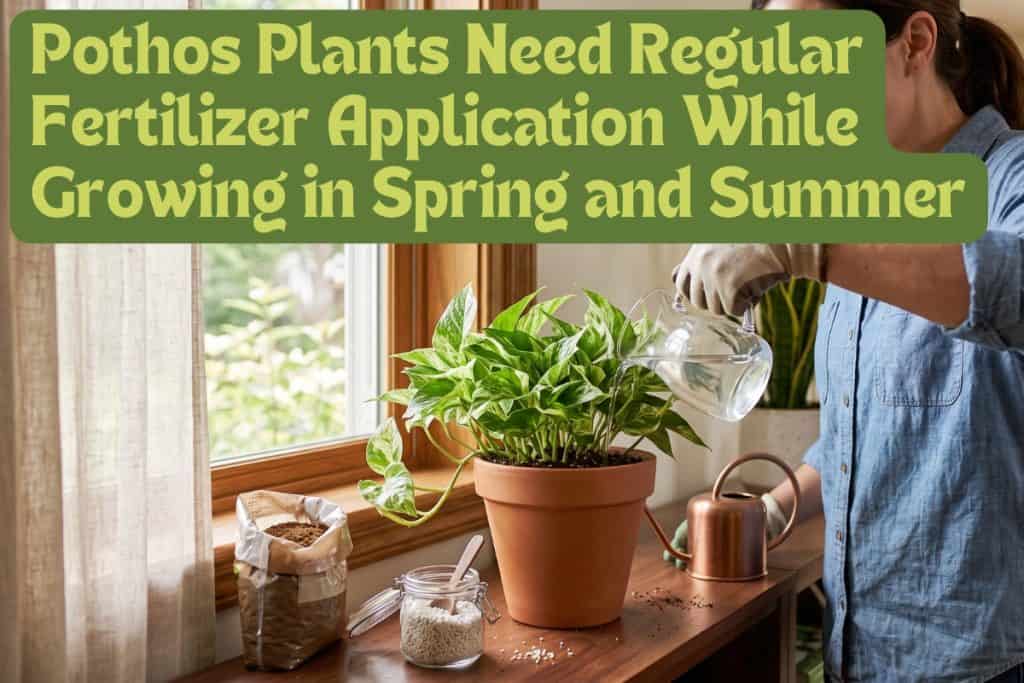
Pothos is a foliage plant, so you should lean heavily on nitrogen fertilizers (best for foliage) or use a balanced fertilizer (for root growth and overall health). You can use a light topdressing of aged compost or compost tea for a natural approach.
When it comes to timing, applying a 3-month controlled-release fertilizer in spring will feed through the busiest growing season, then finish before fall.
Fertilize Pothos in 4 Steps
- Feed monthly with a balanced fertilizer (8-8-8) at half the label strength through spring and summer.
- For a natural alternative, add fish emulsion, which shouldn’t burn.
- Taper off as growth slows in early fall.
- Stop fertilizing completely in winter, when the plant isn’t actively growing.
Prune Your Pothos
Left alone, a pothos vine will keep spreading from its tip while the base becomes increasingly bare. This is why long-established plants often are lush at the ends and thin near the pot. Every leaf node along that bare stem is a dormant growth point.
Pruning, or making strategic cuts near those nodes, triggers a hormonal signal that prompts the plant to branch out and fill in. That’s why pruning is a perfect fix for a leggy plant.
How to Prune for Fullness
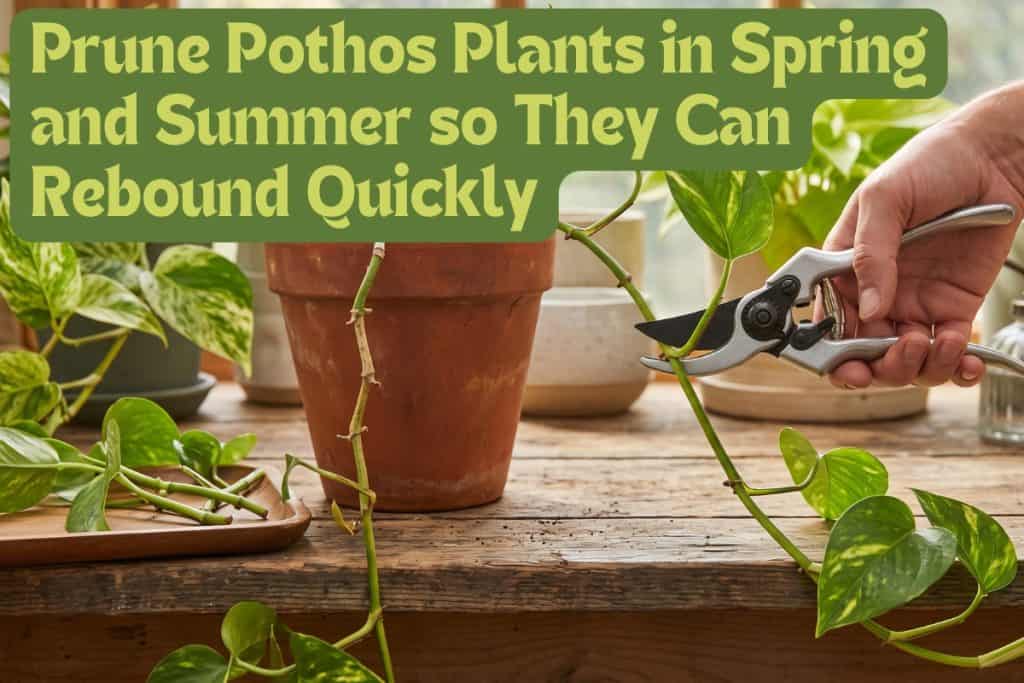
- Cut just above a leaf node using clean, sharp scissors or pruning clippers.
- Prune whenever vines are too long, uneven, or bare in the middle.
- Prune primarily in spring and summer, when the plant rebounds fastest.
- Never remove more than one-third of the plant at one time.
- Save every node-bearing cutting; they can become new plants.
Master pruning for pothos and other plants, including the steps needed for money trees in our guide here.
Pothos Pruning Tips
If your variegated plant has leaves that have turned solid green, cut a fully green stem back to the last variegated point. The pattern won’t return further down.
If you need to be more drastic with some vines, cutting them back to a 2-inch stub with a node looks extreme. However, this should allow them to rebound and branch into much fuller vines.
Trailing or Climbing Pothos: Which is Best?
In nature, pothos starts out crawling on the ground with small leaves. Then, when it finds a tree trunk and begins to climb, it takes off. Attached to a support and the moisture that comes with it, the plant shifts into a more mature growth phase. Mature growth means larger leaves, thicker stems, and sometimes even split, hole-y leaves you might see at a botanical garden.
On the other hand, a trailing pothos in a pot or hanging basket will stay in a juvenile phase indefinitely.
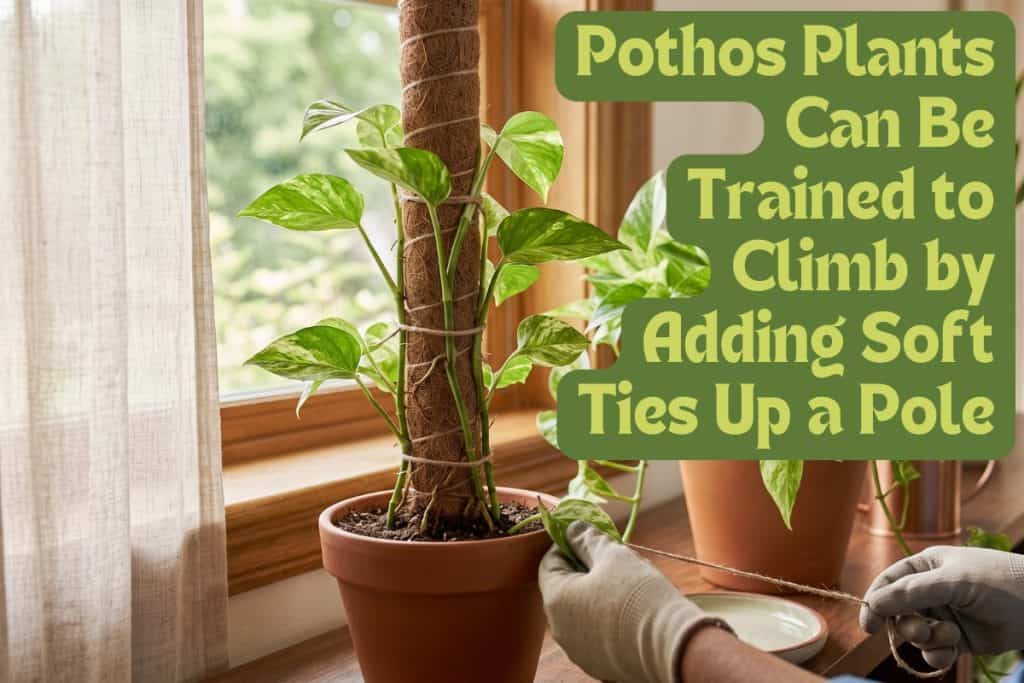
Decide early whether you want your pothos to trail or climb. You’re not just choosing a look; you’re choosing which growth phase you’ll encourage.
You can still add a pole to a mature, sprawling plant later, but expect some breakage along the way — and don’t be surprised if a few vines never fully attach.
How to Train Trailing or Climbing Pothos
- For trailing pothos, use a hanging basket or tall shelf and let stems hang down freely.
- For larger, more mature leaves, guide vines onto a tall moss pole. Keep training new growth upward as it appears.
- Keep plant training loose and gradual. Use soft ties to guide the vine a little at a time, moving them up as new growth appears.
- Don’t force the plant into place or the stems are more likely to snap than bend.
- Keep the pole consistently damp so the aerial roots have something to grip and drink from.
- Don’t rotate the pot of climbing pothos. This will throw off its grip and direction.
- Trailing plants will do better with regular rotation.
Propagate Pothos for New Plants
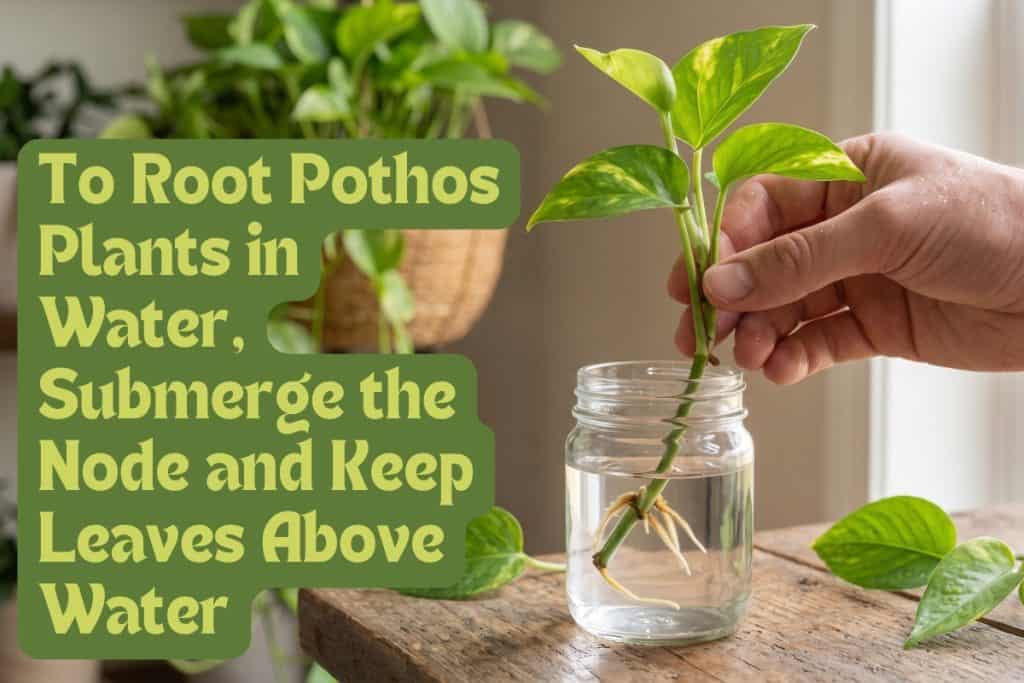
Every new pothos plant starts at a node, the small bump where a leaf attaches. Roots and new growth emerge only from that point, never from the internode (or the smooth stretch of stem between two leaves).
Once you know to look for the node, propagation becomes a simple matter of making sure every cutting includes at least one.
Pothos Propagation Techniques
- Cut a section with at least one node and one or two leaves.
- To root in water, submerge the node and keep leaves above the waterline. Change the water every few days.
- To root in soil, bury the node in a moist, well-draining mix. Keep it evenly damp.
- Move water-rooted cuttings to soil once roots reach 1 to 2 inches.
- To fill gaps in the existing pot, pin a vine’s nodes against the soil with a floral pin or bent wire.
- Plant several rooted cuttings together for an instantly full look.
Rooting speed is determined by the amount of light your cuttings get. Healthy cuttings root in 2 to 5 weeks under good light. Slower rooting usually means there’s too little light.
Snake plants can also be propagated in soil or water; learn how in our guide here.
Clean Your Pothos’ Leaves
Pothos leaves collect dust, and dust blocks the light the plant needs to photosynthesize, (plus, it can clog the tiny pores the leaves breathe through). Wiping them occasionally keeps the plant working at full capacity and lets you spot pests early.
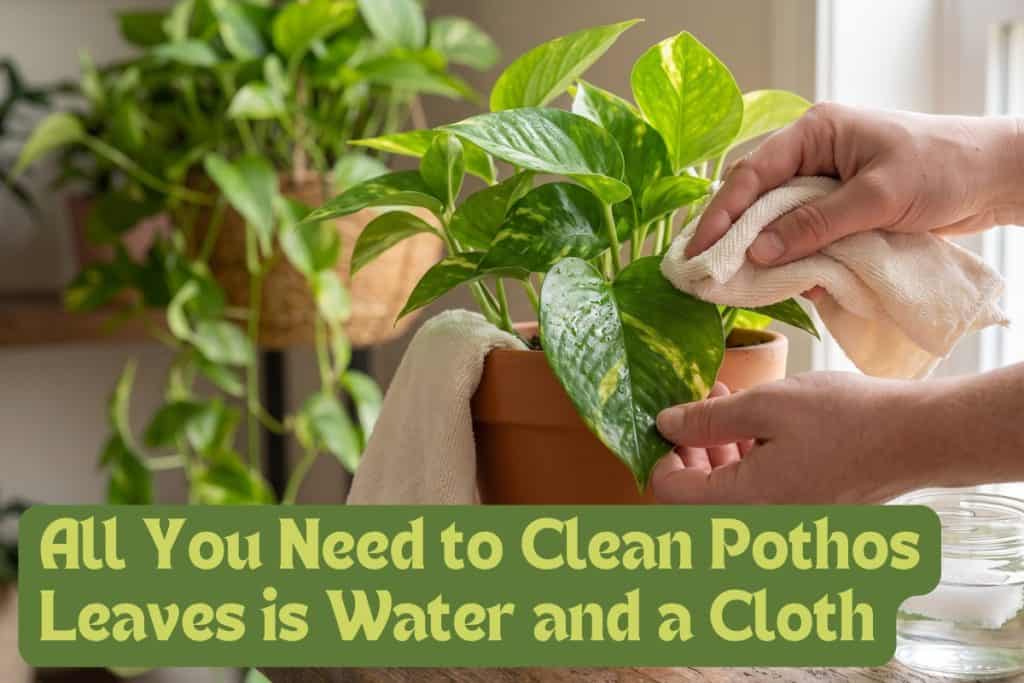
To clean pothos’ leaves, support each leaf with one hand and wipe both sides with a soft, damp cloth. For a big or trailing plant, a gentle rinse in the sink or shower does the same job.
3 Steps to Keep Leaves Clean
- Wipe both sides of the leaves with a soft, damp cloth every few weeks.
- Rinse a large or trailing plant under a gentle spray in the sink or shower instead.
- Skip mayonnaise and leaf-shine products, which block light, clog pores, and trap dust.
Prevent and Treat Pests and Problems
Pothos is fairly low-maintenance, but it isn’t problem-proof. When something does go wrong, it almost always traces back to one of two causes: soil that’s stayed too wet for too long or a pest problem that went unnoticed. Both are easier to prevent than to fix.
Catching an issue in its first couple of weeks can have a completely different impact than catching it a month later. Once pest populations have multiplied or roots have already broken down, the plant becomes stressed, and growth will slow until well after you’ve fixed the problem.
6 Steps for Preventing and Treating Problems
- Quarantine and inspect any new pothos before placing it near other houseplants.
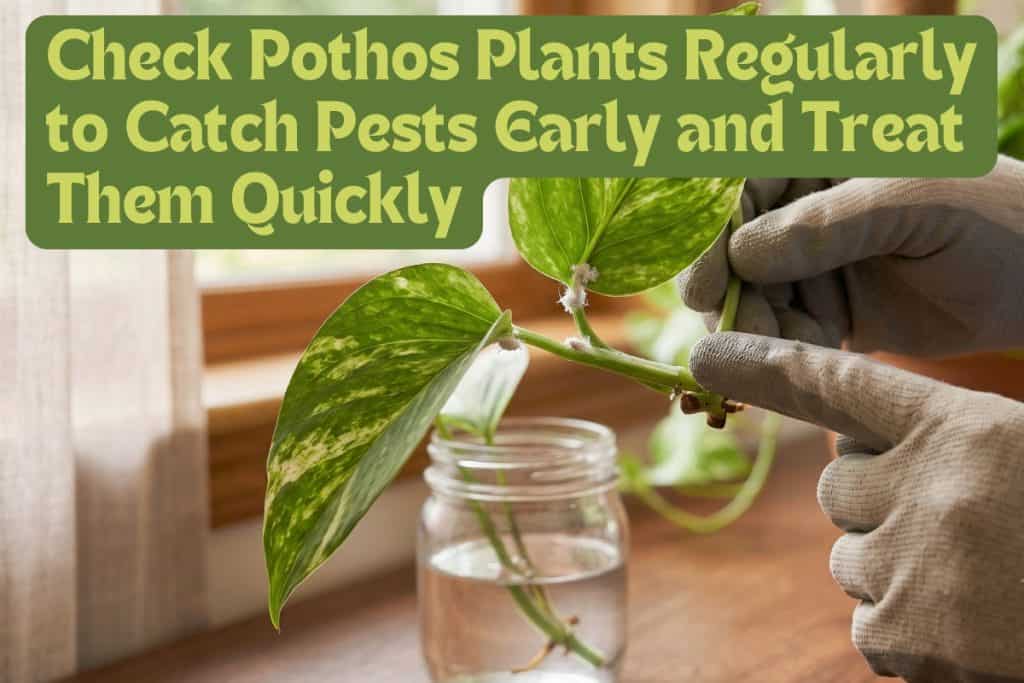
- Check the undersides of leaves, leaf axils, and stems for pests every few weeks.
- Watch for white, cottony residue (mealybugs), fine webbing (spider mites), or small bumps (scale).
- Rinse foliage with a strong spray of water to knock off dust and early pests.
- Treat active infestations with insecticidal soap or neem oil at label rates.
- For root rot, unpot the plant, trim away mushy black roots, and repot in fresh, dry potting mix.
Final Advice
Pothos earned its “unkillable” reputation by surviving decades of neglect. But this plant is capable of developing full, glossy vines that fill a room, or climb with leaves the size of your hand. It just needs the light and care mentioned in this guide.
With light, the right amount of water, and occasional maintenance, your pothos will reward you with dense, healthy growth. Don’t be afraid to experiment, either. Pothos recovers from poor pruning, under-watering, or neglect faster than almost any other houseplant.


4 thoughts on “How to Care for Pothos Plants and Devil’s Ivy”
Thank you for such an easy to read yet thorough and easy to follow article. A neighbor moved and put a giant pothos by the dumpster. It was clearly a trailer! Sadly doesn’t look healthy or happy. I’m going to water tonight and allow it to recover slightly before I start pruning and propagating.
Nancy, I would have snagged it myself if I saw it. Best wishes and I hope it recovers soon. Put multiple cuttings in a new pot and you will have pthos trailing all over soon.
Your articles are great! Easy to read and understand, the “why” behind the care instructions explained simply, and all the information laid out how you need it without having to wade through a whimsical back-story. Can you do one on the deiffenbachia?
Thank you for the nice words! I try to add in teaching moments when I can. It isn’t scheduled yet, but watch for dieffenbachia in the future.