

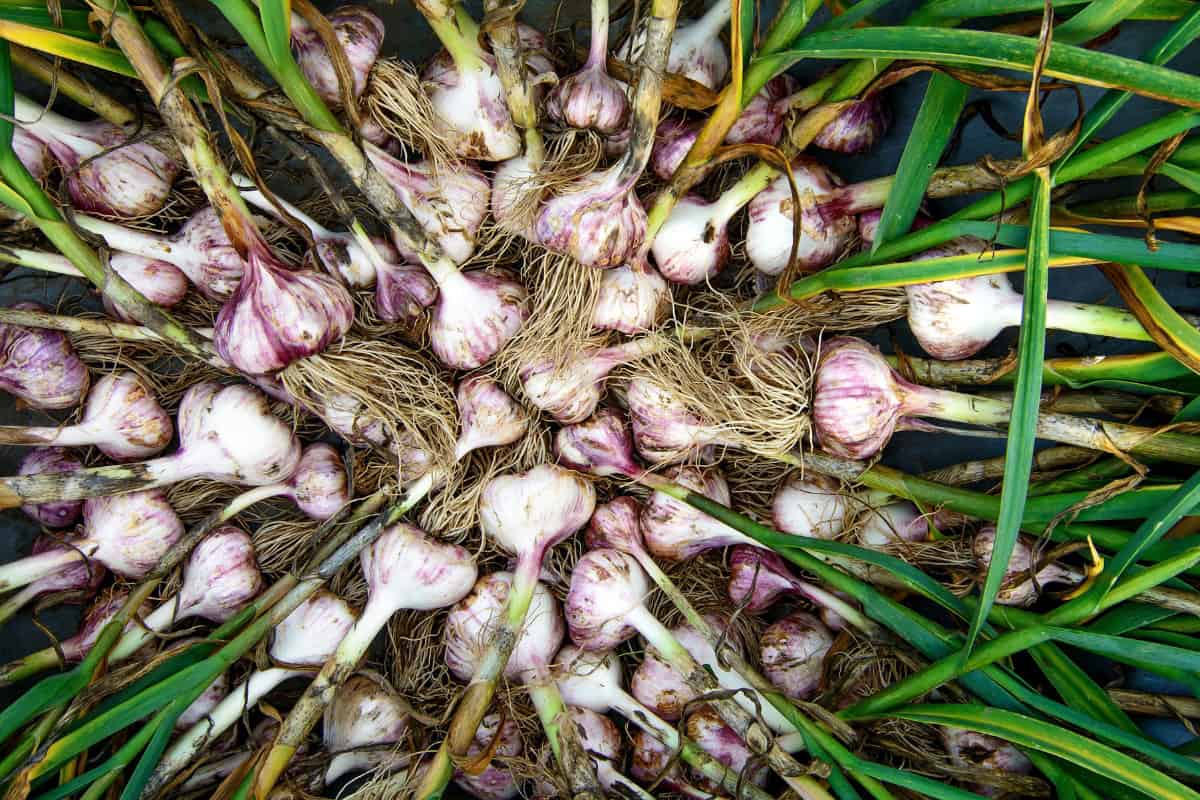
Ever wondered how to grow a plant that keeps both vampires and bland food away?
Garlic has been a staple for cooking and healing for thousands of years. Individuals choose it not only for its intense flavor but also for its benefits to the immune system.
We’ll go over in this article…
- How to choose the right variety for climate and flavor.
- Why garlic needs a cold period (vernalization) to form bulbs and how to fake it
- Mastering the pointy-end up rule and the perfect depth for healthy roots.
- When to remove scapes to force your plant to grow massive bulbs.
This guide will walk you through everything you need to know to grow garlic successfully.
Essentials To Know Before Growing
Before you get your hands in the dirt, it helps to understand how this unique plant is built and the unusual schedule it follows.
Bulbs, Cloves, and Scapes
Garlic is a bulb composed of 6 to 15 individual cloves, depending on the variety. Each clove has its own thin, papery layer called a tunic. All of these cloves fit inside an outer wrapper of more tunics. It’s like nature designed a wrapped gift.
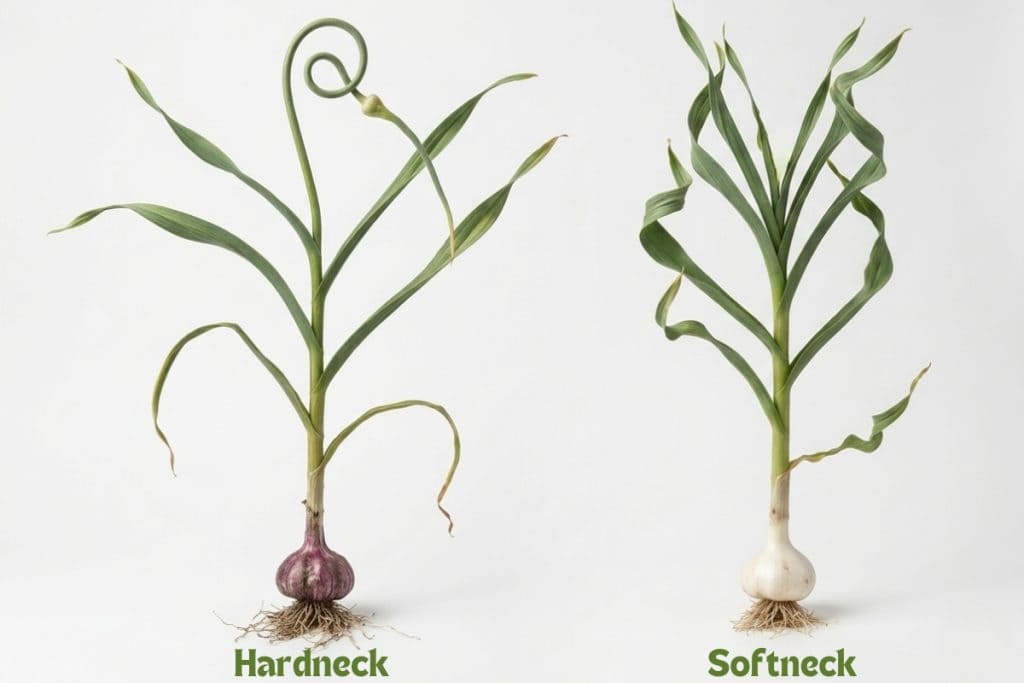
A scape is the tall curly flower stalk that comes out of the top of hardneck varieties in late spring. Scapes are edible, with a mild garlic flavor.
Unfortunately, scapes draw energy away from bulb development, so most growers remove them to encourage larger bulbs. It’s a trade-off, so you will need to decide what your goals are.
The Garlic Growth Timeline
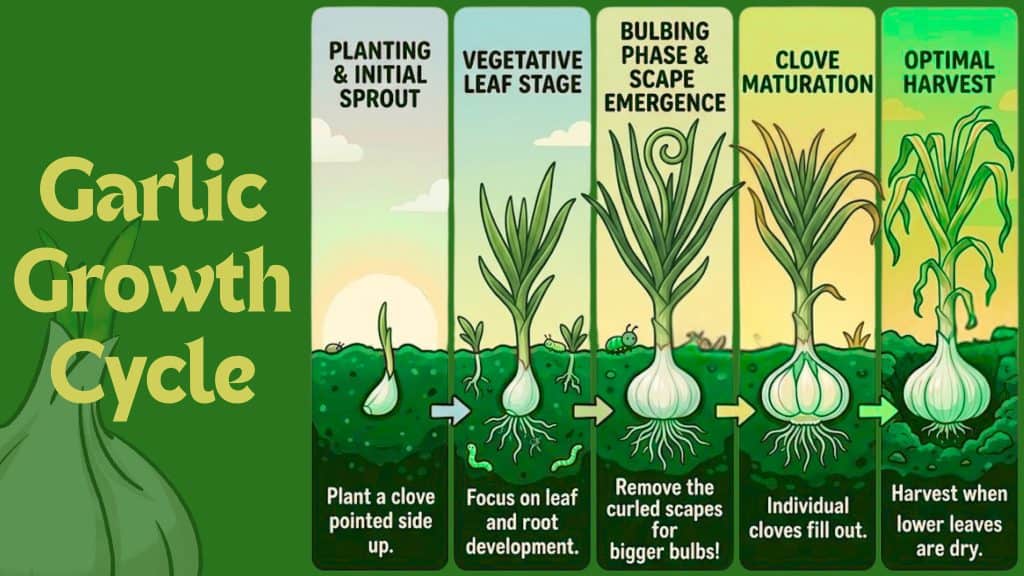
Garlic doesn’t follow the typical spring planting, summer growing, and fall harvesting cycle that most gardeners expect.
Instead, it’s a bulb with a growth pattern that spans from fall to early summer. It can take nine months from planting a clove to digging up a mature bulb.
Step #1: Choosing The Best Garlic Types
Choosing the right variety and the right planting time go hand in hand. You may hear someone talk about buying “garlic seed”. They are really talking about individual cloves.
Hardneck vs. Softneck
Hardneck varieties produce a scape and have a central woody stem that remains firm even after harvest and curing.
- Climate: Ideal for cold climates, thrives in USDA zones 3–7.
- Flavor: Generally stronger, spicier, and more complex.
- Yield: Produces 4–6 large cloves per bulb and an edible flowering “scape.”
- Storage: Shorter shelf life; lasts about 4–6 months.
- Top Varieties: Music, Chesnok Red, and German Red.
Softneck Varieties
Softneck garlic is usually the type you see at the grocery store. They don’t produce a true scape, and have a flexible central stem ideal for braiding.
- Climate: Ideal for mild climates. Adaptable for zones 5–10; does not require intense cold.
- Yield: Produces 10–15 smaller cloves per bulb.
- Storage: Excellent shelf life; keeps for 9–12 months.
- Top Varieties: Inchelium Red and Georgia Giant.
Elephant Garlic
I should mention Elephant garlic, even though it’s not actually garlic. It’s a close relative called Allium ampeloprasum and is more closely related to leeks. Elephant garlic bulbs can grow 3 to 4 times larger than true garlic. If you’re new to growing garlic, I’d recommend starting with true garlic varieties.
Looking for another fun project with impressive results? I invite you to read our guide on how to grow an avocado from the pit.
Seed Clove Buying and Saving
Stay away from tiny cloves or any with blemishes. If you’re buying seed garlic, purchase from a reputable source like seed companies. This is really important. Never use grocery store garlic because it’s often treated with growth inhibitors.
If you’re using garlic from a previous harvest, wait until just before planting to “crack” the bulb into individual cloves. Leave the papery skin on each clove because it will protect against rotting.
Step #2: The Required Cold Period (Vernalization)
The key to when to plant garlic is vernalization, which means a cold period. Garlic needs a vernalization period of at least four to eight weeks, with temperatures below 50 degrees Fahrenheit.
This cold period triggers the garlic plant to stop making leaves and start forming a bulb instead. Without that cold trigger, garlic will just keep growing foliage indefinitely and never divide into cloves.
Step #3: Best Time To Plant?
In the north, garlic is planted in the fall, so it experiences the required cold period naturally over the winter. In the south, where winter temperatures don’t stay low enough for long enough, wait and plant garlic in early winter, or chill garlic seed cloves in your refrigerator before planting.
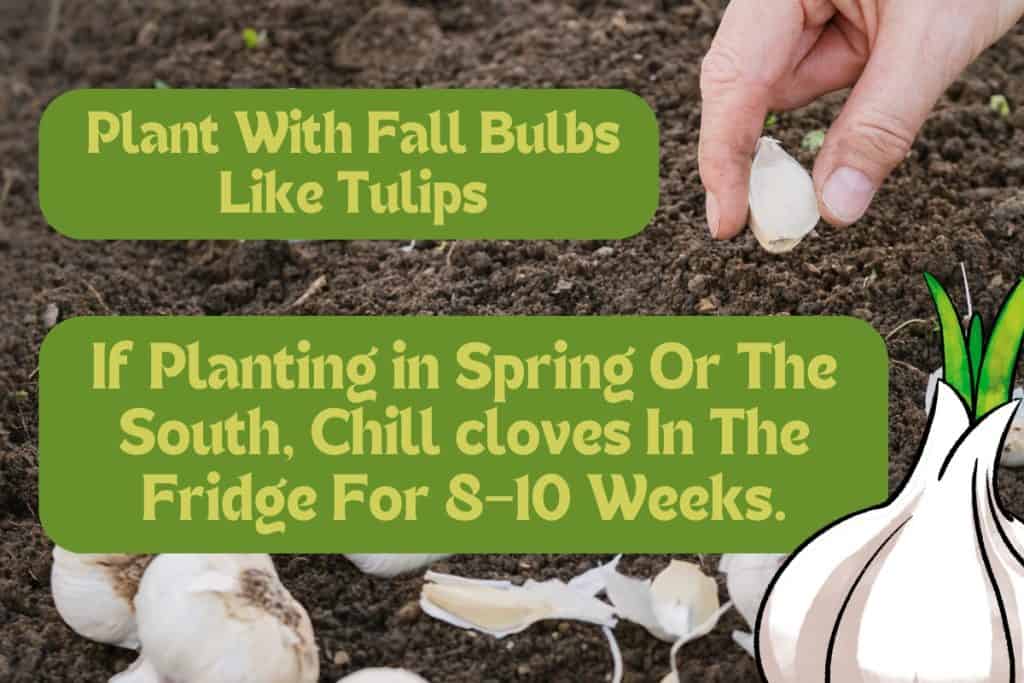
Ideally, plant garlic in the fall at the same time you’d plant spring bulbs like tulips and daffodils. If you can only plant garlic in the spring, you will need to refrigerate the seed bulbs. Put your garlic bulbs in a paper bag and put them in a drawer in your refrigerator about 8-10 weeks before planting.
Check them every couple of weeks to make sure they aren’t getting moldy. Do NOT put them in the freezer; they will break down the cells and turn them to mush.
Step #4: Sun And Soil
Garlic isn’t nearly as fussy about soil as some vegetables, but it definitely has preferences. Getting these specific needs right will be the foundation for success.
Sun and Site Selection
Garlic needs a minimum of 6 to 8 hours of full sun daily with good air circulation.
If you’re gardening in an exposed area with strong winds, you might need wind protection to avoid stressing young plants and slowing growth.
Best Soil For Cultivating Garlic
Garlic thrives in well-drained soil with a pH between 6 and 7. I highly suggest getting a soil test done before planting. Most county extension offices offer testing for a small fee. In some states, you can get a free soil test every couple of years. Soil tests give you information about nutrients and pH, which lets you amend the soil without guessing.

Ideal soil for garlic is loamy with ample organic matter. If your soil is heavy clay, you will need to amend it significantly before planting. Clay holds water and encourages rotting.
Add three to four inches of compost and work it in deeply. If your soil is sandy and drains too quickly, add compost or peat moss to improve water and nutrient retention.
Crop Rotation and Disease Prevention
Crop rotation is non-negotiable for garlic. Plant garlic in a different bed than where you grew any alliums (onions, leeks, shallots, garlic) in the previous three to four years.
Garlic shares pests and diseases with all alliums, and they can build up in the soil over time.
Step #5: Depth, Spacing, and Orientation
Plant the cloves two to three inches deep, measuring from the soil surface to the top of the clove, keeping the tunics intact. Too shallow, and cloves will heave out of the soil during freeze-thaw cycles. Too deep, and germination is slow.
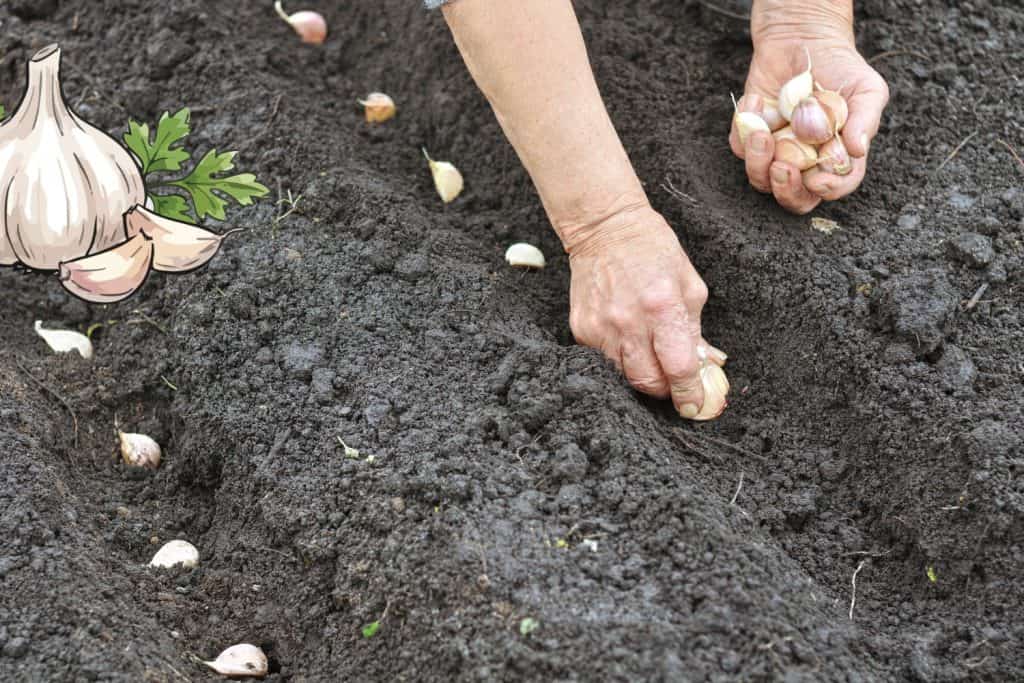
Space cloves four to six inches apart in rows, with rows spaced twelve to eighteen inches apart. Plant each clove with the pointy end up with the root end down. The pointy end is where the shoot emerges, so planting it point-up reduces the distance the shoot has to travel to reach the surface.
- Depth: Plant 2–3″ deep (top of clove), tunics intact.
- Spacing: 4–6″ apart in rows 12–18″ apart.
- Orientation: Pointy end up, root down.
- Layout: Use board with holes or finger grid for straight rows (easier weeding/harvesting).
If you want to keep rows straight and spacing even, use a simple board with holes drilled four to six inches apart, or just use your finger to create a grid pattern. Straight rows make weeding, scape removal, and harvesting easier later on.
Mulching After Planting
Once all your cloves have been planted, apply a 2-4 inch layer of mulch. Straw, shredded leaves, or compost all work beautifully.
Mulch insulates soil through winter freeze-thaw cycles, suppresses weeds, and retains moisture. In very cold climates, heavier mulch, 4 to 6 inches deep, is insurance against extreme cold.
Growing Garlic in Containers
Most gardeners grow garlic in the ground, and that’s the easiest approach. But if you have limited space, or soil that’s not ideal, containers work just as well and can be more convenient.
Use pots that are at least 8 to 10 inches deep and 12 inches in diameter for 2 to 3 cloves. Larger containers, 14 to 16 inches, are even better for easier watering and better bulb development. Make sure they have drainage holes because garlic cannot tolerate waterlogged roots.
Container Growing Essentials
- Container Size: Minimum 8–10″ deep with drainage holes.
- Soil Choice: Use light, fluffy potting mix; avoid garden soil.
- Watering: Check moisture daily as containers dry out quickly.
- Fertilization: Use diluted liquid fertilizer every 2–3 weeks in spring.
- Sunlight: Ensure 6–8 hours of full sun daily.
Use a quality potting mix that is light and fluffy with good drainage. Never use garden soil in containers. It will not drain well enough and could bring in weed seeds, diseases, and pests. Container plants dry out fast, so you’ll need to check soil moisture regularly.
Container plants need consistent fertilization because nutrients leach out with each watering. Use diluted liquid fertilizer, like fish emulsion, or a balanced synthetic formula (2-2-2). Fertilize every two to three weeks from early spring through late spring, then scale back. Full sun is even more critical for containers, so aim for six to eight hours minimum in a bright window.
Hydroponic or Water-Based Garlic Growing
Some gardeners have hydroponic setups for garlic, using nutrient-rich water instead of soil. Garlic can grow in water, but it requires careful attention to nutrient balance, light, and water circulation.
You can start new garlic plants indoors in water using the bases of the cloves and then transfer the rooted plants outside or to containers later.
Water, Fertility, and Seasonal Care of Garlic
Garlic has pretty simple needs when it comes to water and nutrients. It needs to stay moist and be encouraged with fertilizer in early spring and summer, but otherwise takes care of itself.
Irrigation Strategy
In spring, when the plant puts on new foliage, garlic needs consistent moisture. Ideally, provide about one inch of water per week. In late spring and early summer, when foliage starts yellowing, taper back on watering.
Fertility and Nutrients
Fertilizing garlic plants is critical for success. Fertilize in the fall right after planting or in very early spring with a balanced (5-5-5 or 10-10-10) fertilizer. Do not use high nitrogen fertilizer, it will encourage top growth instead of bulb development.
- 10-10-10 Balanced: Ideal for fall planting and early spring.
- 5-10-10 Phosphorus/Potassium: Boosts bulb size in late spring.
- Fish Emulsion: Liquid foliar spray for quick nutrient uptake.
- Blood Meal: Organic nitrogen for early foliage growth.
- Aged Manure/Compost: Improves soil structure and long-term fertility.

Once you get into late spring and bulb formation is beginning, switch gears to a phosphorus and potassium-rich fertilizer like 5-10-10. This combination supports cloves enlarge nicely.
If you prefer organic options, look for compost, aged manure, worm castings, blood meal, fish emulsion, or kelp extract. Apply these every 2 to 3 weeks as a foliar spray or soil drench.
Weeding and Mulch Management
Garlic’s roots are shallow, so when you need to weed, do it by hand. If weeds start taking over the bed, you can check out our guide on natural homemade weed killers here.
If you must use a hoe, cultivate very shallowly, no more than one to two inches deep. That way you remove weeds without destroying the roots.
Maintain two to three inches of mulch through spring and early summer. As the plant approaches harvest and foliage yellows, pull back mulch to allow bulbs to dry more quickly in place.
Pests and Diseases Affecting Garlic
Garlic is relatively pest and disease resistant compared to a lot of vegetables, which is another reason I love growing it. But there are a few common threats you should know about.
Common Garlic Pests
The good news is that there are only a few pests that affect garlic. The bad news is that of the three listed here, only two are treatable.
- Onion Maggots: Tunnel into cloves; destroy infected plants immediately.
- Nematodes: Microscopic worms that stunt growth; requires plant disposal.
- Thrips: Leaf-scarring insects; treat with neem oil or insecticidal soap.
- White Rot: Incurable fungal rot; remove plant and surrounding soil.
Onion maggots are the larvae of a small fly, and they tunnel into cloves and cause rotting. Nematodes are microscopic roundworms that live in soil and feed on roots, stunting plant growth.
If you find any damage, from either of these pests, the plants should be thrown away. Thrips are tiny insects that tear leaves and can transmit viruses. Damage is usually more cosmetic than serious, but it can weaken plants. If infestations get heavy, you can spray with insecticidal soap or neem oil.
Fungus Dangers
Powdery mildew is a fungus and looks like a white, powdery coating on leaves. It usually shows up in the spring and goes away with sun and heat. Rust fungus is also common in humid areas. Improving air circulation and avoiding overhead watering will help with both of these diseases. These are both cosmetic foliage issues and won’t kill the plants or affect the bulbs.
White rot, caused by Sclerotium cepivorum, is a serious disease that causes bulbs to rot before or after harvest. Unfortunately, there’s no cure, so infected plants should be removed and destroyed.
Stopping Pests And Disease
Pest and disease prevention starts with disease-free seed garlic from certified suppliers and planting in rotated beds. Space plants adequately for air circulation and avoid overhead watering if possible.
If you spot diseased plants, pull and destroy them to stop the disease from spreading.
When To Harvest Garlic
Knowing when to harvest is absolutely critical to get the most from your harvest. If you dig them too early, cloves will be small and disappointing. If you wait too late, bulbs could have split open or rotted. Getting this right is what separates a good harvest from a great one.
Signs of Bulb Readiness
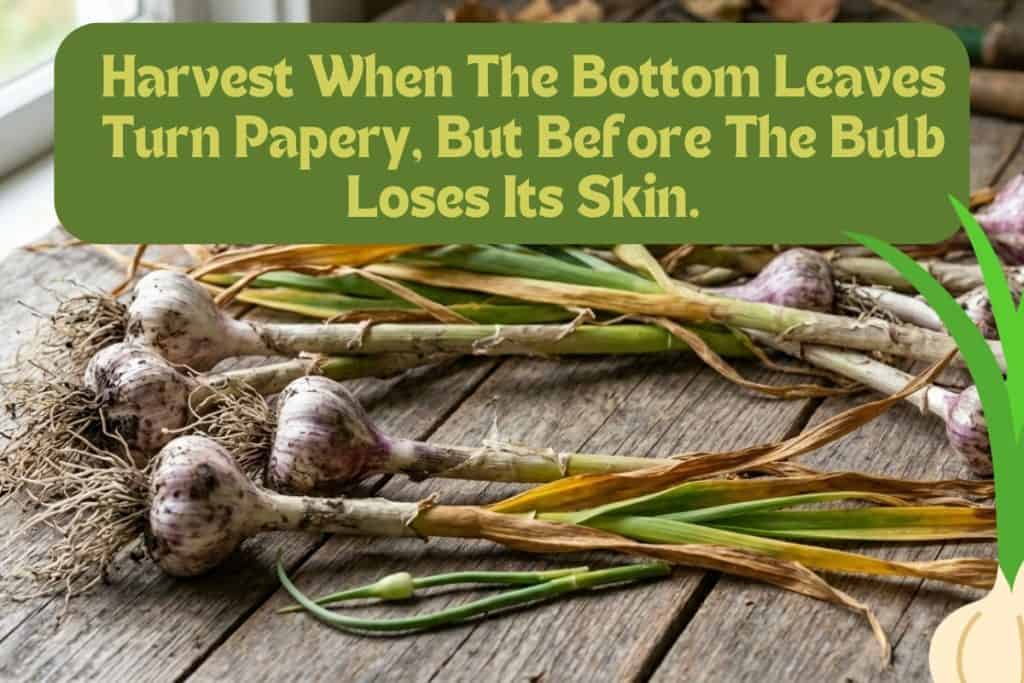
The clearest signal bulbs are ready is yellow foliage. Watch for the lower leaves to turn yellow, then brown and papery. This is your green light for readiness. Gently dig around a test bulb to peek at how it looks. Cloves should be plump and papery tunics should be starting to form. If cloves still look tightly connected and aren’t separated, wait another week or two.
Most garlic varieties require 180-240 days from planting to maturity. This varies by variety and climate.
Harvesting Without Damage
When you are ready to harvest, use a garden fork or spade to loosen the soil under the garlic plant rather than yanking it up by foliage. The foliage at this point is fragile and will break easily, exposing the bulb to potential disease and rotting. Slide the fork under the plant and gently pry upward, then ease the bulb out by hand.
Garlic bruises easily, and bruises lead to rotting during storage, so handle bulbs gently. Avoid dropping them, and don’t use high pressure water to wash them off. This is a common mistake that damages the papery skin and limits storage time.
Curing and Storage: The Final Steps
Curing, or drying bulbs, is the final step in preserving flavor and extending storage life. It’s not complicated, but it absolutely matters for long-term storage success.
- Temperature: Keep between 70°F and 85°F for the first 3 weeks.
- Airflow: Use a single layer on a screen; never stack bulbs.
- Environment: Choose a shaded, dry, and well-ventilated space.
- Timeline: Cure for 3–5 weeks until skins are papery and roots shrivel.
Curing Conditions
The perfect curing location will be warm with good airflow and low humidity. A well-ventilated shed, garage, or even a shaded porch in dry climates works well. Ideally, keep temperatures between 70 and 85 degrees Fahrenheit for the first two to three weeks. After that, cooler temperatures around 60 to 75 degrees work best for long-term storage.
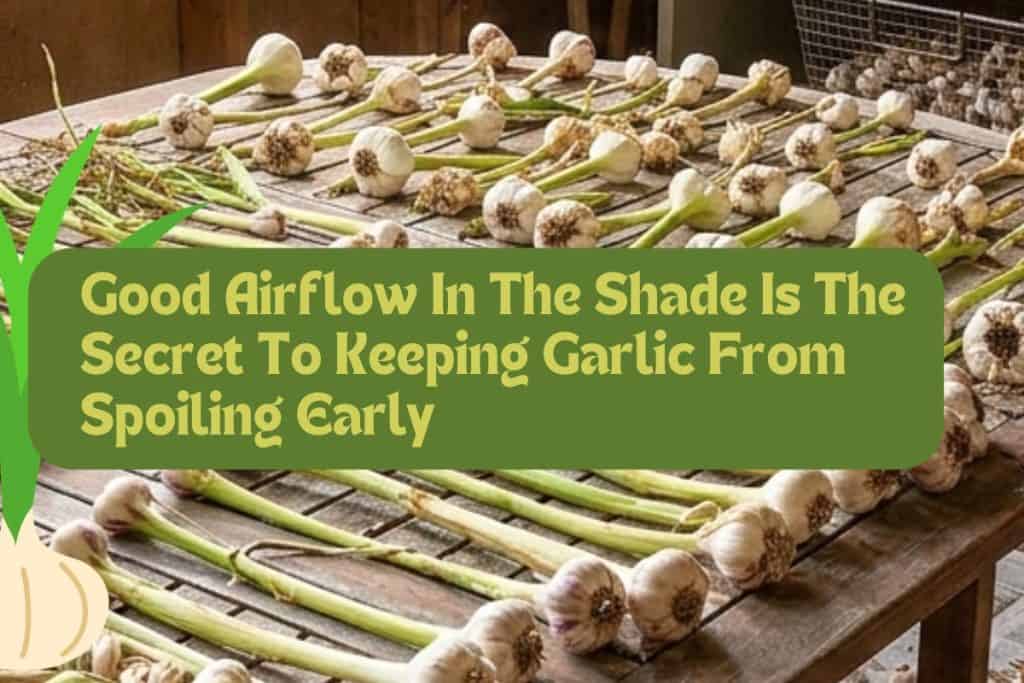
If possible, lay bulbs in a single layer on a screen, rack, or cloth-covered table. Never stack them; air needs to flow around every bulb.
Curing Timeline
The first three weeks are the active curing phase. Bulbs dry down, outer skins become papery, and roots shrivel. After three weeks, you’re in post-cure storage. Total curing time is 3-5 weeks, with softneck varieties curing a little faster than hardnecks.
Preparing for Storage
Once fully cured, you have options. You can leave roots and stems on, or you can trim roots, leaving about half an inch. You can trim stems to half an inch or braid softneck varieties for hanging storage. Braiding helps garlic last longer in storage due to better air circulation and saves space when stored. Don’t remove healthy skin; it is there for protection.
The Garlic Life Cycle
Fall And Winter
When you plant garlic in fall through early winter, ideally about 4 to 6 weeks before your first hard freeze, that clove immediately starts putting out roots. Above ground, there’s minimal visible growth, if any.
In winter, the garlic goes dormant and the vernalization cold requirement triggers the plant to make bulb development the number one priority.
Spring
In early spring, the soil warms up, days get longer, and your new garlic plant wakes up. Foliage starts growing fast, so the plants need steady moisture and nutrients to feed the bulb creation process.
Bulb formation intensifies in late spring. The base of the plant starts to swell because the cloves are dividing and growing larger. This phase is critical to encourage the largest bulbs possible. Continue to be consistent with water and fertilizer to keep stress to a minimum.
Summer
In early summer, the plant shifts its energy from enlarging the bulb to allowing it to fully mature. Cloves develop papery tunics, the wrapper layers that protect them. Foliage starts to turn yellow and begins to collapse. You can back off on watering because the plant is naturally starting to dry itself down to be ready for harvest.
Final Thoughts
In summary, you can cultivate garlic successfully by selecting the right variety and planting it in the ideal window for your climate at the proper clove depth and spacing. Then keep them moist and feed them until they begin to yellow. Whether you’re growing garlic in a pot, in the ground, the core principles remain the same.
The payoff for your hard work will be well worth it. A single clove will become a full bulb with 6–15 cloves for next year’s crop or next year’s kitchen. Pick up some bulbs right now and put them in your refrigerator; you still have time. At least make preparations for growing garlic in the fall, and you will never look back.
Happy growing!
11 thoughts on “From Clove to Kitchen: A Simple Guide on How to Grow Garlic Plants”
I’ve grown garlic from the same gene pool in northern Nevada for decades. Plant in mid October, first appearance of growth in mid January, harvest in the first week of July. Always with good results. This year the green garlic shoots appeared in early November. It’s almost July and I checked bulb progress and, for the first time, bulbs are small (about 3 centimeters in diameter). In this part of the west we have had unusually warm weather recently (!). If temperatures are the cause of these changes, how should I adjust my methods to mitigate the lower yields?
So, if I read this right, here is the issue, the warm weather is the cause, but the mechanism isn’t “warm temperatures shrink bulbs” directly. It’s “warm fall weather → premature emergence → leaf damage or stunted leaf development over winter → smaller bulbs at the normal harvest trigger point. Here are some things to consider going forward. Mitigation strategies:
Delay planting in warm falls. Push your planting date later if temperatures are running warm, to keep cloves dormant until conditions closer to your normal mid-January emergence.
Deepen your mulch. Thicker mulch buffers soil temperature swings, reducing the odds of premature sprouting and insulating any shoots that do emerge early.
Protect early shoots from freezes. If shoots appear ahead of schedule anyway, use row cover or extra mulch during cold snaps to limit leaf dieback.
Front-load nitrogen in spring. Make sure nitrogen is available early to help plants rebuild leaf mass quickly if they’ve had a rough start — taper off well before bulbing begins.
Track emergence date, not just calendar date. Use first-shoot timing as your real signal going forward, and adjust next year’s planting date if early/warm falls become more frequent.
When do I remove the scapes?
Garlic scapes should be removed when they’ve made one full curl, forming a loose loop or circle. Don’t wait for it to straighten back out. For most of the US, about right now (June) is the right time.
If I want to use my own grown garlic to plant in the fall, after I cure do I store for the next 3 months in refrigerator or just store in a dry place?
Jan, make sure you cure it really well and then you should be able to just put it in a cool dry place, not the refrigerator. Garlic doesn’t need pre-chilling before planting, it gets its cold vernalization period in the ground over winter. The process works like this:
You plant in October – The clove puts out roots first (this happens in cool fall soil, even before a hard freeze)
Then it goes dormant through winter, getting its cold treatment underground, then shoots up in spring once temps warm
The key is root establishment before a hard freeze, not top growth. You actually don’t want significant leaf growth before December, a little green poking up is fine, but big leafy shoots going into a hard freeze can be damaged.
I hope that helps. Diane
What if my garlic bulb has already sprouted green, do I put in the fridge for the 4 weeks or can I separate cloves and plant in my container?
Good question. Since the bulb has already sprouted green, it has naturally broken its dormancy. Putting it in the fridge will not help at this point. Cold treatments are used to trick dormant bulbs into thinking winter has passed, so it is ready to divide and grow.
My garlic is growing like I planted the whole bulb instead of individual clove? They are growing in a cluster. Should I separate them and replant them.
Patsy Hart
If it was me, I would dig it up and separate it so that it can multiply.
Thank you