

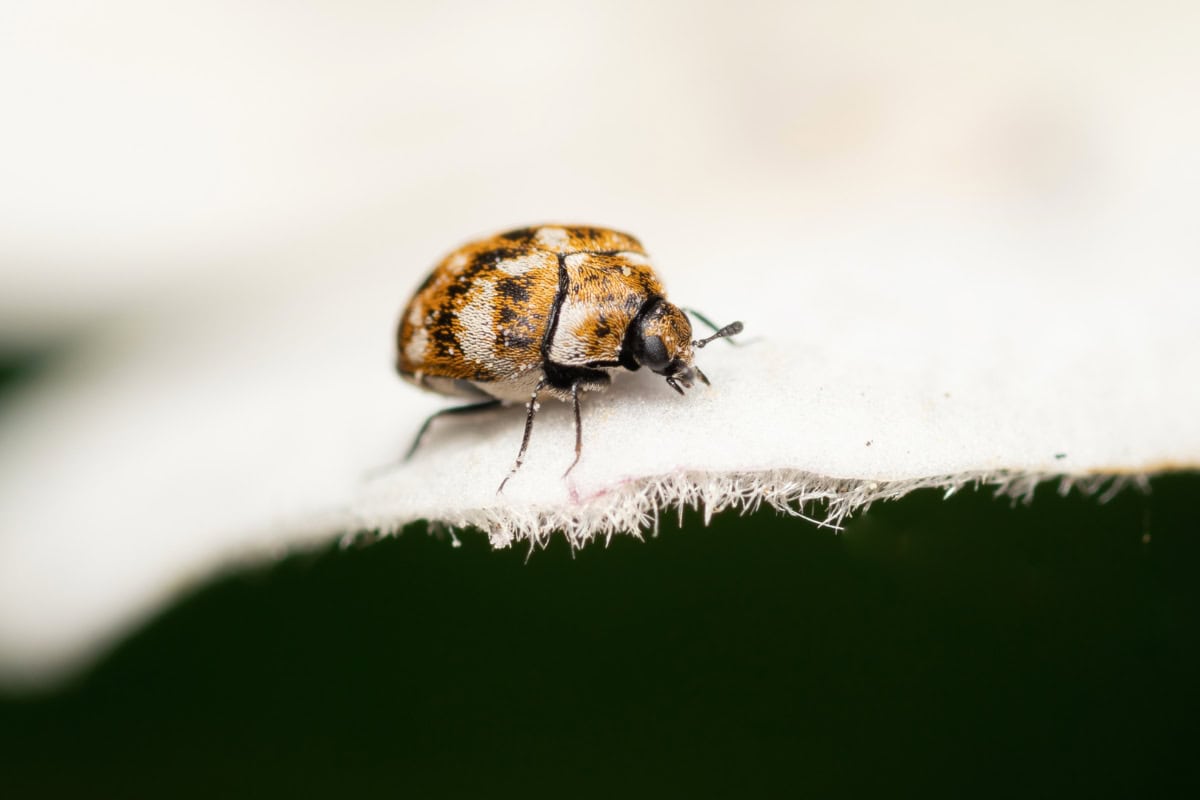
Why do carpet beetles treat natural fibers like an all-you-can-eat buffet?
Historical records from Europe and Asia show that carpet beetles have irritated humans for centuries. Their presence increased as people began storing textiles, grains, and other animal-based products indoors.
If you think you have these unwanted guests, this guide will show you how to get rid of carpet beetles using a few proven methods.
We’ll go over…
- 11 ways to kill carpet beetles (DIY and pro)
- How to use food-grade diatomaceous earth
- Steam cleaning for an instant kill
- Deep vacuuming as a foundational strategy
- Sealing entry points to stop future infestations
- How pros do whole-house heat treatments (costly but unbeatable)
Let’s get started!
What To Know Before Killing Carpet Beetles
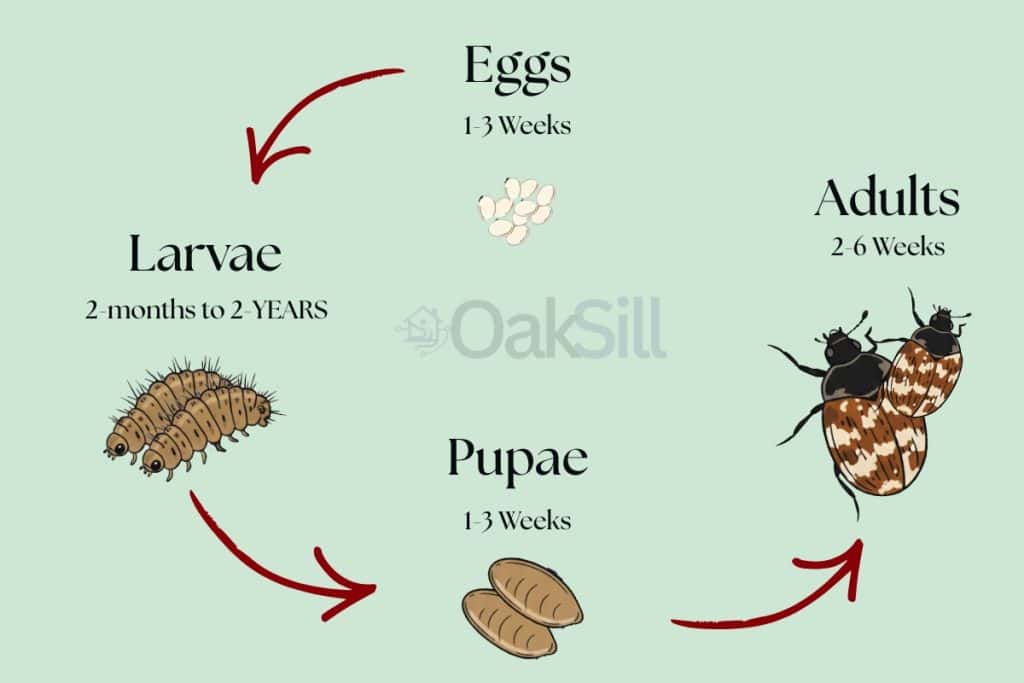
Life Cycle
Carpet beetles develop through four stages (egg, larva, pupa, and adult), but all fabric damage happens during the larval stage. Mature beetles only eat pollen and nectar, they do NOT eat fabric.
Adult beetles lay eggs in a dark area near natural fibers, and they hatch in 1–3 weeks. The larvae feed for several months (or longer) on wool, silk, fur, feathers, pet hair, and lint.
Key Physical Signs
- Small holes or thinning in fabrics
- Shed larval skins (tiny, brown, bristly shells)
- Carpet beetle larvae that appear small, hairy, brown, or striped
- Adult beetles (small, oval, black or mottled colored)
- Damage to rugs, upholstered furniture, or clothing (clean, surgical-looking holes or fabric surface damage)
Are They Dangerous?
Carpet beetles are NOT physically dangerous because they don’t bite, sting, or carry diseases. However, their larval hairs can cause itchy allergic reactions on your skin.
The real threat of carpet beetles is to your property because the larvae can eat through wool, silk, leather, and carpets.
Can They Fly?
Adult carpet beetles are capable fliers and are drawn to indoor light sources.
Flying allows them to enter homes through open windows, doors, or small gaps in siding to lay their eggs.
Way #1: Locate Breeding Spots (Most Strategic)
A crucial prevention step is finding breeding zones so you can eliminate the larvae feeding on organic debris before they spread.
Carpet beetles don’t have nests like other insects but they tend to cluster in certain areas for food and reproduction.
I recommend carefully inspecting your basement, attic, or other dark/quiet area with a flashlight. Don’t forget your air ducts, wall voids, stored boxes, and other undisturbed spots.
Pro Tip: While you have your flashlight out, check out my guide on how to inspect for bed bugs to make sure your home is truly pest-free.
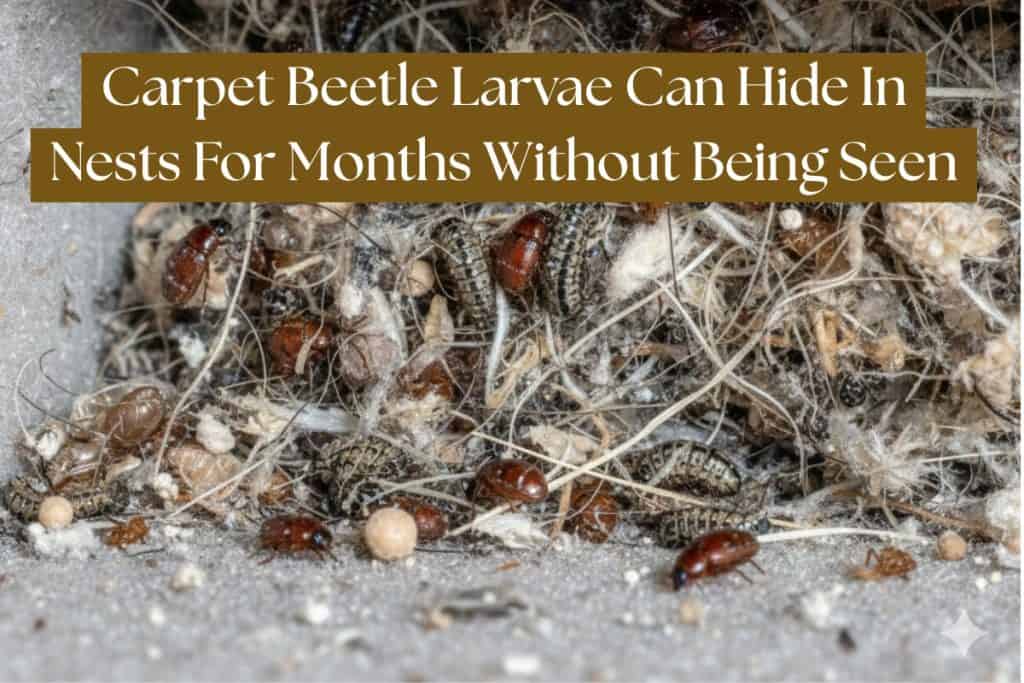
If your home has a particular area with heavy carpet beetle activity, there is likely a hidden breeding spot nearby.
Keep an eye out for larval skins (like tiny bristly husks), adult beetles, and fecal pellets. The beetles may be feasting on dead insects, old bird nests, feathers, or other forgotten fabrics.
If you find a breeding area, discard the infested items in a sealed bag and throw it away outside.
5 Steps To Locating Breeding Spots
- Locate Source: Trace the infestation to its source such as attics, vents, wall voids, and crawl spaces. Use a flashlight to check for hairy larvae, translucent shed skins, and sand-like fecal pellets.
- Remove Items: Bag and discard nests, heavily infested materials, and debris immediately.
- Vacuum Thoroughly: Clean the area to remove eggs, larvae, and organic residue.
- Treat Salvageable Items: Wash, heat-dry, steam, or freeze items that you keep.
- Monitor And Re-inspect: Re-check areas regularly to confirm activity has stopped.
Way #2: Sticky Traps (Best for Detection)
While sticky traps may kill a few carpet beetles, their main purpose is to help monitor beetle activity and infestation levels.
Since sticky traps kill mostly the adults, the fabric-damaging larvae will still be alive somewhere in the house, probably at the breeding source.
A sudden increase of adult beetles on a trap or in a single room may mean there’s an active cluster nearby. If the sticky trap only catches a few beetles (or if the numbers decline), it can indicate that your current pest control strategy is working.
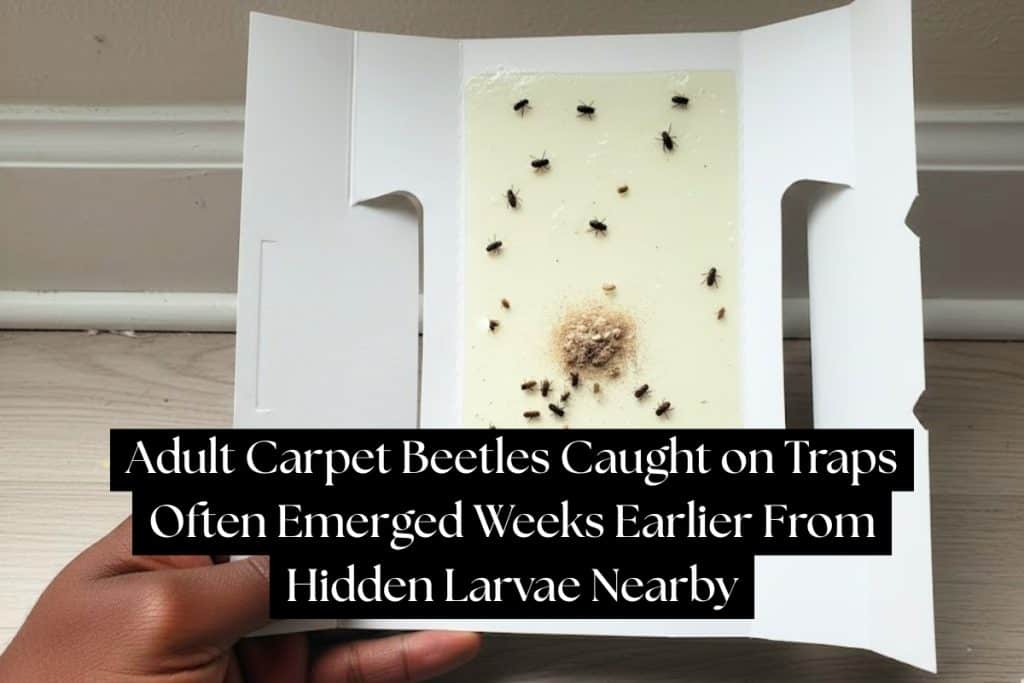
I recommend placing the traps along baseboards, inside closets, under furniture, and by vents — especially where natural fibers are stored.
When you check the traps weekly, you can pinpoint hot spots where the infestation is most concentrated. If you find a lot of beetles on a single trap, it’s a clear signal to deep-clean nearby fabrics, furs, or woolens.
4 Steps To Using Sticky Traps
- Select Traps: Choose plain glue boards for basic monitoring or scented traps for stronger attraction to beetles.
- Choose Locations: Place in a dark and undisturbed spot such as under furniture, along baseboards, in closets, near rugs/upholstery, pantries, or storage areas with natural fibers.
- Position Traps: Lay them flat on floors or level surfaces; place parallel to walls or near suspected activity paths.
- Monitor: Check traps weekly for captures; replace when dusty, filled, or adhesive weakens (every 1–3 months).
Way #3: Vacuuming (Most DIY-Friendly)
Vacuuming is a simple DIY way to physically remove carpet beetles, eggs, larvae, and food sources. It can help break the life cycle by eliminating the next generation of beetles before they reproduce.
However, it’s necessary to vacuum beyond just the open floor areas to really make a dent.
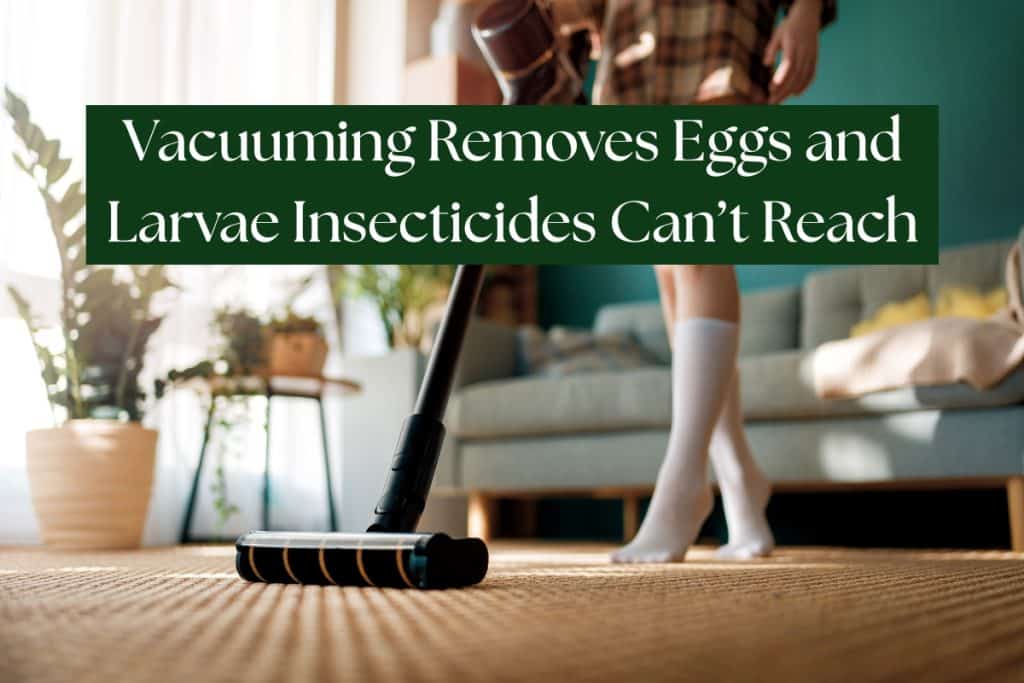
I recommend using a crevice attachment to vacuum deep into baseboards, inside heating vents, under rugs, furniture seams, and other dark cracks/corners where you have spotted larvae.
For a heavy infestation, you may want to vacuum daily and immediately empty the vacuum outside to prevent larvae from crawling back out.
While vacuuming won’t solve severe infestations on its own, it can dramatically reduce beetle numbers and makes other treatments more effective.
This level of deep cleaning is a similar first line of defense for other invaders, too — check out my full guide on how to get rid of bed bugs to see why vacuuming is so critical for them.
5 Steps To Vacuuming
- Focus On Hiding Spots: Focus on carpet edges, baseboards, closets, furniture seams, under rugs, and vents.
- Use Right Attachment: Crevice and brush tools help reach cracks and fabric folds where larvae hide.
- Repeat Frequently: Vacuum every 2–3 days during active infestations.
- Trash Disposal: Seal and discard bags or empty canisters outside the home.
- Follow With Other Treatments: Pair vacuuming with heat, DE, or insecticides for better control.
Way #4: Hot Washing And Drying (Fast & Chemical-Free)
Simply washing and drying your clothing, bedding, and other fabrics is one of the most reliable ways to kill carpet beetles.
It’s essential to use a hot wash and dry cycle so the high temperature will kill all larvae, eggs, and adult beetles.
If you can’t hot wash a delicate fabric, using only a high-heat drying cycle can still be effective. Ideally, water in the hot wash cycle should hit at least 120°F to kill most or all of the carpet beetles.
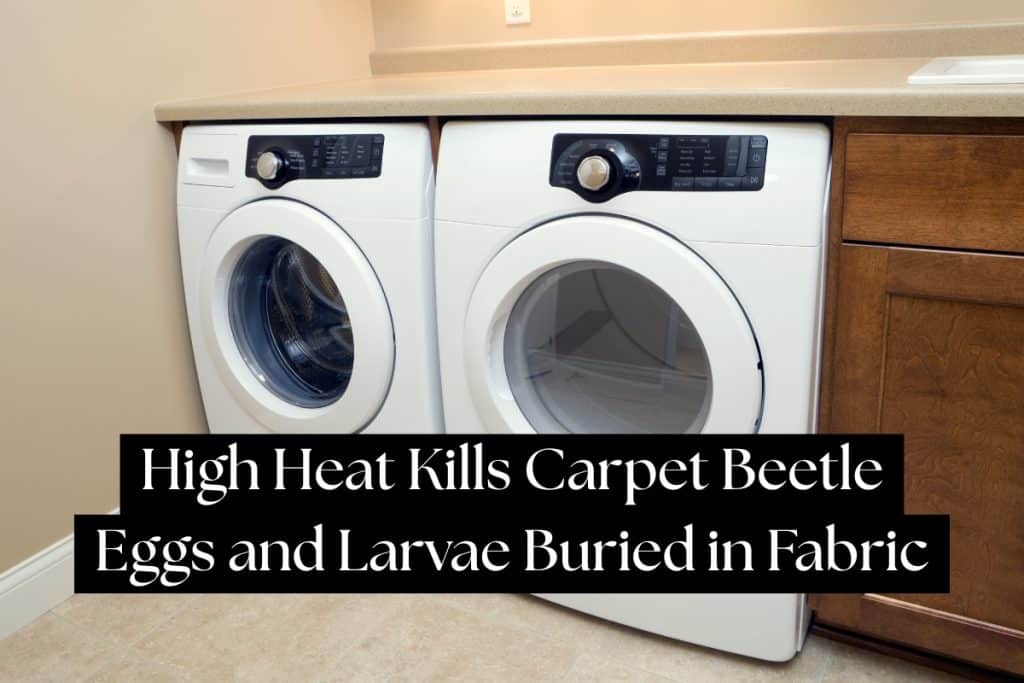
The sustained heat from the dryer will help kill off any surviving eggs that survived the hot wash cycle.
The downside to this strategy is the possibility of damaging or shrinking clothes from the high heat. Just be sure you are okay if the item shrinks and you may want to check the label so you don’t harm it.
The hot wash/dry cycle method works quickly and it’s useful for contaminated items removed from closets or storage areas.
Way #5: Steam Cleaning (Deep Fiber Kill)
For carpets and upholstered furniture, steam cleaning can be a highly powerful way to kill carpet beetles. The high temperature steam penetrates deep into the fibers and cracks to instantly kill larvae and eggs.
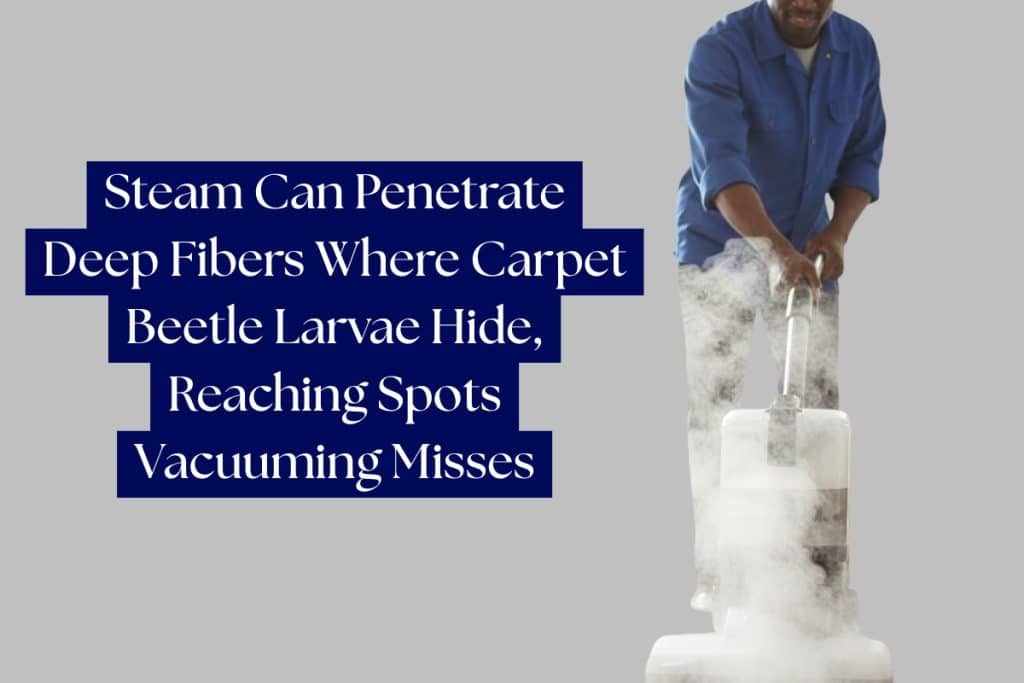
It’s essential to move the steam cleaner slowly along carpet edges, baseboards, seams, and furniture joints. Ideally, you want to steam clean only AFTER you have vacuumed to remove debris.
The main risk is that a re-infestation is possible if food sources and entry points aren’t fixed, so it isn’t a cure-all.
Related Guide: If you’re dealing with pests in your kitchen or bathroom, read my article on how to get rid of drain flies.
6 Steps To Using Steam Cleaning
- Pick Targets: Focus on edges, seams, under furniture, and high-traffic zones. Try to find the primary source where you see hairy/bristly larvae or shed skins.
- Move Slowly: Work in small sections: apply steam steadily (hold nozzle 1–2 inches above surface) for 10–30 seconds per spot to ensure heat penetrates fibers and kills all stages.
- Target the Edges: Spend extra time along baseboards and in dark corners. Carpet beetle larvae hug the edges of rooms where pet hair and dust accumulate.
- Avoid Overwetting: Use controlled steam to prevent excess moisture and mold risk.
- Let It Dry: Run fans, open windows, or use a dehumidifier. Make sure everything is bone-dry within 24 hours.
- Repeat If Needed: Re-steam every 3–7 days for 2–3 rounds if infestation persists.
Way #6: Freezing (Safest for Delicates)
When washing isn’t an option, freezing offers a safe, fabric-friendly way to deal with carpet beetles.
The cold temperature turns the water in their cells into ice crystals, causing damage to internal organs.
I recommend first placing your item in a sealed plastic bag to prevent moisture buildup.
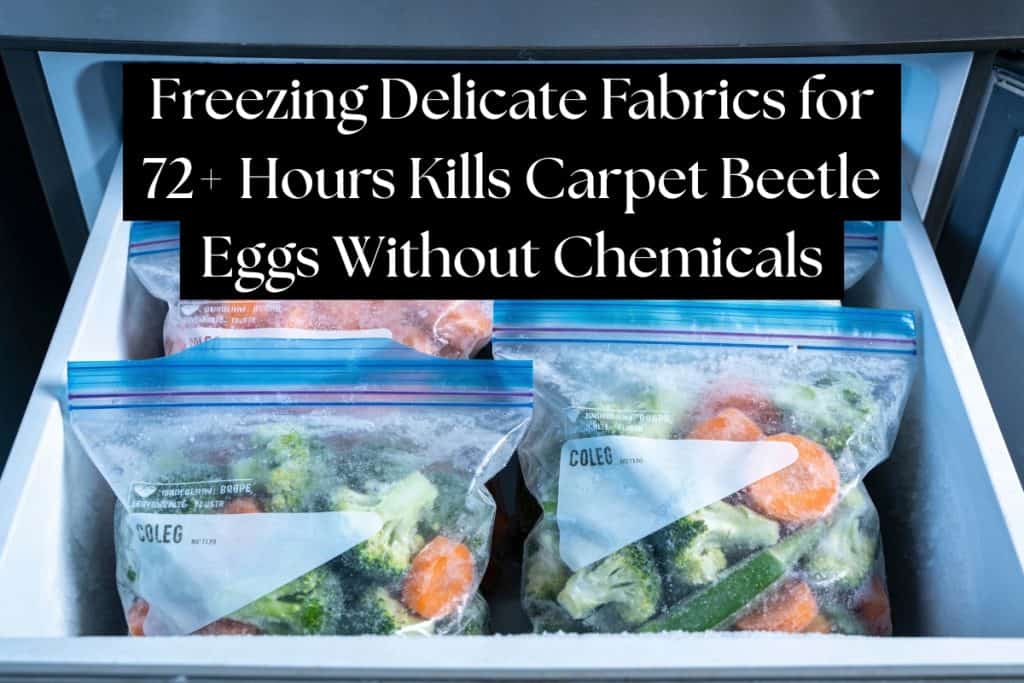
Once in your freezer, wait at least 7-14 days for it to kill the larvae and eggs. The safest bet is to leave in the freezer longer if possible for a few weeks.
It’s recommended to keep your freezer to at least 0°F, but if you can drop it to -20°F, you can speed up the killing process.
5 Steps To Freezing Delicate Items
- Identify Infested Items: Target clothing, rugs, stuffed animals, or small fabrics showing signs of carpet beetles.
- Use Plastic Bag: Place items in airtight bags to prevent moisture and condensation during freezing.
- Set Freezer Temperature: Ensure the freezer is at 0°F or lower if possible.
- Freezing Time: Keep items frozen for at least 7-14 days to kill larvae and eggs but wait 3-weeks if possible for a guaranteed kill.
- Return Items To Use: Remove from freezer, allow to thaw completely, and inspect before bringing back indoors.
Way #7: Diatomaceous Earth (Cheapest Long-Term)
Diatomaceous earth or DE is a type of powder made up of fossilized algae which is commonly used as a filtration medium in pool filters.
For home use, it’s essential to buy food-grade DE to avoid any type of ill health effects.
This powder is also incredibly to stop an ANT invasion, read my guide on getting rid of ants to see how it works.
The basic idea is to sprinkle a small amount of DE around carpet edges, baseboards, and other dark areas where carpet beetles have been seen.

The DE works primarily through adsorption; it wicks away the protective waxy layer of the exoskeleton, causing the insects to dehydrate and die over a few days.
Boric Acid Alternative
If you can’t find food-grade DE powder, you can also use boric acid as a substitute.
Boric acid is likewise sprinkled as a very fine layer similar to DE which ends up poisoning and dehydrating them.
Risks
Just be sure that you don’t sprinkle too much of the powder since the beetles will avoid it rather than crawl through it.
DE (or boric acid) won’t work well if you have a heavy infestation, and it also becomes useless if it gets wet.
5 Steps To Using Diatomaceous Earth
- Use Correct Type: Buy only food-grade diatomaceous earth. Pool-grade DE (used for filters) is hazardous if used indoors.
- Vacuum: Clean and vacuum the area first to remove all dust, larvae, eggs, hair, and lint so there is more direct contact between the DE powder and the carpet beetles. Make sure the area is thoroughly dry or the DE becomes useless.
- Apply Thin Layer: Dust a thin, barely visible coating along baseboards, carpet edges, cracks, and seams. I recommend using a soft brush, hand duster, or small bottle to spread the DE powder.
- Leave It In Place: Allow DE to sit for several days so insects have time to contact it. Also, make sure to keep it away from kids or pets, and don’t breathe it in.
- Vacuum And Reapply: After 5–7 days, vacuum up the DE and repeat in active areas.
Way #8: Use Insect Growth Regulators (Best Life-Cycle Control)
Insect growth regulators or IGRs controls carpet beetles by disrupting their life cycle, preventing larvae from molting into adults. Some of the top IGR products on the market include NyGuard, Tekko, and Gentrol.
These insecticides were developed in the mid-20th century as a safer alternative to broad-spectrum insecticides, and are widely used in the pest control industry.
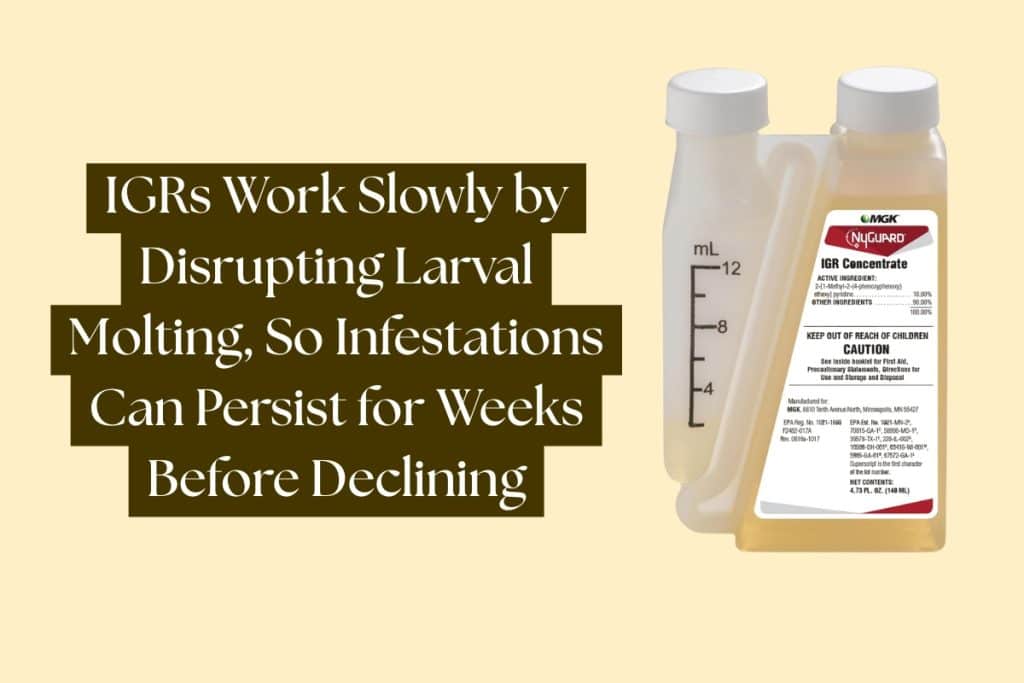
IGRs don’t kill instantly but reduce populations over time, especially when combined with cleaning or residual sprays.
These sprays generally have low toxicity to humans and pets when following the labeled instructions, but overexposure or misuse can cause irritation.
IGRs are ineffective against existing adult beetles but will prevent their eggs from hatching, so you will need patience to see them decline in number.
5 Steps To Using IGRs
- Select An IGR: Use products specifically approved for carpet beetles.
- Target Hidden Zones: Treat cracks, seams, and fiber-rich areas, not open surfaces.
- Combine With Cleaning: Vacuuming and cleaning improves the IGR effectiveness.
- Give It Time: Expect gradual population decline over several weeks.
- Re-Apply: Monitor with sticky traps and re-apply the IGR if needed.
Way #9: Contact Insecticides (Quick Knockdown)
Homeowners can use broad-spectrum insecticides to help control active carpet beetle infestations.
These indoor insecticides should have ‘beetles’ as a labeled use, but they are generally for a wide variety of insects.
I recommend searching for sprays that contain pyrethroids like bifenthrin, deltamethrin, or permethrin.
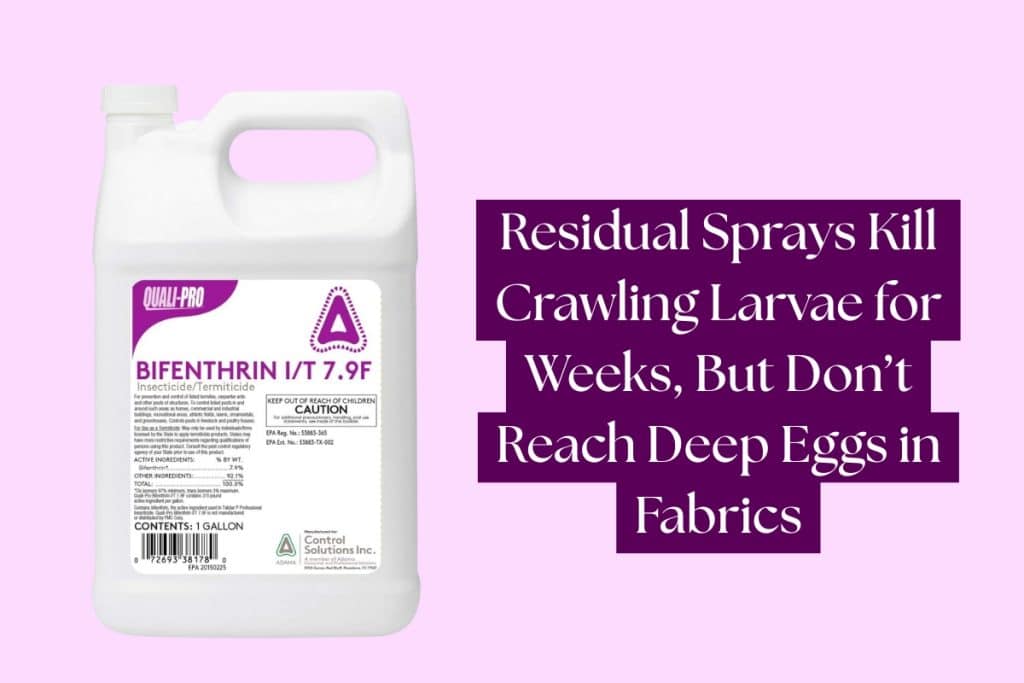
These active ingredients have a residual effect, killing larvae that crawl over treated surfaces for weeks.
You should apply these insecticides to cracks, baseboards, carpet edges, closets, and under furniture, NOT broad carpet/floor surfaces. Don’t ever spray on clothing, bedding, furniture, or where you prepare food.
Always follow the label exactly and ventilate the area during application. Insecticides work best after vacuuming, laundering, and cleaning.
Contact insecticides won’t penetrate deep fabrics well, so they’re most effective as a targeted, supplemental treatment.
6 Steps To Using Insecticides
- Confirm Label: Choose an insecticide that lists beetles and is approved for indoor use.
- Vacuum First: Remove larvae, eggs, lint, and debris so the insecticide can contact insects directly.
- Target The Right Areas: Apply only to cracks, baseboards, carpet edges, closets, under furniture, and wall voids.
- Apply Lightly And Precisely: Use low pressure or crack-and-crevice application; avoid soaking surfaces.
- Ventilate And Vacate Briefly: Follow label directions for airflow and re-entry timing.
- Let It Dry Undisturbed: Residual insecticides work best when left untouched.
Way #10: Sealing Entry Points (Most Preventive)
The best way to stop carpet beetles after eradication is to stop them from entering your home in the first place.
Adult carpet beetles enter your home through tiny cracks (or hitchhike on items) in a desire to lay eggs in a warm and safe place.
When you thoroughly caulk the exterior and interior, it is a simple and potent way to keep the bugs out.
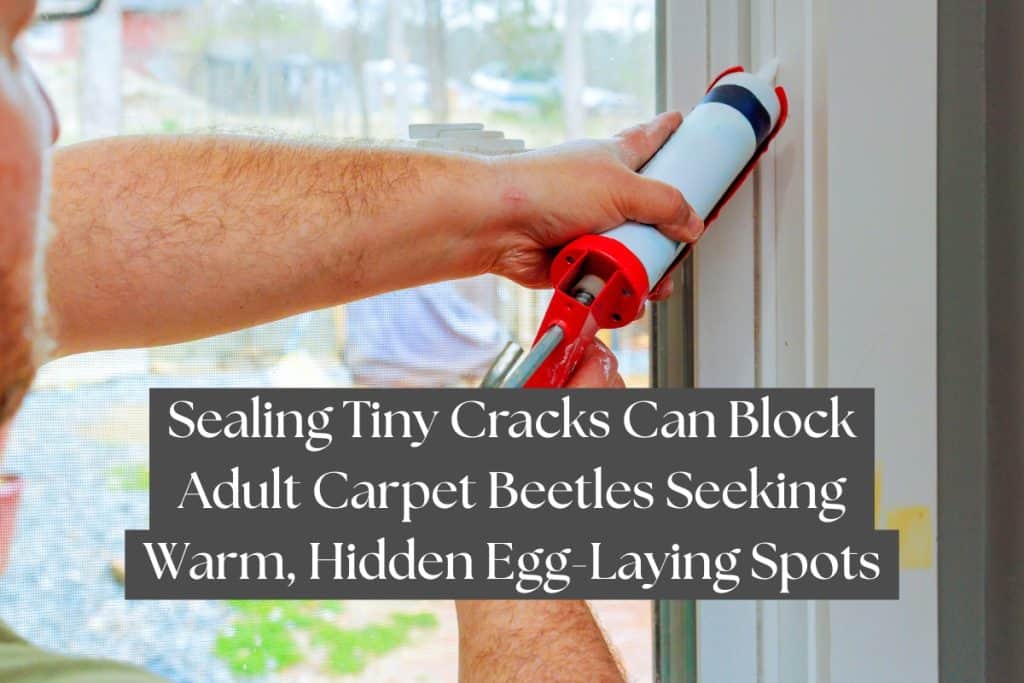
On the exterior, verify that there aren’t any holes/cracks around windows and doors.
Make sure all exterior wall penetrations are sealed such as plumbing, around ducts/vents, electrical wiring, and lights.
It’s essential to carefully inspect the eaves and attic to stop any entry points for carpet beetles. I also recommend trimming any trees or bushes that are touching the house or getting too close.
4 Steps To Sealing Entry Points
- Inspect: Focus on windows, doors, vents, utility penetrations, attic gaps, and foundation cracks.
- Be Cautious With Vents: Never seal vents, chimneys, or combustion air openings, only the gaps around the pipes/ducts should be sealed.
- Use Right Caulking: Apply exterior-grade caulking or sealant for small cracks, foam for larger gaps, and weatherstripping for doors.
- Monitor: Watch for continued beetle activity and reseal areas that reopen with weather or settling.
Way #11: Whole-House Heat Treatment (Most Powerful)
Whole-house heat treatments are probably THE most effective way to exterminate carpet beetles.
This pro strategy raises the ambient air temperature of the house to around 140°F to 150°F using specialized heaters and blowers.
The high heat is kept at that level for 4-6 hours which allows the extreme temperature to kill off beetles, larvae, and eggs that are within furniture or wall voids.
The heat penetrates carpets, walls, furniture, and other hidden areas that are almost impossible to get to using other methods.
Disadvantages
The biggest drawback is likely the cost. The average cost is around $1500 to $6500, depending on the size of the home, the extent of the infestation, the local living expenses, and other factors.
You will also need to remove all electronics, plastics, and other heat-sensitive belongings from the home to avoid harm.
Even though heat treatments work great, it doesn’t prevent a re-infestation if all entry points aren’t sealed; thorough caulking and sealing is recommended afterwards.
Final Thoughts
Getting rid of carpet beetles takes persistence, it isn’t a single quick fix.
The best approach combines deep cleaning, heat-based methods, targeted treatments, and removal of food and breeding sources.
Once the infestation is under control, sealing entry points and monitoring helps keep them from returning.
With the right steps, carpet beetles can be eliminated and your home protected long-term.
Share your experience with getting rid of carpet beetles below, or ask me a question!
References
- UC IPM: The go-to “industry bible” for cleaning and prevention strategies.
- NPIC (Oregon St./EPA): The best site to fact-check which sprays and powders are actually safe for your home.
- Univ. of Kentucky Entomology: Pro-level tips for hunting down hidden breeding spots in vents and attics.
- Cornell Extension: Practical DIY advice specifically for saving rugs and vintage clothes.
- PennState Extension: The best data on the exact kill-temperatures needed for heat or cold treatments.

10 thoughts on “11 Proven Ways to Get Rid of Carpet Beetles (DIY, Pro, & Prevention)”
Wow this has been so enlightening! My family thinks I’m crazy and my scalp itches at night. I actually saw a larva in kitchen tried to take a pic but dropped it! I want it as proof for my family. Also it was great bc carpet beetles were on friends and neighbors tonight. Anyway never in my life would I think I would be dealing with this. I vacuum , DE, Nyguard and have exterminators and nothing helps
Happy to give you some ideas! It can be a frustrating problem.
Has your husband looked at you yet like you lost your mind. You can hear him saying it even though he’s not saying it? I’m so glad to see other people describe an exactly what I’ve been going through. He has thought I was losing my mind. But now he’s getting the spots too, he is seeing it everywhere, he’s tossing and turning because they won’t go away; and there are so many.!, I’m so glad to see other people’s describing exactly what I’ve been going through for months now. I think this is a new type of infestation. I ain’t never seen anything like this and the older people I talk to have never seen or heard of anything like this. Yes they saw one here and there back in the day but nothing like we’re having now! Somebody should look into that!
Please help me. I’ve been dealing with them in my skin making me itch uncontrollably. They come out of my skin little black things. I’ll have an itchy and tell my boyfriend where it itches and every single time it’s a little black thing. Some look like a bundle of yarn. I’m honestly going crazy. I’ve been dealing with this for 3 years now. Everyone thinks I’m crazy, my doctor even put in my chart that im seeing things and going crazy. What do I do please help!!!!
I recommend getting a 2nd opinion from a dermatologist, maybe bring some carpet beetles to him in a jar as proof. And maybe contact a professional pest control company.
I bathe with a cap full of bleach shave down some moth balls & add apple cider vinegar to my water and sea salt.ans same with fac
.ewashing
Can they get in your hair? Some nights my head itches so bad
They don’t eat hair or infest hair like lice, but the larvae can get on your scalp if they’re in your bedding or clothing. Their tiny hairs can irritate skin and cause itching.
Hello Arie , I’ve recently had and have Carpet beetles which I contracted from a former employers house (she had old oriental rugs brought up from her basement) and since then I started getting these things in my skin which actually if you pick them off turns into a deep hole. I’ve seen the dermatologist she tells me I have eczema (@56 yrs old I know I don’t have eczema) and it’s not itchy. A friend of mine has been dealing with this for 3 yrs and she blamed it on those carpets in that woman’s house and is why they were put in her basement until recently. I thought she was losing her mind everyday complaining her skin her skin well now I know she’s not because I’m in the same situation and have been diligently cleaning from morning until night . My daughters are worried about me they think I’m loosing my mind. But I can’t let this go beyond what it was I’m trying to avoid an exterminator and their fees so yes I’m loosing my mind but because it’s ruining my face and other areas of my skin I never thought I would be dealing with such a thing and I’m apparently allergic to the hairs of these things. They also have a smell to them almost like a stink bug and just when I think I’m close to the end of this as far as vacuuming and cleaning smell it and off I go. Try explaining this to someone and they literally think I’m off my rocker. It’s so disturbing and why would I want my face all hacked up with small holes from a type of bug. This is absolutely devastating and life altering. Any suggestions that I’ve not done or read yet please feel free to respond back.
Wow, that sucks! I would probably seek a second opinion from a different dermatologist. The bugs cause something called carpet beetle dermatitis which is a reaction from the larval hairs. You also may need a pro pest control treatment to fully remove them, fyi.