

Winter is coming. No, really — it’s already poking its chilly nose through the calendar.
And while most folks run to the thermostat, there’s a smarter, thriftier club of homeowners quietly doing things that keep their homes warmer and their heating bills far lower.
Below are 10 genius tactics people use before the first hard freeze.
Each one is practical, mostly inexpensive, and proven to cut heating costs while making houses comfier.
1) Seal the obvious — and the sneaky — air leaks (the biggest bang for your buck)
Why it’s genius: big heat loss happens through tiny openings. Seal them and your house stops bleeding warm air. What homeowners do:
- Walk the perimeter of the house and feel for drafts around windows, doors, electrical outlets, and baseboards. Use a candle or incense stick on a calm day: when the smoke leans, you’ve found air movement.
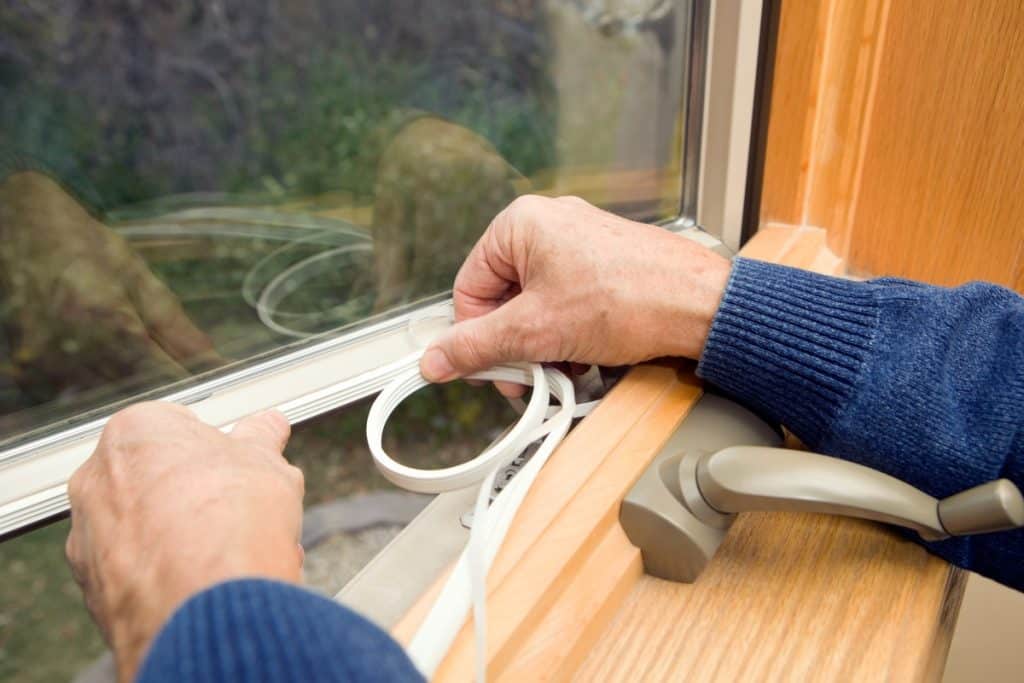
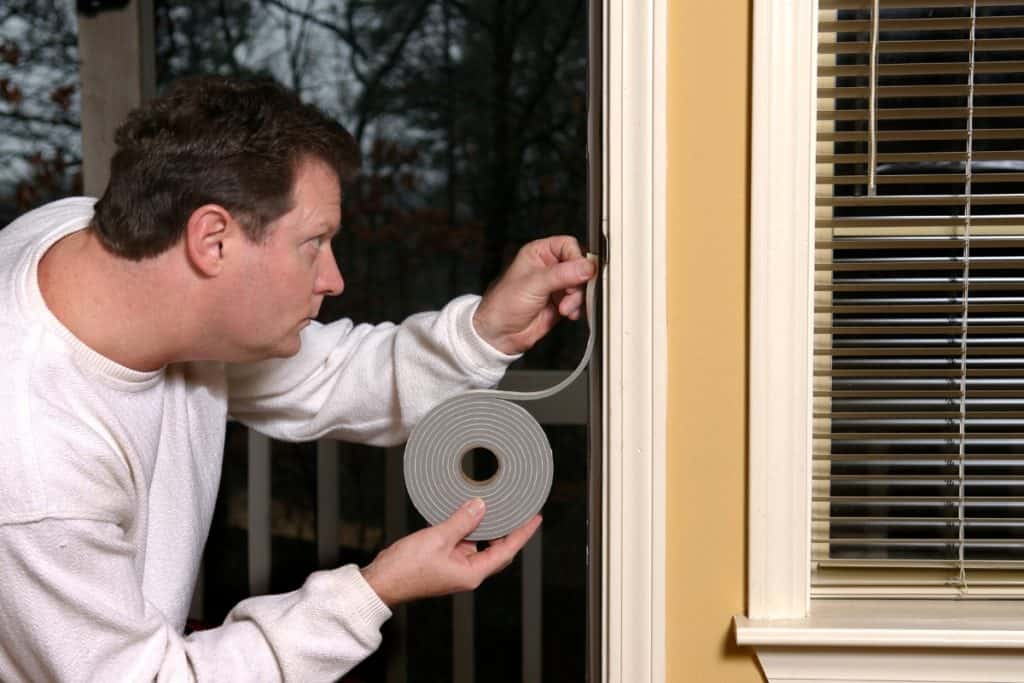
- Replace or add weatherstripping around windows and doors. Use adhesive foam tape for sash windows, V-strip for door edges, and a door sweep for the bottom gap.
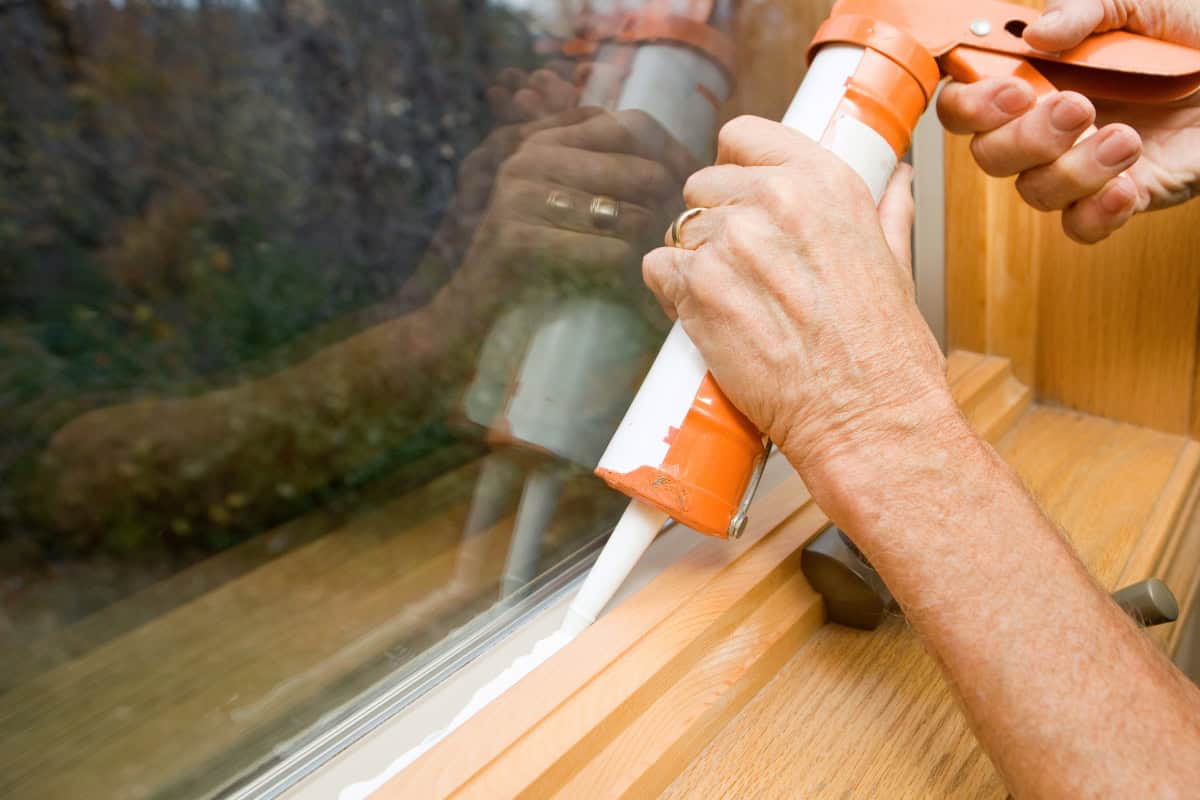
- Caulk stationary joints: between window/door trim and siding, between baseboards and the wall, and around plumbing penetrations.
- Use low-expansion spray foam for gaps larger than ¼ inch, especially around plumbing, vents, and where framing meets foundation.
- Put foam gaskets behind electrical outlets and light switches on exterior walls — these little tricks are wildly effective.
Tools & materials: caulk gun + silicone/latex caulk, adhesive foam tape, V-strip, door sweep, spray foam cans, outlet gaskets. Total starter kit: typically $60–$150 depending on quality.
Why It Saves
Sealing leaks reduces drafts and stops warm air escape. Typical homeowner savings vary by climate and existing leakage, but many people report 5–20% reductions in heating bills after comprehensive air sealing.
Quick How-To (One Afternoon)
Start at the attic hatch and work downward. Seal attic access with weatherstripping, then move to windows and doors, then the basement and crawlspace access. Finish by sealing outlet gaskets.
Pro Tip: prioritize sealing in this order — attic access, exterior doors, windows, foundation penetrations, and duct joints.
2) Add targeted insulation where it actually matters (not necessarily the whole house)
Why it’s genius: full-house insulation overhauls are costly. Smart homeowners add insulation only where it yields the best return.
High-leverage spots:
- Attic: heat rises. Adding attic insulation often pays fastest. Most homes benefit from more than the bare minimum of insulation above the ceiling plane.
- Kneewalls and ducts in unconditioned spaces: insulate ducts that run through cold attics, crawlspaces, or garages.
- Rim joists: the band of wood between the foundation and first floor is a massive leak/thermal bridge. Seal and insulate it.
- Under floors above unheated spaces: a few inches of insulation under living room floors above unheated garages does wonders.
Materials & cost: batt insulation (fiberglass/mineral wool), rigid foam board, spray foam for rim joists. A DIY attic top-up can often be done for $200–$800 depending on area and starting point; targeted rim joist sealing/insulation might be $50–$300 in materials and a weekend’s labor.
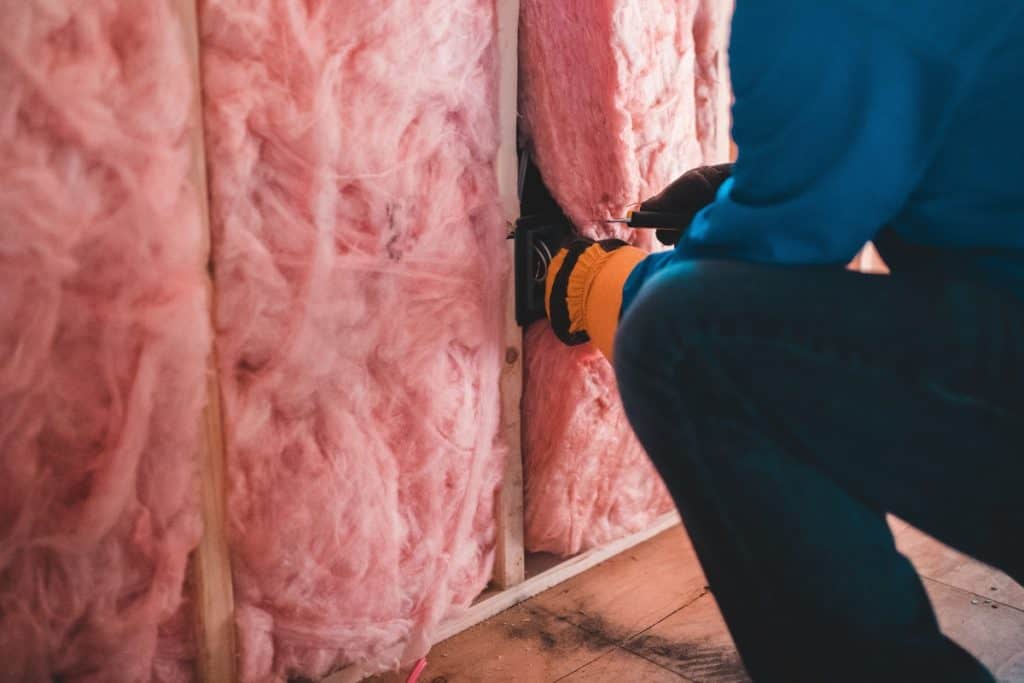
Why it saves: insulation slows heat flow out of the home. Paired with air sealing, it’s multiplicative: fewer leaks + more insulation = significant heat retention.
How homeowners do it affordably:
- Roll/batt added over joists in attics — put new batts perpendicular to old ones to reduce gaps.
- Use rigid foam against foundation walls or under floors in basements/crawlspaces.
- Spray foam + rigid board at rim joist for a tidy, effective seal.
Safety note: when insulating around recessed lights or chimneys, follow clearance rules — use rated insulation or install thermal boxes.
3) Give your furnace & ducts a pre-season tune (prevent waste)
Why it’s genius: an efficient system uses less fuel. Small maintenance prevents big waste.
What homeowners do:
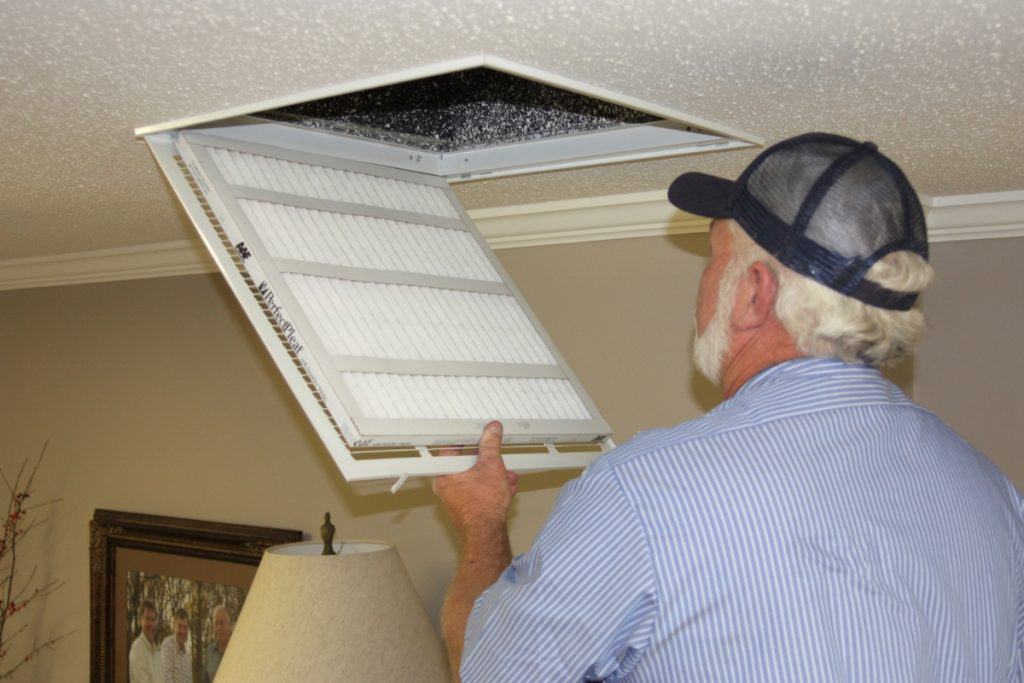
- Replace or clean HVAC filters before season start (and check monthly). A clogged filter reduces airflow and increases runtime.
- Schedule a professional tune-up every 1–2 years: clean burners, check heat exchangers, adjust controls, and verify safe operation.
- Seal visible duct joints with foil-backed mastic or UL-approved duct sealant (not cheap cloth tape).
- Insulate accessible ducts in unconditioned spaces with wrap insulation (R-6 or better if possible).
DIY vs pro: filter changes and basic visual duct checks are DIY. A professional tune-up costs $80–$200 but can improve efficiency and catch safety issues.
Why it saves: optimized combustion and airflow translate into less runtime. Combined with sealed ducts, more of the produced heat actually reaches rooms — not the attic.
4) Winterize windows without breaking the bank (two-tier approach)
Why it’s genius: windows are responsible for substantial heat loss in many homes. You can improve them cheaply or upgrade selectively.
Budget moves homeowners use:
- Thick curtains or insulated cellular shades: close them at night and open on sunny days.
- Window film: shrink-wrap film kits for winter reduce convective losses across glass.
- Rope caulk for old single-pane sashes: fills small gaps around sashes and trim.
- For greener homeowners: install interior storm windows or invest in one or two double-pane replacements on the worst windows.

Costs:
- Curtains/shades: $20–$150 per window depending on quality.
- Window film kit: $10–$30 per window.
- Interior storm windows: $50–$200+ per window.
Why it saves: glass conducts heat more readily than walls. Blocking drafts and improving glazing reduces heat flow and makes rooms more comfortable.
Pro tip: prioritize south-facing windows for solar gain during daytime — open shades when the sun’s out.
5) Tame the fireplace (because a pretty fire can be a big energy leak)
Why it’s genius: fireplaces look cozy but are often massive heat losers when idle.
Savvy homeowner moves:
- Close the damper when not in use. Sounds obvious — but many forget.
- Install a top-seal damper (metal seal at the top of the chimney) — far more effective than standard throat dampers.
- Use a chimney balloon for long periods when the fireplace is unused (deflate before use).
- Consider an efficient wood insert or gas insert if you use the fireplace a lot — these convert more fire energy to home heat and seal better.

Cost & payoff:
- Damper maintenance and top-seal install: a few hundred dollars if you hire it out.
- Chimney balloon: $25–$50.
- Inserts: thousands, but if you use the fireplace often, they are more efficient and safer.
Why it saves: open chimneys act like giant chimneys for warm air. Sealing stops conditioned air from escaping up the flue.
Safety note: always remove chimney balloon or open damper before starting a fire. Check for proper venting.
6) Use smart zone control without reno headaches (thermostat tactics + space heaters done right)

Why it’s genius: heat where people are — not where they aren’t. Zone control saves energy and improves comfort.
What homeowners do:
- Install smart thermostats and program setback schedules: lower temps when everyone’s out or asleep. Many people who used to keep heat steady now drop it by 6–8 degrees at night or when away and save serious cash.
- Add a smart radiator valve or smart venting for secondary rooms (where practical).
- Use small, efficient electric space heaters strategically for occupied rooms instead of heating the whole house — but only modern, safety-certified models with thermostats and timers.
Behavioral hacks:
- Wear a sweater and lower thermostat 2–4 degrees — small comfort sacrifice, big savings.
- Use timed setbacks: aim for 60–64°F overnight (depending on household comfort and health needs) if safe and comfortable for residents.
Caveat: electric space heaters draw a lot of power. Use them selectively and only in rooms where you can stay safe and attentive.
Why it saves: whole-house heat for an empty house is wasteful. Targeted heating and timed setbacks reduce fuel use directly.
7) Optimize heat distribution: ceiling fans, furniture placement, and vent balancing
Why it’s genius: often heat is wasted by poor circulation — warm ceiling air and cold floors. Fix circulation and feel warmer without more heat.
Smart moves homeowners use:
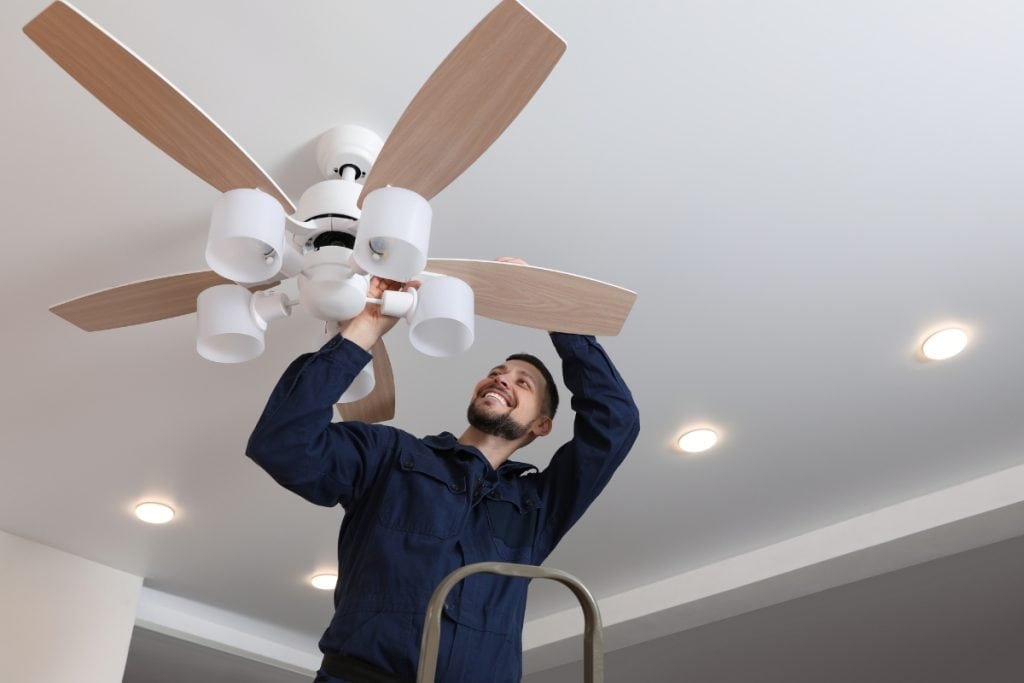
- Reverse ceiling fans to push warm air down (clockwise at low speed). This small flip keeps rooms more even and reduces thermostat needs.
- Keep vents unobstructed. Move furniture away from supply vents so warm air can circulate.
- Close vents in unused rooms and slightly open vents in cold rooms for better flow. (Be cautious with HVAC systems — don’t close too many vents or it can raise furnace pressure. Close strategically.)
- Install vent deflectors to steer warm air into living zones instead of windows or exterior walls.
Why it saves: better distribution means the thermostat reaches set points sooner and runs less often. It also reduces cold spots that tempt people to crank the heat higher.
DIY: reverse fan switch, move a couch, and check vents in 30 minutes.
8) Insulate and weatherproof exterior doors and thresholds (tiny details, big impact)
Why it’s genius: doors — especially older entry doors — are common leak sources plus a visible thermal bridge.
What homeowners do:
- Install a new door sweep or threshold with an integrated seal.
- Replace or add weatherstripping around the jambs. Foam, V-strip, or tubular rubber work depending on the gap.
- Consider storm doors: they add an extra insulating air layer and protect the main door from cold wind.
- If replacing a door, choose an insulated steel or fiberglass door with a good thermal break and low U-factor.
Cost & payoff:
- Door sweeps and weatherstripping: $20–$100 installed DIY.
- Storm doors: $150–$400 installed.
- New insulated doors: $500–$2,000+ depending on materials and install.
Why it saves: sealed doors reduce drafts and the energy lost when the door sits closed for long periods. Storm doors add a buffer.
9) Fix ductwork and heat losses in basements, crawlspaces, and garage interfaces
Why it’s genius: duct losses can be sneaky. Leaky ducts in unconditioned spaces waste heat produced by the system.
Homeowner upgrades:
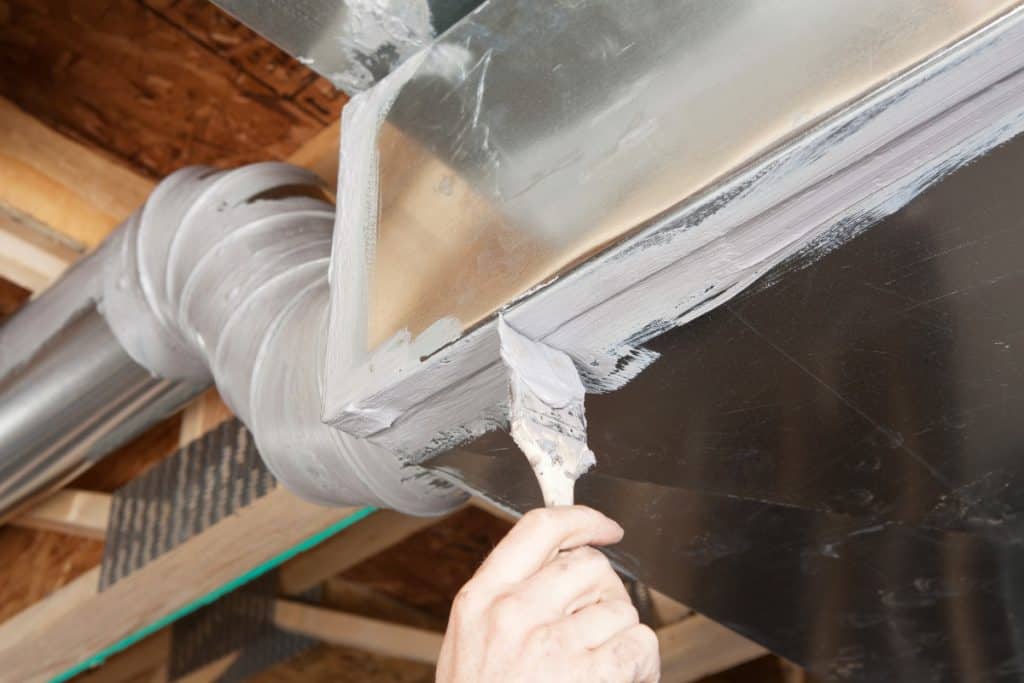
- Inspect ducts in basements/attics for loose joints, gaps, and holes. Seal with mastic (preferred) or foil HVAC tape (not cloth tape).
- Insulate ducts in unheated spaces with R-6 or higher wraps to reduce conductive loss.
- Close and insulate garage-to-house doors and seal gaps where duct or return lines pass through the garage.
Costs & ROI:
- Duct mastic and wraps: $50–$200 materials DIY.
- Professional duct sealing: $200–$700 depending on system size.
Why it saves: once sealed, more of the heated air reaches living areas. People commonly report noticeable comfort improvements and lower fuel bills.
10) Do a seasonal systems checklist and plug energy leaks everywhere else
Why it’s genius: the last 10% of savings comes from thorough seasonal prep. Homeowners treat winter like a project, not a surprise.
Seasonal checklist items people swear by:
- Programmable/smart thermostat schedule set with gradual ramping to avoid spikes.
- Humidifier maintenance: properly humidified air feels warmer, so you can keep the thermostat lower. Either use whole-house humidifiers or portable ones in occupied rooms.
- Reverse fan blades (already mentioned) and vacuum registers to ensure good airflow.
- Check seals on the washer/dryer vent, kitchen exhaust, and furnace/boiler flues for leaks.
- Move area rugs to keep feet warm and reduce heat lost to cold floors.
- Service humidifiers and check that combustion appliances vent correctly (safety first).
Why it saves: the combination of small, smart moves compounds into major savings. Homeowners who do all these items consistently see cumulative benefit — both dollars and peace of mind.
Real homeowner mini-case studies (actual moves, actual savings)
People like specifics. Here are three compact stories that show how small to medium effort pays off.
Case 1 — The townhouse weatherstrip blitz
Context: 1,100 sq ft townhouse, older windows, drafty front door.
Actions: replaced door sweep, added V-strip to the door, weatherstripped three sash windows, installed outlet gaskets.
Cost: about $120 in materials, 6 hours of work.
Result: Owner reported a 12% reduction in monthly gas use for heating and the living room felt immediately warmer at lower set points.
Case 2 — Attic insulation plus duct sealing
Context: 1,800 sq ft ranch, ducts in attic, existing R-19 attic insulation.
Actions: added R-30 batts over the attic floor, sealed duct joints with mastic, insulated duct runs with R-8 wrap.
Cost: $650 materials and rental blower/insulation tools; homeowner DIYed the install.
Result: Heating bill dropped by roughly $90 per month during peak winter. Furnace cycled less frequently.
Case 3 — Family of four, smart schedule + space heater strategy
Context: 3,000 sq ft two-story home with zonal usage (kids’ upstairs bedrooms mostly unused during day).
Actions: installed smart thermostat, programmed setbacks, used efficient ceramic space heater for an occupied downstairs office in the evening.
Cost: $200 for smart thermostat, $80 for a certified space heater.
Result: Family reduced monthly heating spending and kept bedrooms at comfortable night temperatures while lowering whole-house heating during daytime.
Regional tips (because winter in Florida ≠ winter in Minnesota)
Adjust tactics to your climate and housing type.
Cold & snowy climates (e.g., Northeast, upper Midwest)
- Prioritize attic insulation and airtightness (heat loss through roofs is huge).
- Consider more aggressive weatherization and professional blower door testing.
- Chimney balloon + top-seal dampers are high-value if you have a fireplace.
Mixed climates (e.g., Mid-Atlantic, parts of the West)
- Balance insulation and ventilation — moisture control matters.
- Focus on sealing and ductwork plus programmable thermostats to use mild outdoor temps.
Mild winters (e.g., coastal South, parts of California)
- Focus on sealing doors/windows and reducing radiant heat loss through poorly insulated windows.
- Ceiling fans on low reverse can still help recirculate warm air on chilly evenings.
Rentals & multifamily dwellings
- If you rent, talk to your landlord about weatherstripping and insulation — many landlords will invest if tenants show potential savings.
- Portable, efficient electric heaters for occupied rooms may be the pragmatic route when you can’t modify structure.
Cost vs. benefit cheat sheet (realistic ranges)
Below are ballpark investments and typical payback ranges. These are rough; actual values depend on climate, current house condition, and energy prices.
- Weatherstripping & door sweeps: $20–$150. Payback: months to 2 years.
- Window film & heavy curtains: $10–$200. Payback: months to 2 years.
- Attic insulation top-up: $200–$1,500. Payback: 1–5 years typically, often less in cold climates.
- Duct sealing & insulation: $50–$700. Payback: 1–3 years.
- Smart thermostat: $100–$300. Payback: under 2 years if you use setback features.
- Chimney balloon/top-seal damper: $25–$400. Payback: months to 2 years.
- Professional HVAC tune-up: $80–$200. Payback: immediate via improved efficiency and safety.
If you combine several of these, the compound savings accelerate payback.
Mistakes to avoid (so your winter-proofing actually works)
- Don’t seal combustion appliance vents without understanding combustion air needs — safety hazard.
- Don’t over-tighten ducts or close too many vents at once — can harm fan motors and raise pressures.
- Don’t use ordinary duct tape for duct sealing — it fails. Use mastic or foil HVAC tape.
- Don’t insulate without addressing moisture — poor ventilation + insulation can lead to mold in some climates.
- Don’t forget safety with space heaters — choose modern units with tip-over protection and auto shutoff.
Weekend plan: what to do in 48 hours
If you want a plan to actually execute in a single weekend, here’s a prioritized, time-boxed list.
Day 1 — Audit & quick wins (4–6 hours)
- Walk the house with a candle/incense stick. Mark leaks.
- Replace HVAC filter and check furnace basics.
- Install door sweep and weatherstripping on the worst door.
- Seal electrical outlets on exterior walls.
- Close fireplace damper; insert chimney balloon if unused.
Day 2 — Insulation & duct work (4–8 hours)
- Add attic insulation in easy areas (if safe to access).
- Seal visible duct joints in basement/attic with mastic.
- Insulate ducts in unconditioned spaces.
- Install window film or hang heavy curtains on cold windows.
If you’re short on time, do Day 1 and at least one Day 2 item next weekend. You’ll still see results.
Long game: projects that pay back over time
If you’re planning to stay in your house for many years, consider these longer-term upgrades:
- Full attic insulation to code or above.
- Replacing single-pane windows on the worst façades.
- Installing a heat pump or high-efficiency furnace (paired with sealing/insulation first).
- Investing in whole-house insulation and air sealing via a contractor after a blower door test.
These cost more but are lasting. Combine them with tax credits or utility rebates when available.
Final checklist — be the low-bill legend
Before the cold hits for real, run this quick checklist:
- Replace HVAC filter.
- Weatherstrip doors & windows.
- Install door sweep(s).
- Seal attic hatch and check attic insulation.
- Caulk visible cracks and use spray foam for larger gaps.
- Seal duct joints with mastic; insulate ducts in unconditioned spaces.
- Close and seal chimney/damper when not in use.
- Reverse ceiling fans to push warm air down.
- Program your thermostat for setbacks; consider a smart thermostat.
- Add heavy curtains or window film to the coldest windows.
- Check garage entry door and seal interfaces.
- Consider a chimney balloon or top damper for unused fireplaces.
- Test and balance vents so occupied rooms get conditioned air.
Satisfying tip: cross off a few of these and then check your next energy bill — the math adds up quickly.
Closing bell: do a little, save a lot
The best part of winter-proofing is that small, inexpensive actions compound. A $50 package of weatherstripping, a $25 chimney balloon, and a $20 roll of outlet gaskets can combine to make your house noticeably warmer and your bills measurably lower. Bigger projects like attic insulation or duct sealing cost more, but the savings scale with the investment.
People who treat pre-winter prep like a ritual — one weekend a year of minor labor and smart purchases — consistently report lower bills and fewer chilly nights. So before you let the thermostat run wild on the first freeze, do what savvy homeowners do: seal, insulate, tune, and strategize. Your home (and your wallet) will thank you.


2 thoughts on “How To Winterize Your Home”
I need to insulate my bathroom vent. Any ideas?
If the vent goes through the attic, just install fiberglass insulation to it, and seal the joints with HVAC foil tape. There are also flex vents that are pre-installed with insulation you can replace it with.
Comments are closed.