

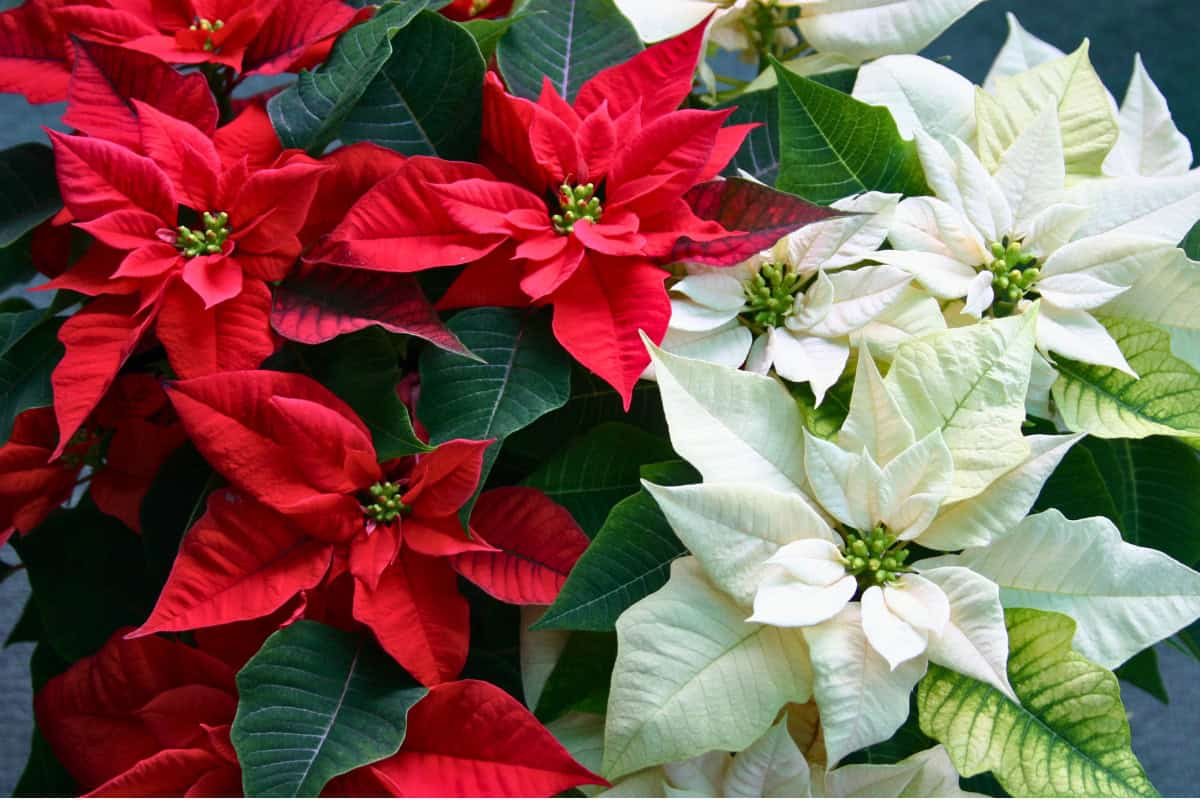
Poinsettias are the best-selling potted plant in the U.S., but for most people, their story ends in January. However, it doesn’t have to. These flowers can grow into leafy houseplants and turn red again next winter.
In this guide, we’ll cover key growing and care insights like:
- What the colorful part of a poinsettia really is (and why it isn’t the flower!).
- Why those decorative foil sleeves kill more plants than any pest.
- How long nights, not cold weather, bring the color back.
Grow a healthy poinsettia, and it can hold its color for months and live for years — and it makes a great houseplant thanks to its dark green, showy leaves.
What To Know Before Buying
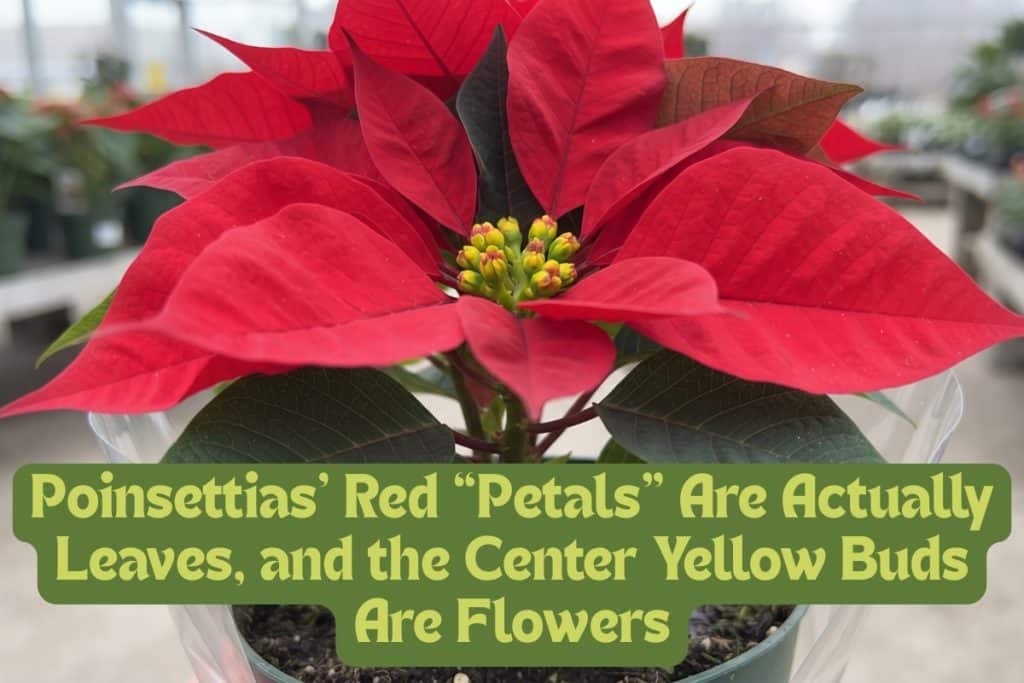
People have plenty of misconceptions about poinsettias. One of the biggest? That a poinsettia’s color comes from flowers.
Those bright red, pink, or cream petals aren’t flowers; they’re bracts, a kind of modified leaf. The true flowers are the small yellow buds clustered in the center. That’s why the color eventually fades while a poinsettia plant keeps living.
Poinsettias are also widely thought to be poisonous, but that’s misleading. Modern evidence suggests they are not highly toxic. However, their milky sap can irritate the skin and may cause mild mouth or stomach upset if chewed or swallowed, so they’re better described as irritating than dangerous. Even so, you should discourage children and pets from chewing on them.
Most of you reading this probably already have a plant you purchased or were given. If you’re still choosing one to buy, the best advice I can give is for you to spend a few minutes looking it over. A plant stressed at the store rarely recovers well at home.
6 Details to Look For When Buying
- Pick a plant with dark green leaves all the way down to the soil line.
- Pass on any plant with insects or leaf spots.
- Look at the true flowers: Tight, unopened yellow buds mean a fresher plant that holds its color longer.
- Don’t buy plants that are wilted or sitting in soggy soil or a sleeve full of water.
- Skip plants displayed in a cold draft, near automatic doors, or in front of the store.
- Have the store sleeve and bag the plant for the trip home.
Light Requirements
Poinsettias are native to Mexico and Guatemala, where they grow into a shrub up to 10 feet tall outdoors. This plant naturally loves sunlight and warm temperatures, and light fuels all of its growing processes, including holding its color through the holidays. Put one in a dim corner, and the lower leaves will yellow and drop as the bracts fade.
Placement matters, which means the window your poinsettia sits near matters. Direction alone won’t tell you whether a spot is bright enough for your plant. A poinsettia set close to the glass gets far more light than one that sits a few feet back. Curtains, porch roofs, or trees outside can all reduce the amount of light that comes in.
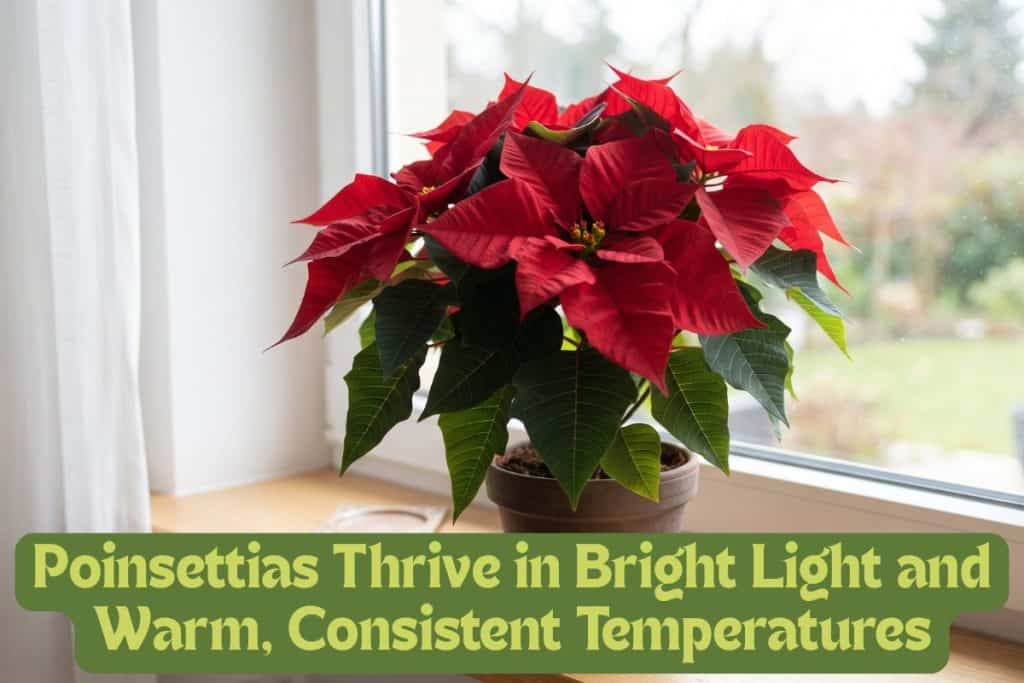
A window that’s very bright in the summer can also become much weaker by December. In winter, place the plant in the brightest spot you have; the weaker sun is unlikely to burn the leaves. In warmer months, however, strong sunlight through glass can become too intense and may dry out or bleach the leaves, especially if they are touching the window.
Poinsettias may also drop leaves if they are moved too often, so it’s best to choose the right spot from the start and keep the plant there.
6 Steps to Choosing a Well-Lit Location
- Set it near the brightest window you have. In winter, a south-facing one is usually best.
- Keep it within a few feet of the glass, but don’t let the leaves ever touch the pane.
- Keep the leaves out of strong, direct sun in the warmer months.
- Turn the pot a quarter turn every week or so for even growth.
- Add a grow light 8 to 12 hours a day if the brightest room you have is still dim.
- Stretched stems and pale, small new leaves are signs the location is too dark.
Like poinsettias, chrysanthemums can require special care when it comes to placement and light. Learn how to make them bloom in our guide to chrysanthemums here.
Watering Guidelines
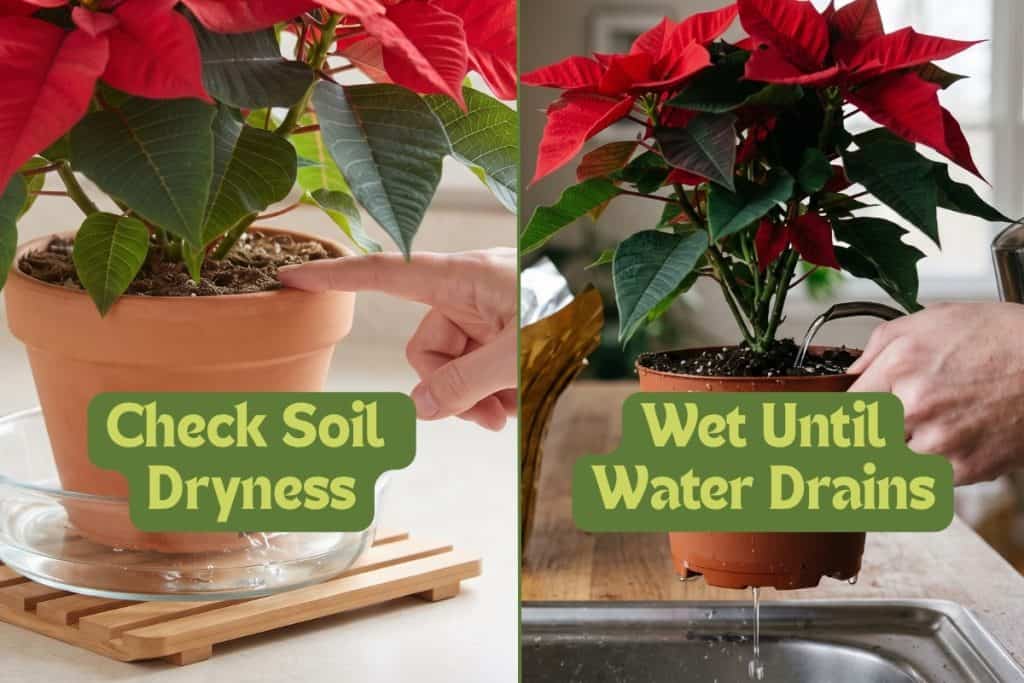
The fastest way to lose a poinsettia is giving it too much water. Soggy soil suffocates the healthy roots, then rot sets in fast. Once rot starts, the plant wilts — and this fools people into watering the still-wet soil more, compounding the problem. Less than a minute of checking the soil can prevent this.
The pretty foil wrappers poinsettias are usually packaged in are also a problem. In fact, they’re the plant’s number one enemy. Wrappers don’t have drainage holes, so every time the plant is watered, the runoff pools in the bottom and the roots sit in it.
The amount of water a plant needs changes along with the seasons and its growth. A big, leafy poinsettia in a warm room needs a lot of water; a freshly pruned one with few leaves needs very little.
Just make sure to take the foil sleeve off before you water, or set the pot somewhere it can drain freely.
Water This Way: 5 Simple Steps
- Feel the top 1 to 2 inches of soil; water only when it’s dry.
- A pot that feels light for its size usually needs water.
- Water slowly and evenly until it runs from the drainage holes.
- If the pot sits in a saucer, let it drain completely; then empty the saucer.
- Adjust how often you water to the plant’s size and the room temperature.
Succulents can also be sensitive to overwatering, but you can learn how to water the right way in our guide to growing succulents here.
Temperature And Drafts
Remember, this is a subtropical shrub that’s used to steady warmth, so it has no tolerance for cold. Even a brief chill can stunt or injure it, and a real freeze finishes it off.
That’s why the few minutes between a warm store and a cold car matter so much. These plants already receive a shock going from a warm greenhouse onto cold delivery trucks, so if you can, don’t buy one when it is extremely cold outside.
Once your plant is home, a cold draft from an open door or a blast from a heating vent can cause sudden leaf and bract drop. This may look serious and send you hunting for a disease or pest; however, it just means you should pick a different spot free from drastic temperature swings.
Give It the Right Spot in 3 Steps
- Keep poinsettias above 50 degrees Fahrenheit at all times, including the ride home. They’re happiest around 65 to 70 degrees Fahrenheit in the day and in the low 60s at night.
- Keep plants away from cold or hot windowpanes, vents, fireplaces, and doorways.
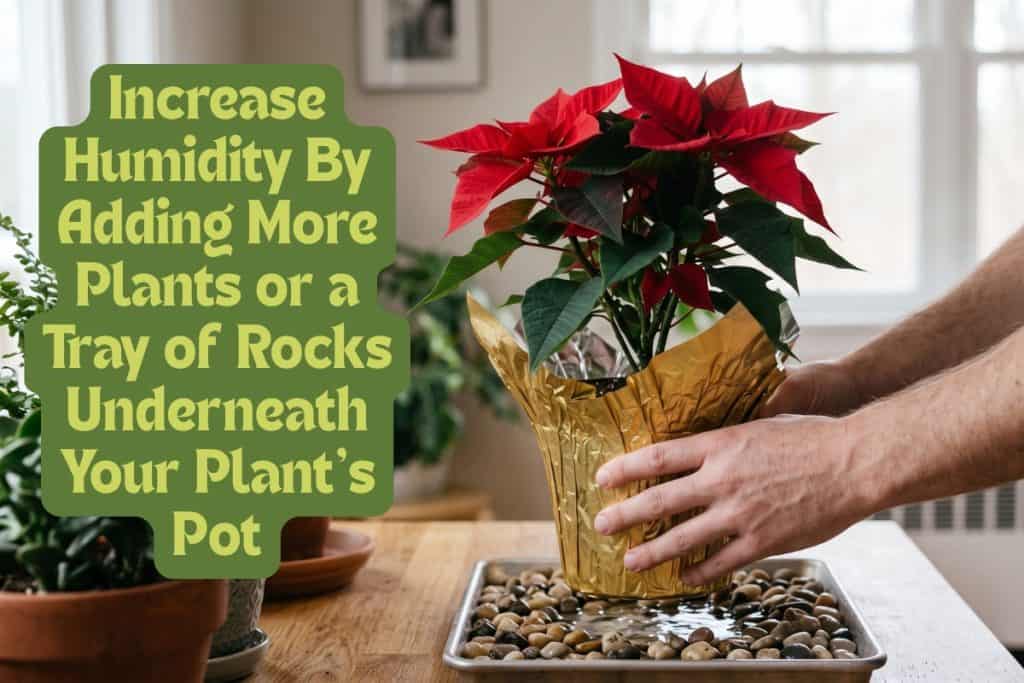
- In a dry room, group poinsettias with other plants or set the pot on a tray of pebbles with water to add humidity.
Feeding Schedule
A poinsettia in full color doesn’t need feeding; fertilizer wouldn’t do any good. Worse, over time the unused salts can build up in the soil and start burning the roots, which shows up as brown, crispy leaf edges. These plants often come home from the store so heavily fed that you can see a white salt crust on the soil surface.
Feed poinsettias only during the growing season. Once the holidays pass and the plant produces fresh green growth, it can finally use those nutrients. That new growth is your signal to start feeding.
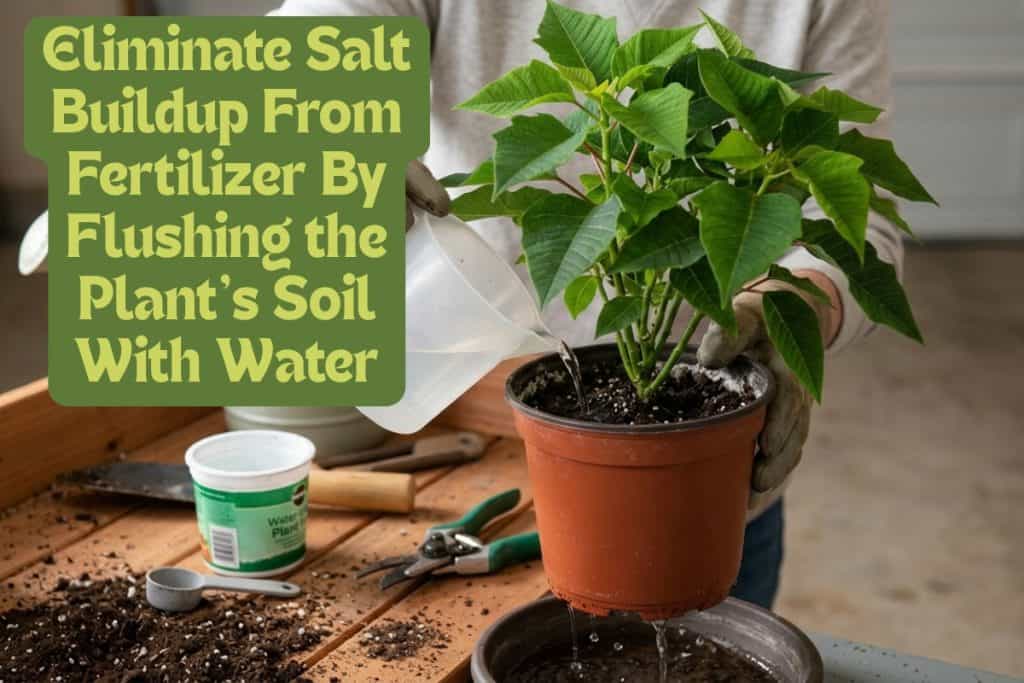
Remember, fertilizer is a fuel for stems, leaves, and roots, not a way to force color. The color comes from fall’s long nights, not from nutrients in a bag. A balanced houseplant fertilizer applied at label rate is all the plant needs for optimum health. Don’t assume more is better; stay at label rate or half that rate.
5-Step Fertilizing Routine
- Skip fertilizer entirely while the plant is in color.
- Don’t feed a wilted or just-repotted plant until it has recovered.
- Once new growth is 1 to 2 inches long, start feeding.
- Use a balanced, water-soluble fertilizer about once a month, or half strength every 3 to 4 weeks until fall. Stop when it’s time to encourage coloring.
- Once a month, or whenever you notice a white salt crust on the soil or pot rim, flush the pot with plain water. Let water run through the soil for 2 to 3 minutes to rinse the buildup out.
Post-Holiday Care
When the bracts fade and drop, the plant is naturally finishing its season, not failing. Whether yours is worth keeping comes down to the roots, not the sad-looking top.
So, before you write it off or invest months in care, slide it out of the pot and have a look at what’s happening underneath.
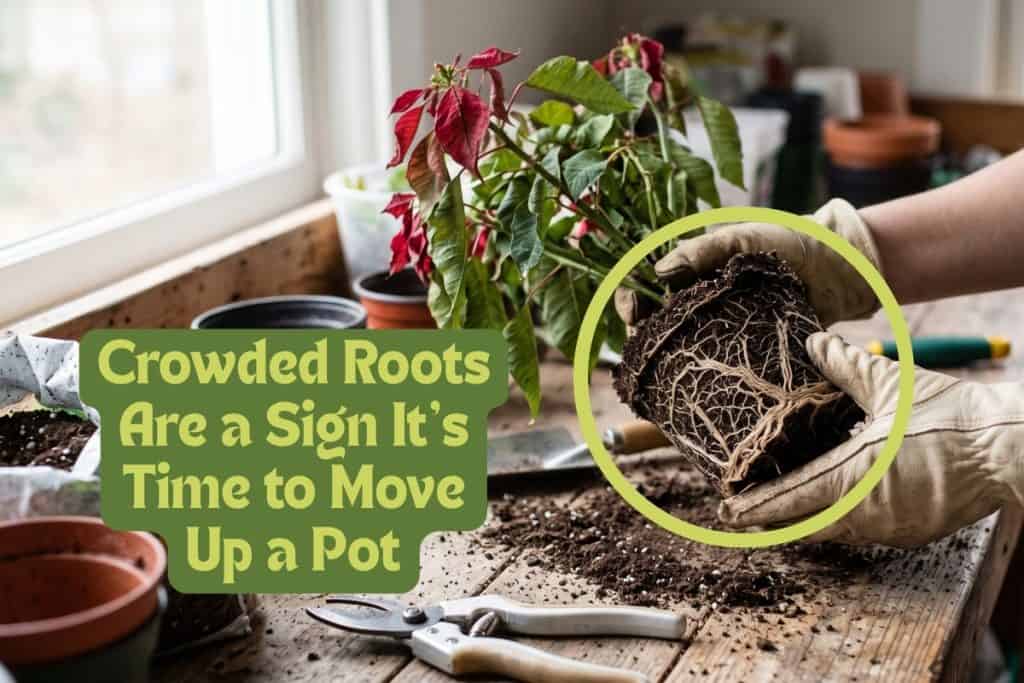
Here’s what the roots’ appearance can tell you:
- Firm and White: The plant is healthy; it will bounce back once you prune it.
- A Few Dark Roots: Trim these off and the plant will recover fast.
- Dark and Mushy: The plant sat in water too long; rot is developing.
Additionally, you’ll want to check whether or not the roots are crowded. Poinsettias grow fast and pack a pot full of roots. Once they’re crowded, the roots circle and the soil dries out almost as fast as you can water it. Moving the plant up a pot size can fix the source of constant wilting instead of merely treating a symptom.
If the roots check out, the rest is easy, and there’s no hurry. You can let the plant coast until the color is finished, then cut it back and, if the roots are crowded, give them more room to spread.
6 Tips to Reset Your Plant for the Year
- Enjoy the plant while it still has color.
- When color fades from late February into March, cut the stems back to about 3 to 6 inches, just above a node (the leaf joint where new shoots form).
- Use sharp, clean pruners or sturdy scissors, since the firm stems can crush under a dull blade.
- If a stem looks dead, scratch the bark. Green underneath means it’s alive, while brown and dry all the way through means it’s dead.
- Wear gloves; the cut stems ooze a milky sap that can irritate skin.
- If the roots have filled the pot, move the plant into one that is 2 to 4 inches larger with drainage holes and add a light, well-draining indoor soil mix.
Orchids also have a reputation for tricky blooms, but you can learn how to master this plant in our guide to orchid care here.
Spring And Summer Growth
For most of the year, your holiday plant will simply be a green houseplant, and that’s exactly what you want. A strong, leafy summer builds the plant’s colors up for later.
This is also the best time to build a full shape. Every growing tip you pinch will branch into two. A little early pinching will turn a single leggy stem into a full, bushy plant by fall.
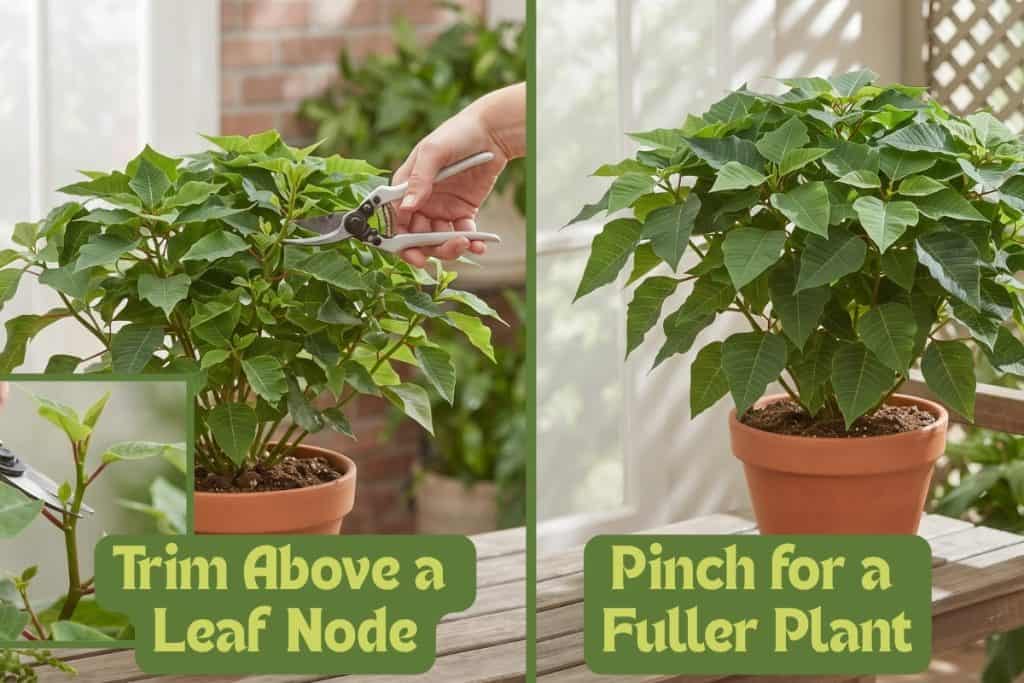
Between pruning and pot size, you can control how big your poinsettia gets. Leave it in the same pot and prune hard for a compact plant, or move it up a size and prune lightly for a bigger one.
If you move your plant outside for the summer, just make sure to ease it into the light. Leaves that grew indoors are used to far weaker light than they’ll be exposed to outdoors, and a plant set straight into full sun will wind up with scorched leaves. Put it in a shady, sheltered spot and add a little more light each day so it can adjust without burning.
The care routine through the warm months is similar to most other indoor plants. Steady, basic care in spring and summer sets up everything that comes later. When it’s time to bring your poinsettia back inside, put it in quarantine for a couple of weeks until you know it didn’t carry any insects inside with it.
Spring and Summer Care in 7 Steps
- Pinch the growing tips when new shoots reach 4 to 5 inches. Pinch again in mid-August.
- Once the plant is as full as you want, stop pinching. More stems make more but smaller bracts; fewer stems make fewer but larger ones.
- Move it outdoors only once nights stay above 60°F, and set it in part shade or filtered light. Increase the light gradually over 1 to 2 weeks.
- In a hot climate, shield it from harsh afternoon sun.
- Check an outside pot more often, since it can dry out faster.
- As nights cool in early fall, bring it back inside before it gets chilled.
- Before it rejoins your other plants, check the undersides of the leaves and stem joints for pests; treat anything you find.
Triggering Color Change
A poinsettia doesn’t develop color simply because it’s December or the weather turned cold. Poinsettias are short-day plants, which means they respond to night length. Long, unbroken darkness each night is the signal that tells the plant to make colored bracts.
However, this only works on a healthy plant. A strong, leafy summer is what makes re-blooming possible. Dark nights reward a good growing season with color.
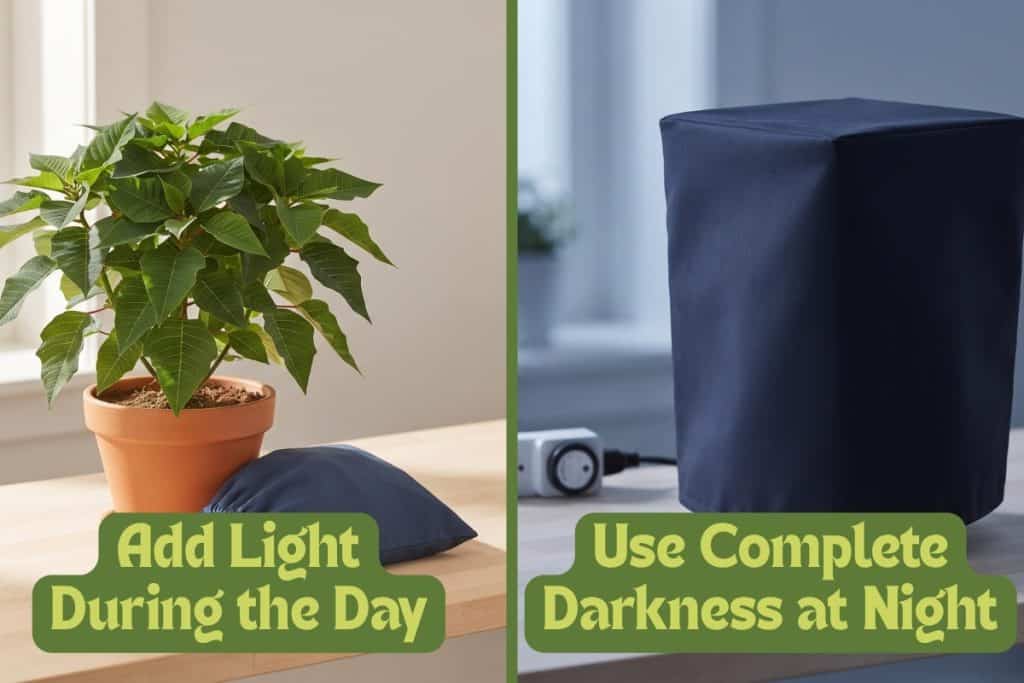
The key words here are “unbroken darkness”. One interruption, such as a lamp switching on or someone opening the closet door for a minute, can reset the whole process and leave the plant green.
A poinsettia can’t sit in the dark around the clock, though. It still needs bright light during the day to make energy. You should aim to recreate a natural fall with short bright days, long nights, and an even rhythm. A good rule is to count back about 8 to 10 weeks from when you want it at its most colorful, and begin then.
7 Steps to Bring the Color Back
- Keep your poinsettia where nighttime temperatures stay in the low 60s.
- Starting in late September or early October, give the plant about 14 hours of complete darkness every night. Timing varies by home and region, so start on the early side if you’re unsure.
- Use a closet, an unused room, or a box over the plant so no stray light reaches it at night.
- Make sure that dark spot has some air and isn’t too hot or freezing cold.
- Move it back into bright light during the day. Setting a timer helps consistency.
- Continue the same schedule daily for 8 to 10 weeks, until the bracts show color.
- Once color appears, stop the dark treatment and return it to a bright window, usually around Thanksgiving.
Another popular holiday pick, the Christmas cactus, requires a similarly dark routine. Learn how to get one blooming in our Christmas cactus growing guide here.
Watch for Pests and Common Problems
Most poinsettia trouble isn’t caused by pests or disease; instead, it’s a reaction to the surroundings. When leaves and bracts drop, the cause is usually a draft, a big temperature swing, or lack of light.
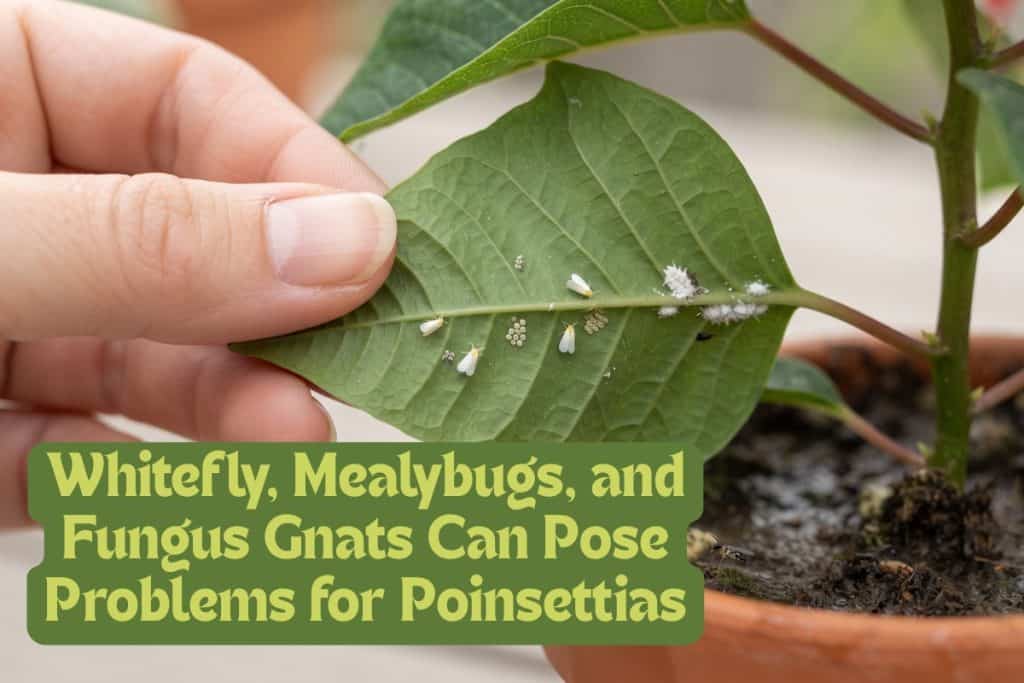
Once in a while, a few insects do find a poinsettia or hitch a ride home from the store. Here’s what you might spot:
- Whitefly: Tiny whiteflies under the leaves that scatter when you disturb the plant.
- Mealybugs: White cottony bumps on stems and leaf joints.
- Fungus Gnats: Small dark flies that rise from damp soil.
None of these pests do much harm on their own. You can pick mealybugs off by hand, wipe whitefly from the leaf undersides, and perform a weekly look under the leaves to catch both before they spread. Gnats usually fade once the soil dries between waterings.
The deadliest and most common issue, root rot, kills far more poinsettias than insects ever will. Prevent it by checking the roots often, and if you find soft, dark ones, unpot the plant, trim them off, and repot in fresh, well-draining mix.
Get the spot, the water, and the drainage right, and most of these problems never start.
If Something Goes Wrong
- If leaves are dropping, check for drafts and hot-cold spots.
- If lower leaves turn yellow, check light levels and root conditions first. The oldest leaves will yellow naturally with age.
- For brown, crispy leaf edges, use water to flush out salt buildup.
- Powdery mildew can show up in crowded, humid conditions. Increased airflow can dry it up.
- For persistent whitefly or mealybugs, treat by coating the undersides of leaves with insecticidal soap or neem oil. Repeat every few days for 3 weeks.
Poinsettia Colors and Varieties
Red is the classic poinsettia color, but it’s not the only option anymore. Thanks to decades of breeding, there are now whites and creams, every shade of pink, speckled and marbled two-tones, curled rose-like bracts, and even green and gold varieties.
Many newer poinsettias also hold up to shipping better than the older types, though none can shrug off cold, overwatering, or low light.
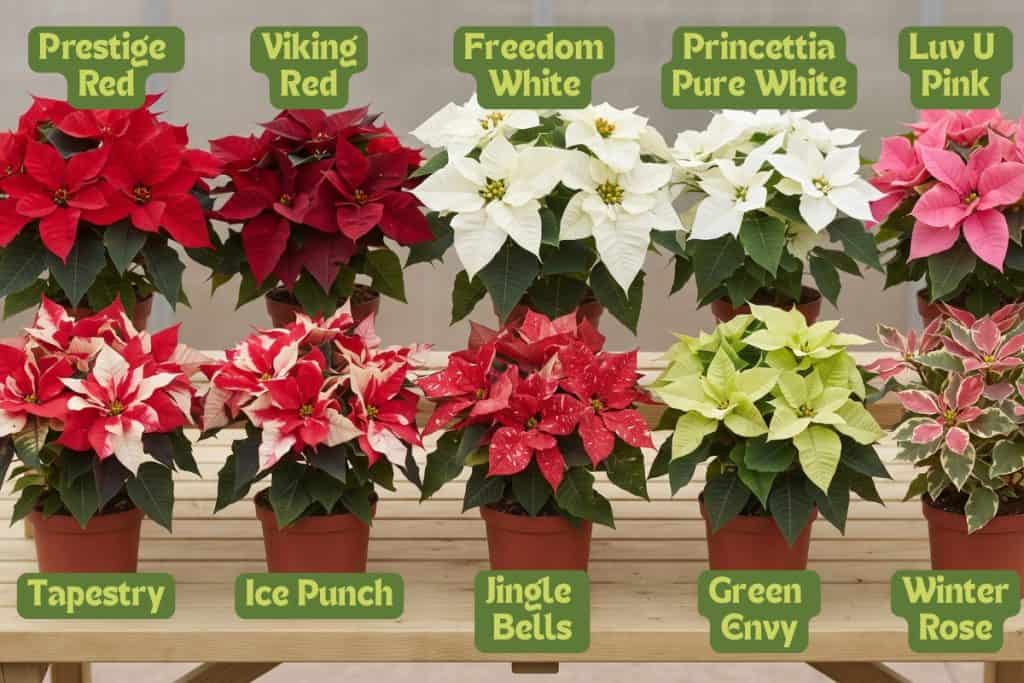
Types Worth Looking for, Grouped by Color
- Prestige Red: A classic bright red, reliable and widely grown.
- Viking Red: Deep crimson bracts and unusually cold-tolerant.
- Freedom White: Extra-large ivory bracts that handle heat well.
- Princettia Pure White: A true white, not cream.
- Luv U Pink: A vivid pink that keeps producing bracts.
- Ice Punch: Red with a white center blaze, a popular two-tone.
- Winter Rose: Bracts that curl into globes, like little roses.
- Jingle Bells: Crimson flecked with white, a classic speckled variety.
- Green Envy: Unusual chartreuse bracts.
- Tapestry: Cherry bracts over cream-edged, variegated leaves.
Whatever you pick, the care is the same across all of them. The color is just the fun part.
Final Advice
A poinsettia isn’t a disposable decoration unless you want it to be. Treat it like the subtropical shrub it is, and it will hold its color long after the new year. I think it makes a great houseplant, and people who toss healthy ones in the trash after the holidays end are really missing out.
Growing a poinsettia throughout the year and coaxing the color back is one of the more satisfying houseplant projects. If you have a Christmas cactus, you can actually run both plants through the same routine.
If the reblooming routine isn’t for you, there’s no shame in enjoying a poinsettia for one holiday season and starting over next year. Try some new colors, then pass the plant along to a friend who will continue to enjoy it. It will be a win-win for both of you.
2 thoughts on “How to Care for Poinsettias: Keep Your Christmas Flowers Alive”
did not prune at all didn’t know when or how will my plant have flowers
Yes, it’ll still bloom. Pruning and flowering are two separate things on a poinsettia. The color trigger is photoperiod, the long uninterrupted nights in fall, not anything to do with whether the plant was cut back. Give an unpruned plant its 14-ish hours of dark each night and bright days, and it will still color up its bracts right on cue.
The one indirect catch is timing: late pruning is what delays bracts, because the new shoots need time to mature before the dark treatment. Someone who didn’t prune at all doesn’t have that problem, since the stems are already mature going into fall. So if anything, no pruning is safer for on-time color than pruning too late is.