

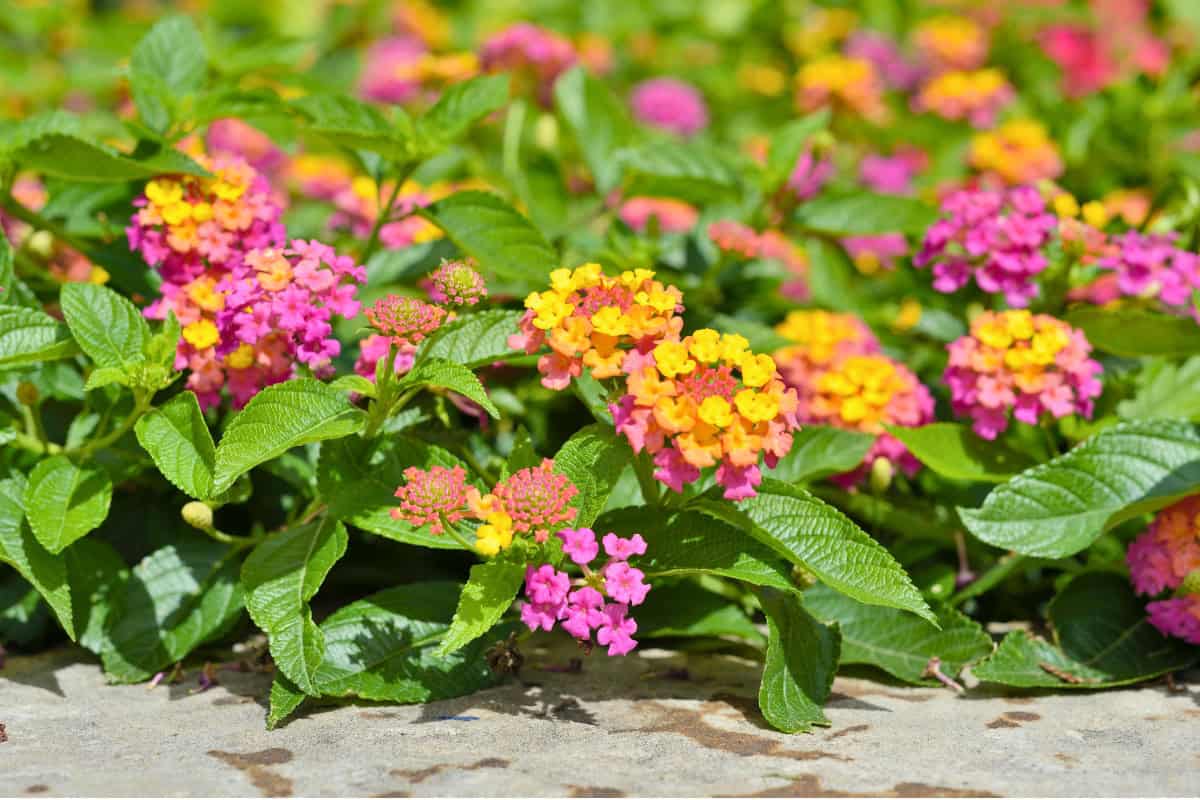
Lantana is a common go-to bedding plant chosen for colorful beds and borders because it’s tough.
This plant shrugs off heat and drought while filling your beds with brightly-hued flowers. To keep a lantana packed with flowers all season, start with the right cultivar, plant it in full sun, then feed and trim it correctly — which you can do once you learn:
- Why a drought-tough plant can stop blooming for weeks.
- The 2-week haircut that will bring a leggy, flowerless plant back into bloom.
- How to deepen the shade of red flowers.
Whether you want a tree or a spreader that’ll cover a landscape bed, lantana will give you a huge return for your simple investment.
Choosing the Right Lantana
The type of lantana you choose will set the stage for the rest of the season.
So, pick a plant whose habit and growth rate match your open spot or pot. Lantana comes in a few different growing forms, from tight little mounds about 1 foot wide to ground-covering spreaders that run several feet wide.
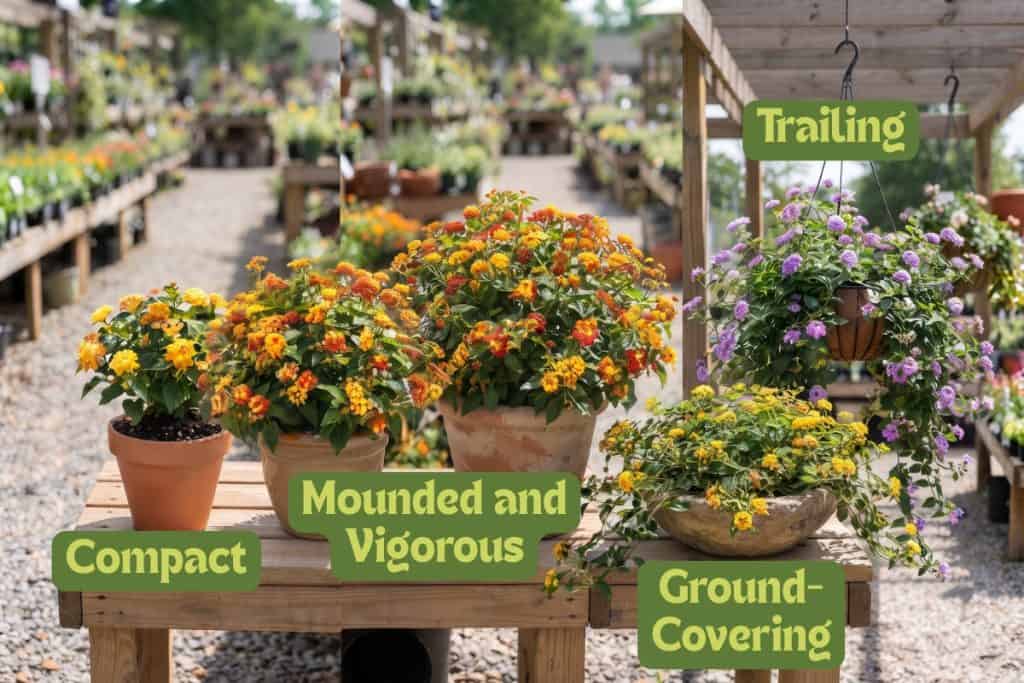
The different types also have different growth rates. This is particularly important in northern states, where a short season leaves a slow-growing lantana no time to reach full size.
Plant breeders have split lantana into categories based on their different purposes:
- Compact: Suits small pots. Choose a tidy type like Bandito.
- Mounded for Garden Beds: Bandana is a type with medium vigor that’s heat-tolerant.
- Extra Vigorous: Types like Bandolero are ideal for big pots or short growing seasons.
- Ground-Covering Spreader: New Gold or Dallas Red can overrun weaker plants.
- Trailing: Lantana montevidensis, a low and spilling type, is best for hanging baskets.
You will usually find these lantana series names on the plant tag. If your garden center only carries a generic lantana, match the habit you need, and you will be fine.
5 Tips to Choose the Right Plant in Store
- Decide what kind of habit you want: mounding, upright, spreading, or trailing.
- Match the plant and the number of plants to buy to the bed or container so it doesn’t overwhelm the area.
- In a short northern season, opt for a more vigorous type that grows fast.
- Choose a sterile selection if you’d rather it not set seed.
- In warm regions, check the toxicity and invasive notes before you buy.
Is It An Annual or Perennial?
A tag that merely says “lantana” won’t tell you whether a plant is an annual or perennial, because hardiness depends on the specific cultivar.
In Zones 3 through 6, most people treat lantana as an annual and either buy it again each spring or overwinter cuttings. In Zone 7, cold-hardy selections like Miss Huff, Chapel Hill, and Sunset are usually perennial. If you aren’t sure which hardiness zone you’re in, you can look it up by ZIP code on the USDA hardiness zone map.
Note that an established plant handles cold better than one in its first year.
If you’re looking for a ground cover like lantana, explore other options and read our guide to ground cover plants here.
Planting Guide
Soil temperature matters: Lantana wants warm soil, and its growth will stall if you rush it into cold ground.
Once planted, it wants good drainage more than rich soil. Lantana can handle poor, sandy ground and even salty coastal beach sites, but it rots if it’s planted where water pools. If you have heavy clay soil, add aged compost or coarse sand to loosen the soil.
Lantana grows in soils with a range of pH levels, but a very high or low pH can limit its ability to absorb nutrients. If you don’t know your soil’s pH, use an inexpensive test or meter to check it.
A new transplant has yet to build its drought tolerance, so you’ll need to keep it watered until the roots spread. Only an established plant can coast through a dry spell.
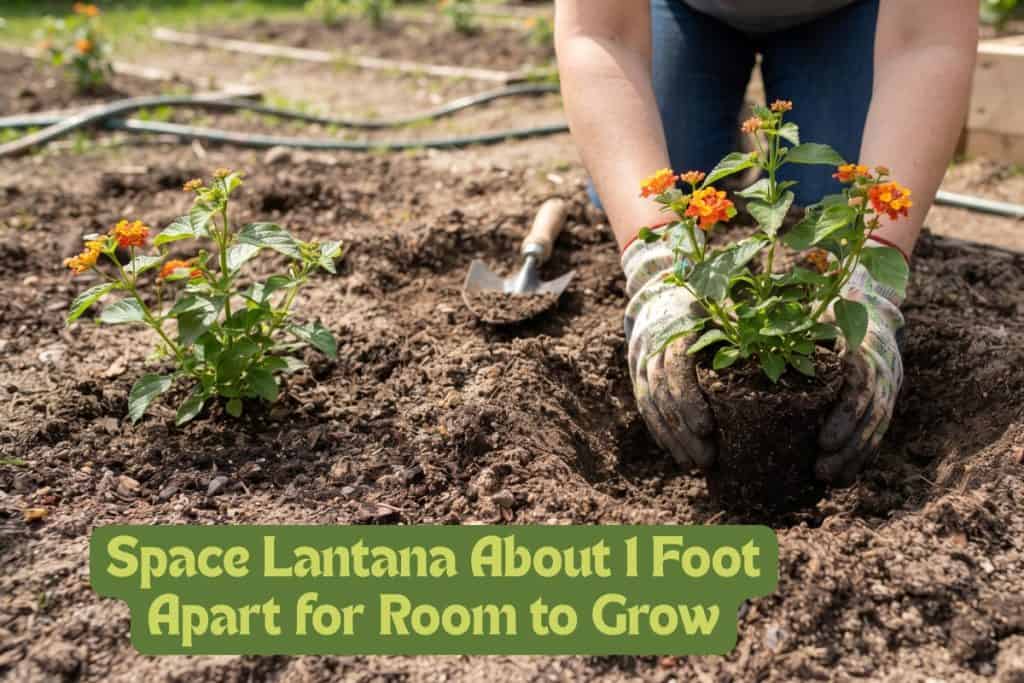
People tend to underestimate the mature size of most lantana. The little plant you bring home can become much bigger by July, and crowding costs you both airflow and flowers. It’s far easier to leave room now than to have to keep cutting plants back in midsummer.
Plant Lantana in 5 Steps
- Wait about 2 weeks after your last frost (until the soil has warmed to at least 60 degrees Fahrenheit).
- Choose a well-drained spot. Sandy loam, slightly acidic (pH 5.5 to 6.5) soil with some organic matter is ideal.
- Set the plant at the same depth it sat in its nursery pot.
- Space plants about 1 foot apart to leave room for summer spread.
- Keep the soil lightly moist for the first few weeks while the roots spread out.
Other flowering plants also need a specific soil type and pH. Learn about the soil needs of dahlias in our guide to growing dahlias here.
Sunlight Needs
Lantana plants need full sun. This affects both your plant’s health and its flowering ability. Lantana will survive in part shade and probably grow well, but it won’t bloom the same as one sitting in the sun.
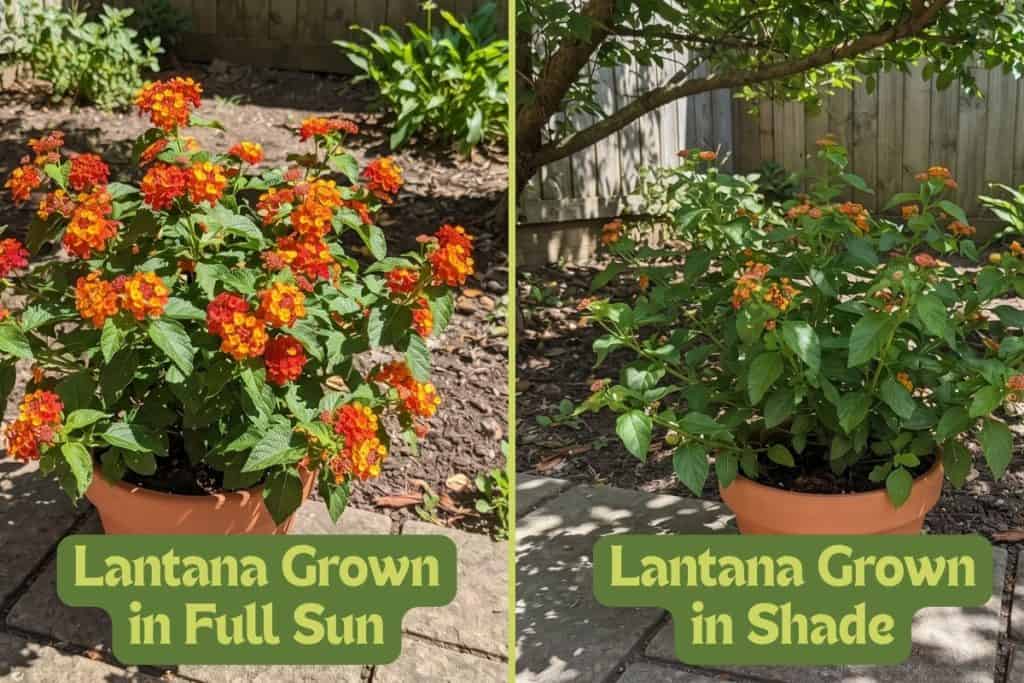
With lantana, beautiful foliage is not the goal; flowers are. A shaded plant may keep its leaves, but that’s poor payoff for a plant that’s grown for its color. Sun-grown plants also tend to shrug off pests like lace bugs better than shaded, stressed ones.
Choose an Optimum Location for Flowers
- Provide full sun for as many hours as your yard allows.
- Shade-tolerant means the plant will survive in shade, but it won’t bloom as well.
- Set container-grown lantana in all-day sun, not just a bright porch.
How to Encourage Blooms
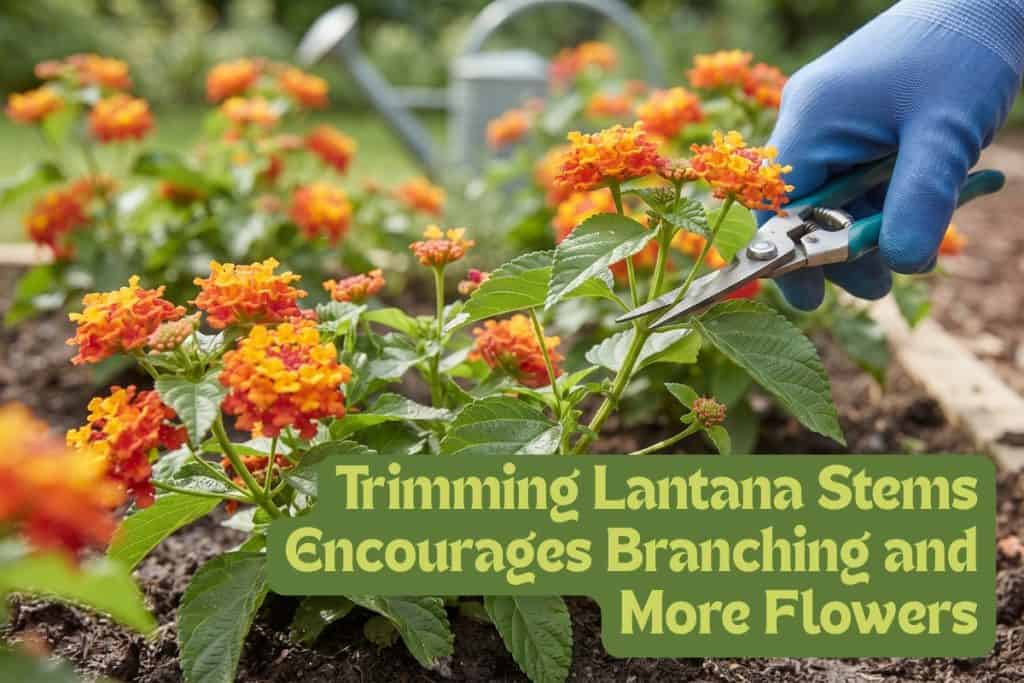
Flower blooms form at the tips of new growth, so every time you cut a lantana plant’s stem, you prompt it to branch. From there, each new branch ends in a flower cluster.
One cut can turn into several stems, so well-timed shearing multiplies your blooms instead of reducing them. During active growth, the plant recovers and flowers again quickly. As a bonus, trimming keeps a vigorous plant from spreading into the lawn or across the walkway.
Water is another flowering factor. Lantana is known for being drought-tolerant, but in bone-dry conditions, a flowering lantana’s blooms will shatter and drop. Its stems are woody and slow to push out new growing points, so new blooms can take a long time.
The seasons also affect when lantana blooms. This plant is a late bloomer by nature, so it often sits through a cool spring and doesn’t hit full flowering stride until summer heat arrives. Stalled growth in early spring is no reason to give up; blooming will slow again in fall.
5 Tips to Keep Flowers Coming
- Shear the tip growth lightly through summer to trigger repeat blooming.
- Count on a single cut to push out 5 to 6 new branches with flowers.
- Water and lightly feed a cut-back plant so it bounces back quickly; expect a new flush in roughly 10 to 14 days during active growth.
- Avoid letting the plant wilt hard repeatedly while it’s trying to flower. Give it a deep soak about once a week if it hasn’t had 1 inch of rain.
- After the first frost, cut a hardy plant to the ground. In cold-winter zones, wait until spring to protect the crown.
Do You Need to Deadhead Lantana?
As lantana flower clusters age, the petals drop and leave behind a small green knob that looks like a tiny pineapple. That’s the seed starting to form.
Cut the stem just behind this knob to keep the plant producing new buds. Sterile cultivars set little or no seed, so they need far less attention.
Pruning, pinching, and deadheading are also key for other flowering plants. Learn about these best practices in our guide to hibiscus plants here.
Fertilizer Tips
Feeding lantana a balanced fertilizer at the right time will help it grow into a healthy plant that bounces back fast from trimming and stress.
However, applying a heavy dose of nitrogen pushes out soft green growth, floppy stems, and more disease, all at the expense of flowers. Similarly, if you starve this plant, it can stop blooming entirely.
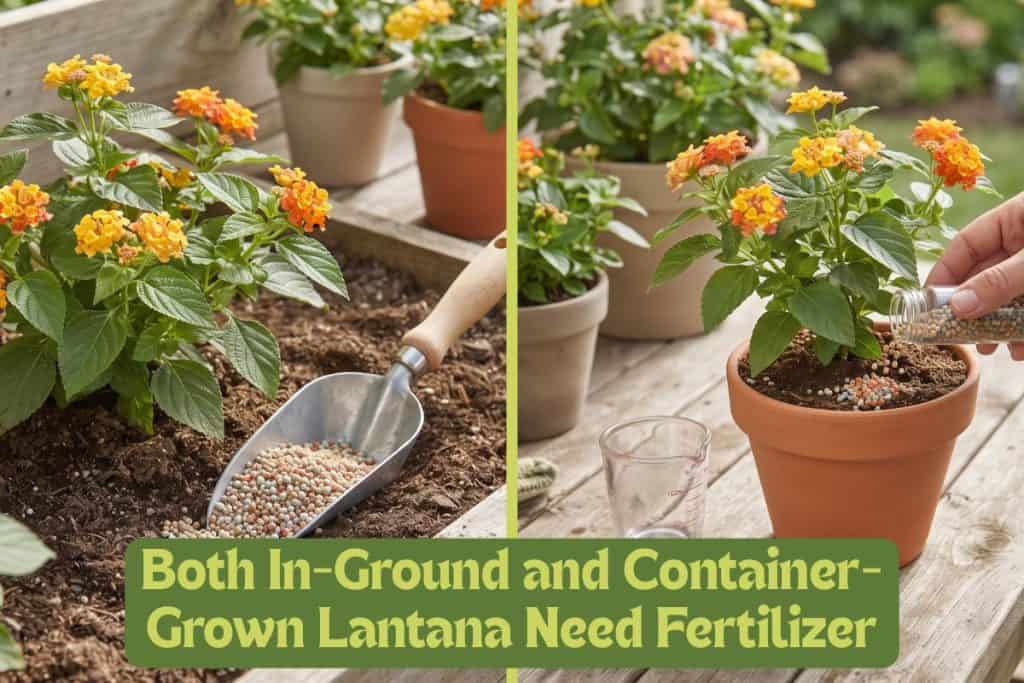
The first warning is usually pale, slightly curled leaves followed by a drop in flower production. In the ground, an established plant needs very little fertilizer to stay on track. A potted plant, on the other hand, needs steadier feeding.
It’s important to know how slow-release pellets and pearls behave. These fertilizers release nutrients on a temperature curve, so when applied in spring’s cold soil they barely feed at all. This is when a liquid feed is a better choice; it’ll fill the gap until the ground warms up.
Feeding in 4 Steps
- Mix a balanced fertilizer (10-10-10 NPK, for example) into the bed at planting time at label rate.
- Feed in-ground lantana lightly once in spring and again at midsummer (if growing vigorously).
- Feed potted lantana a controlled-release fertilizer; top it up lightly through the season. Just ensure your potting soil doesn’t already include it.
- Resist the urge to force more flowers with extra fertilizer; this doesn’t work.
Growing in Containers
Growing lantana in a container calls for a slightly different plan. The plant’s root zone is small, and no surrounding soil buffers it. It can go from wet to bone dry in a single hot day.
That isn’t necessarily a bad thing, though, and this plant often thrives in a pot because its fast-drying nature suits a plant that hates wet feet. The trade-off is there’s less margin for error, so you’ll need to match the cultivar to the pot you’re using and closely monitor water and fertilizer.
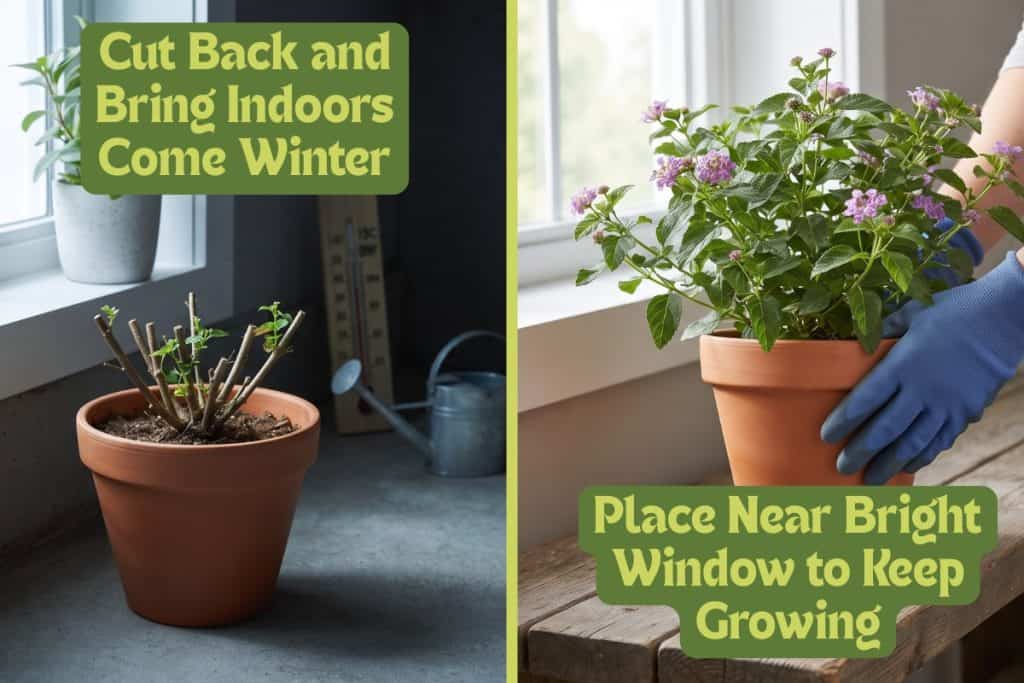
Lantana plants grown in containers also freeze more easily since their roots are above ground. However, container planting does let you carry a lantana through winter if you live in a cold climate.
When frost threatens your plant, you can simply move it somewhere sheltered. Alternatively, you can cut it back hard (unless it is a tree-type lantana) before the first frost and bring the pot inside. From there, you can let it go dormant in a cool, dim spot (which is the easy route) or keep it growing like a houseplant, though this only works in a genuinely bright window.
You’ll know when your plant goes dormant if it looks half dead and drops its leaves. It’ll wake up when warmth and light return.
Lantana Plants for Small Pots
- GEM Compact Yellow Topaz: A Danziger “GEM” series compact plant and a 2025 RHS Award of Garden Merit winner.
- Bloomify Red or Bloomify Rose: A UF/IFAS compact option with sterile triploids (no seeds).
- Denholm Dwarf White: A small-leaved dwarf lantana.
Lantana Plants for Large Pots and Baskets
- Weeping Lavender or Weeping White: Two types of trailing weeping lantanas (L. montevidensis).
- Spreading Sunset: A vigorous spreader and a 2025 RHS AGM winner.
Container Growing in 7 Steps
- Use a general potting soil and a pot with drainage holes.
- Plan to water daily in summer heat.
- Fertilize with a slow-release product, since a potted plant cannot pull food from nearby soil.
- To overwinter, cut the plant back hard before the first frost and bring the pot indoors.
- Store it cool, around 50 to 60 degrees Fahrenheit, with minimal light and water. Let it go dormant.
- If you prefer to keep it growing, set it in your brightest window. Water when the soil surface dries.
- Pause fertilizer until new growth appears in late winter. Move the plant back outside after frost danger passes.
Training Lantana as a Tree (or Standard)
One reason people grow lantana in containers is to train it to grow into a tree.
A tree form, which is typically called a standard, is a single, plain trunk topped by a rounded head of flowers. Achieving this result requires a fast-growing, upright cultivar and a season or two of steady shaping.
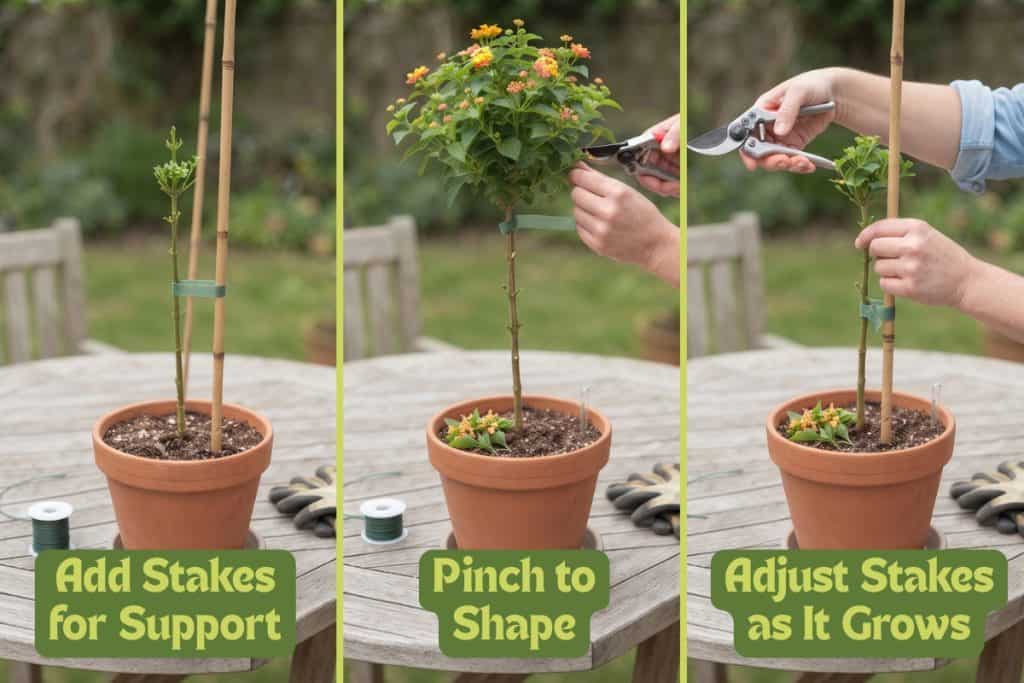
An upright lantana type like Bandolero can give you a strong central stem to build on. Then you can create a small, patio-sized tree after a season or two of shaping. In a pot, you’ll overwinter a standard like any other container-grown lantana, but it’s important to shelter the slim trunk from freezes, since it’s more exposed than a mounded plant.
5 Steps to Train a Standard
- Pick one strong, upright shoot. Tie it loosely to a stake that’s at least as thick as the stem.
- Rub or snip off side shoots along the trunk as they appear, leaving the top to grow.
- When the stem reaches your desired height, pinch its tip so the head branches.
- Shape the head by pinching new shoots with your fingers (hard shearing removes the flower buds).
- Leave the stake in place. The woody trunk stays brittle and can’t support a heavy, blooming head.
How to Propagate Lantana
Cuttings are how nearly every named lantana type is reproduced (and for patented varieties, they’re the only legal route).
Lantana cuttings tend to root easily, but you should take several extra cuttings to ensure you wind up with plenty of new plants.
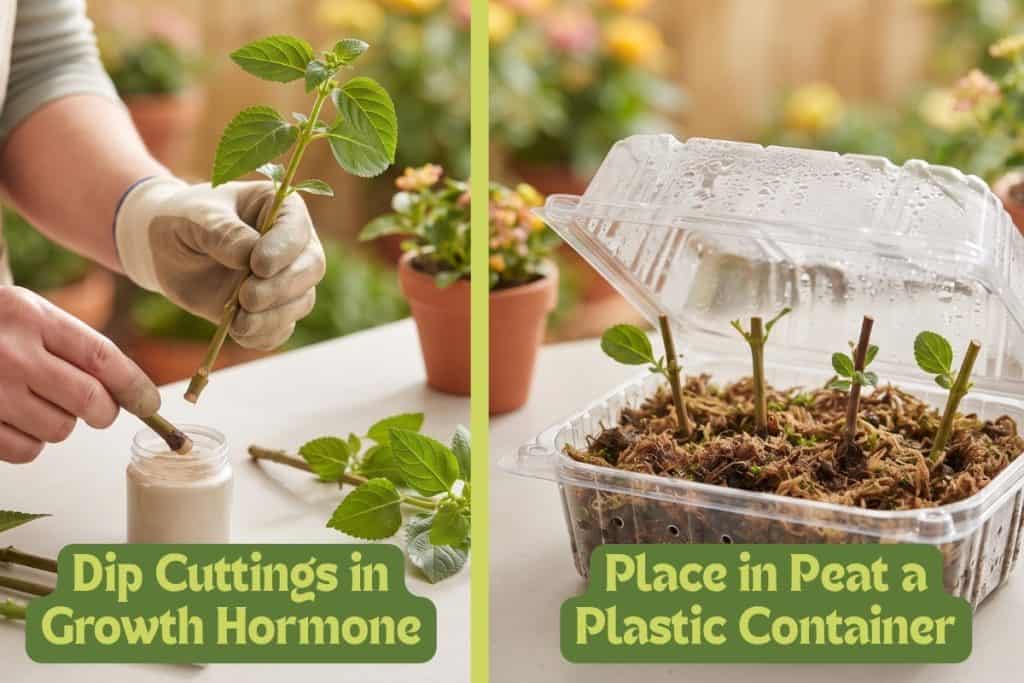
The wood you choose, the way you apply rooting hormone, and the humidity level all make a difference in success.
You can use items around your home, such as a clear produce container, to make mini greenhouses and keep humidity steady and the plant moist. Add peat moss to the container and wet it slowly, as dry peat repels water at first and needs a slow soak before it holds moisture.
7 Steps to Root Cuttings
- Take semi-hardwood cuttings in late spring through summer from shoots with little to no flowering. Stems should have started to firm up, but are still green under the bark.
- Choose a piece with 3 or 4 nodes. Strip the lower leaves that will be under the soil.
- Scrape a shallow wound along one side to expose the cambium. Dip into rooting hormone with IBA. Powdered form is readily available, but if using liquid hormone, pour a small amount into the cap or small cup.
- Skip the hormone in warm weather; lantana usually roots without it unless temperatures are cool.
- Push 2 or 3 nodes into the moist peat.
- Keep the cutting humid and out of direct sunlight.
- Give it about 6 to 8 weeks to root.
Growing Lantana From Seed
You can grow lantana from seed, but this process is slow and unreliable, and named cultivars will not look like the parent plant.
If you want to duplicate a plant you already love, cuttings are the only way to go. Start seed indoors about 6 to 8 weeks before you plan to transplant, and expect spotty germination.
Changing Flower Color
The flowers of the lantana plant might look like one single flower, but they’re really a cluster of tiny florets, and each floret changes color as it ages and after a pollinator visits it.
The youngest flowers are yellow in the center, and they’re surrounded by older ones that have turned orange, pink, or red. This bullseye-like look earned the plant its old nickname: ham and eggs.
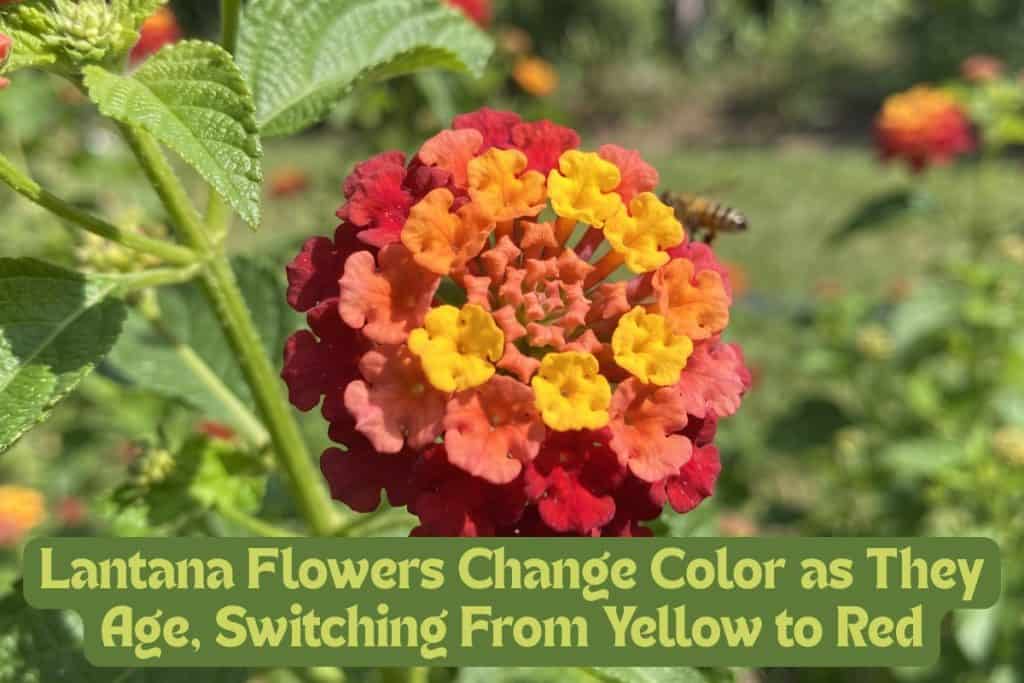
Lantana has a natural signaling system for pollinators like bees and butterflies. After a flower is pollinated, it starts producing red and purple pigments that layer over the original yellow. This visual cue tells pollinators not to waste their time and energy on old flowers or those that have already been pollinated.
In some red cultivars, the final shade is affected by both genetic factors and environmental factors. You can even influence the final color. Certain lantanas are color changers, such as Cherry Sunrise and Peach Glow, which have flowers that move through several shades.
If you prefer a deep red flower, opt for a cultivar like Hot Blooded, which colors up best in strong light.
3 Steps to Get the Deepest Red Flowers
- Give the plant the brightest light possible, as light is the biggest factor for color.
- Keep it adequately fed; an underfed plant will stay orange-red.
- Don’t mistake the natural yellow-to-red variation within a cluster for a problem.
Watch for Lace Bugs
Lantana has few enemies, but the lantana lace bug can pose a problem. These small insects feed on the undersides of the leaves, draining the chlorophyll until the foliage looks bleached and scorched from above.
A light infestation is merely cosmetic and won’t interfere with flowering. However, a heavy infestation is serious and can shut down flowering for a month or more while the plant recovers.
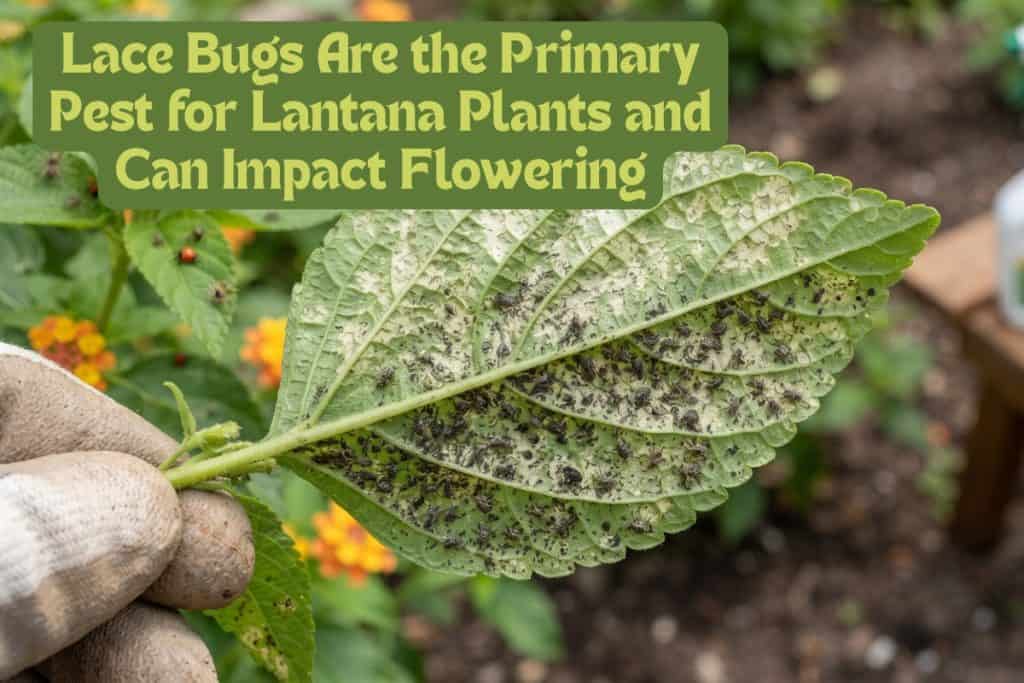
It’s frustrating to know that this same lace bug was once released on purpose decades ago as a weapon against weedy lantana overseas. The bug meant to control the plant is now its biggest threat. However, certain trailing and small-leaved varieties like Gold Mound are fairly resistant to lantana lace bugs.
You should also watch for occasional whiteflies, spider mites, and powdery mildew in crowded, damp spots.
5 Tips to Stay Ahead of Lace Bugs
- Start checking leaf undersides in spring, when young bugs first show up.
- Knock light populations down with a strong spray of water or insecticidal soap.
- Give natural predators a chance first. Assassin bugs, pirate bugs, and spiders often handle light infestations.
- Try to avoid insecticides, since lantana attracts pollinators like bees.
- If it becomes a yearly fight, switch to a resistant type.
Toxicity & Invasiveness
There are two cautions with lantana, and they’re dependent on where you live.
First, the plant is poisonous. Lantana leaves are toxic to grazing animals, and the green, unripe berries are the most dangerous part. In a dog or cat, chewing usually causes vomiting and diarrhea and can damage the liver, so call your vet if a pet eats much of it. It’s best to keep the plant away from children or pets that might nibble on it.
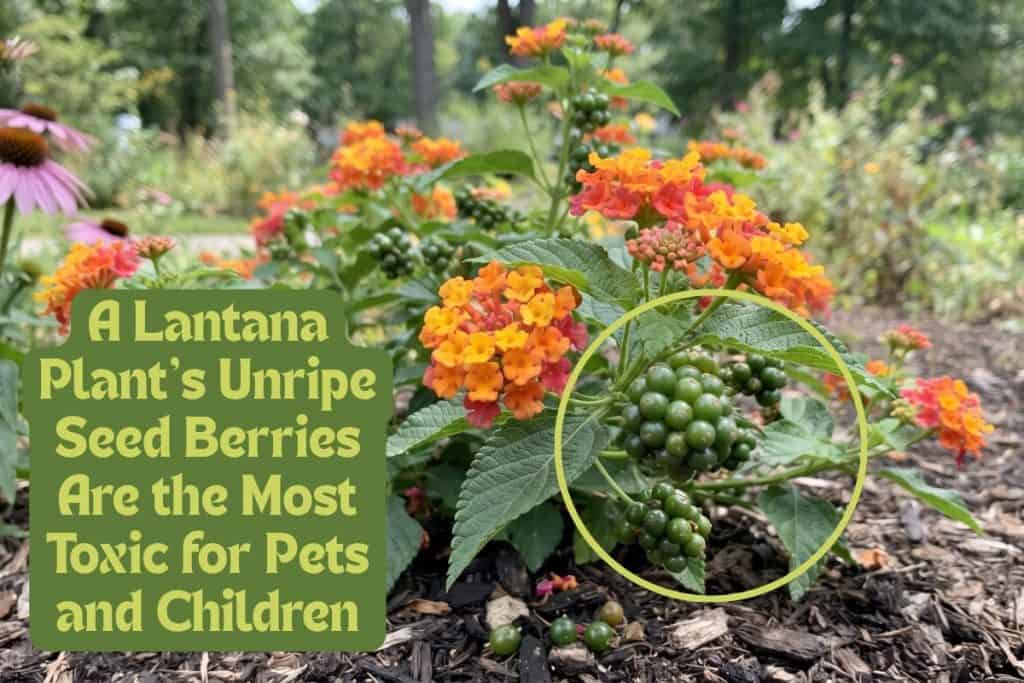
On the flip side, that same toxicity makes lantana strongly deer-resistant, a real plus where deer pressure is high.
The second possible issue is uncontrolled spread. Birds eat the ripe berries, digest them, then drop the seed miles away. The seed germinates, then lantana overruns native plants and takes over. In tropical and subtropical areas, a single planting can become a regional problem.
4 Responsible Planting Tips
- Check your state’s invasive plant guidance for the exact species you’re considering (not lantana in general).
- Keep it away from locations where kids or pets might sample it.
- Where it is invasive, plant a suitable native instead, such as Texas lantana (L. urticoides) or Florida’s L. involucrata.
- Treat a sterile label as helpful but not a guarantee.
Learn about other plants that are unappealing to deer in our guide to deer-resistant plants here.
Final Advice
Lantana is extremely popular because the plant has so much going for it. Its dense form can act as a living mulch, keeping the soil cooler and weeds to a minimum while it puts on a flower show. Plus, the fact that it’s deer-resistant is a huge plus in many areas.
Start with a lantana type that fits your space and climate, then give it full sun and good drainage. As it spreads, don’t hesitate to cut it back. It will just come back healthier and reward you with more flowers a couple of weeks later.
Consider buying the hybrids that won’t set seed. They will save deadheading effort without adding to invasive plant issues.
Happy growing!
1 thought on “Growing and Caring for Lantana: Tips for Tough, Vibrant Flowers”
The lantana plant in my yard is about 10 feet wide and 5 feet tall. It has slowly stopped blooming. What should I do to encourage blooming? I don’t want to cut it back much if that’s what is needed.