

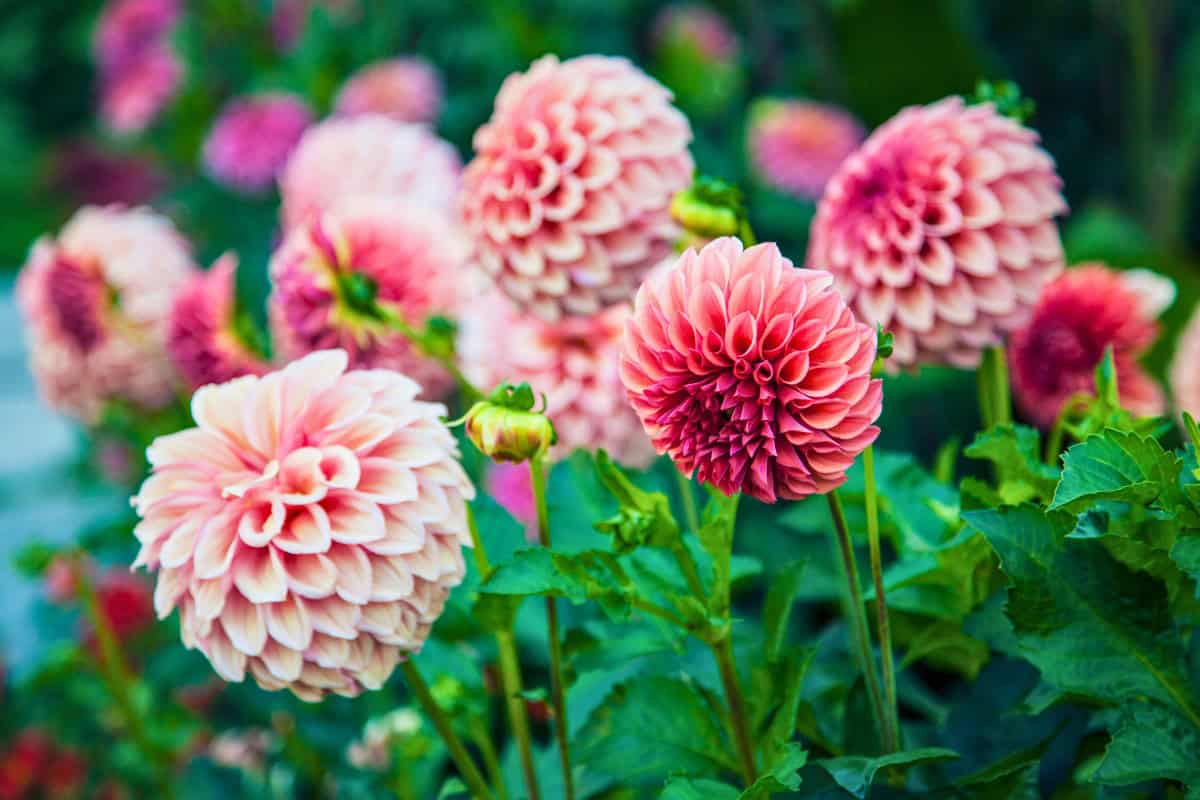
Dahlias can provide months of color, with blooms that last from midsummer until frost. Even better, the more you cut them, the more this flower blooms. Dahlias do have a reputation for being hard to grow, but that’s usually caused by a few missteps with the tubers.
In this guide, you’ll learn:
- How to avoid the watering habit that rots tubers before they sprout.
- When to expect blooms and how to get flowers weeks earlier.
- How to keep this year’s tubers alive for next season.
Get dahlias started right and follow a few basic rules, and they’ll reward you with beautiful flowers in the garden and a vase.
How a Dahlia Grows
Plenty of people search for “dahlia bulbs” to buy, but dahlias actually grow from tubers, kind of like sweet potatoes.
That difference matters when it comes to dahlia care, division, and storage. A tuber is a swollen storage root that holds the energy for next year’s plant. The new shoot comes from an eye, a small bud tucked at the crown where last year’s stem met the roots.
Roots grow from the tuber, but stems only come from eyes. That’s why a fat, healthy-looking tuber can still fail. If it snapped away from the crown, or its piece of crown has no eye, nothing will grow from it no matter how good it looks.
You can learn more about tubers in our guide to growing sweet potatoes here.
Choosing and Buying Tubers
There are 42 different species of wild dahlia and more than 63,000 named cultivars are registered with the Royal Horticultural Society (and sorted into about 14 flower-form groups). With that many options to choose from, every dahlia grower must make two decisions: what you want to use the flowers for and where you’ll buy the tubers.
Consider how you’ll use them first, because a plant grown for a bouquet usually isn’t the best one for a border. One type of dahlia only grows to 1 foot tall, while another might climb to 6 feet; similarly, the blooms can range from a 2-inch pompon to roughly dinner-plate size.
Dahlia Varieties for Different Uses
- For Cutting: Ball forms and taller varieties give the best stems and longest vase life.
- For Borders and Pots: Shorter bedding and dwarf varieties like pom poms are best.
- For Visual Drama: Choose dinner plate dahlias like ‘Cafe au Lait’ and ‘Otto’s Thrill’.
- For Pollinators: Opt for open forms such as single, waterlily, and anemone dahlias.
As you browse, you’ll run into the description “dinnerplate.” That’s just the nursery word for the biggest blooms, which measure roughly 10 inches and larger.
Whatever variety you pick, match its mature height to the planting spot and give the tall types room. Once you know how you’ll use the flowers from your plant, the choices will narrow fast.
RHS Award-Winning Varieties
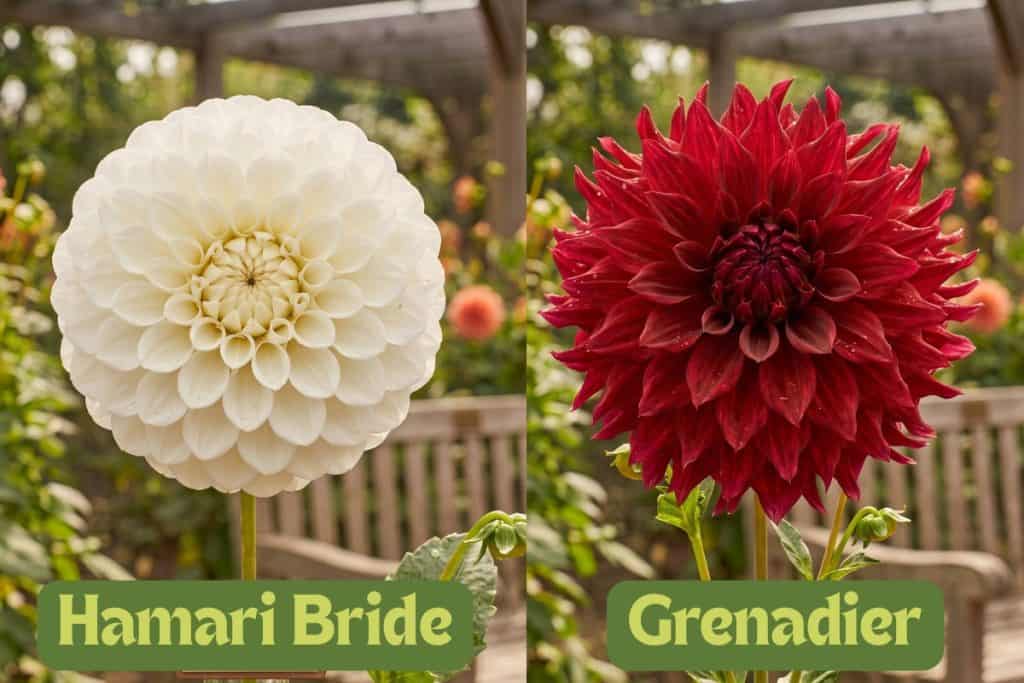
- Decorative: ‘Kenora Valentine’ and ‘Grenadier’.
- Semi-Cactus: ‘Hamari Accord’, ‘Hamari Bride’, and ‘Pink Pastelle’.
- Ball and Pompon: ‘Jomanda’, ‘Jodie Wilkinson’, ‘Small World’, and ‘Rhonda Suzanne’.
- Single, Collarette, Anemone: ‘Moonfire’, ‘Magenta Star’, and ‘Twyning’s After Eight’.
4 Tips for Choosing Dahlias
Once you’ve settled on a variety, the tuber itself still has to be healthy. Look for:
- A firm tuber with a connected neck and crown.
- At least one visible eye, since that eye is the only place a new stem can start.
- Avoid any that are shriveled, mushy, or moldy.
- Buy from a grower who sells virus-tested tubers.
Choosing a Planting Location
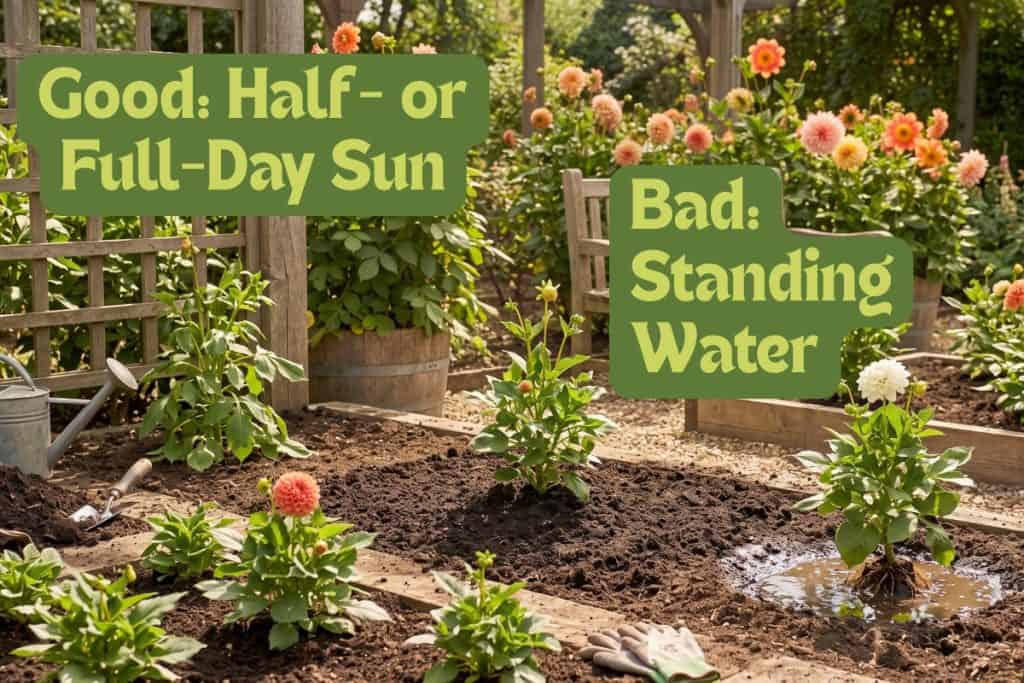
The sun powers flower production, so a dahlia plant that sits in too much shade will mostly develop leaves. A lack of sunlight is one of the most common reasons dahlias fail to bloom.
Drainage also matters. It keeps the tuber from sitting in soggy ground. Without good drainage, tubers rot no matter how well you care for them. Walk your possible planting locations at a few different times of the day and after a downpour, noting the hours of sun and any puddles, before you settle on one.
Airflow matters, too, especially where fungal diseases like mildew are common. A crowded, stagnant corner dries slowly and invites leaf disease, while an open site with a little breeze keeps the foliage dry.
5 Tips for Choosing a Location
- Give dahlias at least half a day of full sun; 6 or more hours per day is best.
- In hot-summer regions, morning sun with afternoon shade eases plant stress.
- Avoid low spots where water stands.
- Plant in a raised bed or container if drainage is poor.
- Leave open space around each plant so air can move through.
Preparing the Soil
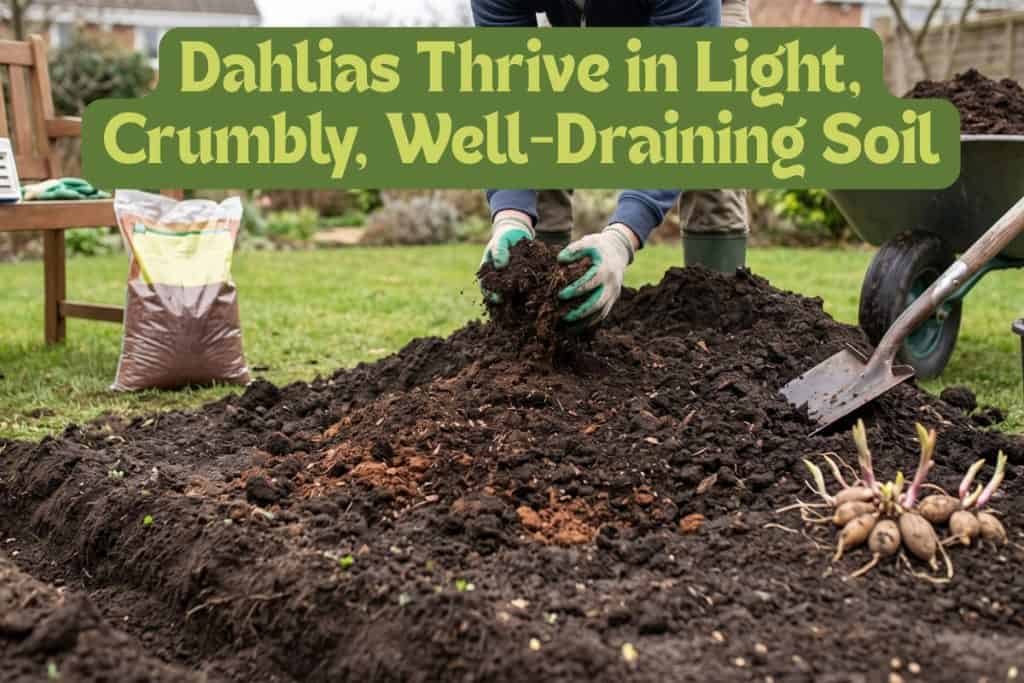
Dahlias grow best in light, sandy or sandy loam soil that drains freely, though they’ll adapt to most soils as long as water drains quickly. You should work in aged manure, compost, or other well-rotted organic matter to improve structure and feed the soil.
In clay soil, compost is a must.
Before you add any fertilizer to feed dahlia plants, it helps to know what nutrients are already present. A soil test can give you that starting base. It also reads your soil’s pH, which determines whether the soil’s nutrients are available to the plant’s roots. For example, a test might show plenty of iron, but if the pH is off, the plant can’t use it.
Get the Ground Ready in 5 Steps
- Loosen the bed until the soil crumbles. If the soil is too heavy or sticky, switch to a raised bed or pot.
- Dig a hole about 24 inches wide and 18 inches deep.
- Blend 1 part organic matter into 2 parts of the removed soil.
- Aim for a soil pH of 6.5 to 7.0. Use lime to raise it or sulfur to lower it.
- Use only finished compost and/or well-aged manure; fresh manure can burn the tubers.
When to Plant Dahlias
Planting time is critical to success. Dahlias should go in the ground in spring, not fall.
Dahlias are native to Mexico (they’re actually the country’s national flower) and Central America. They can’t tolerate frost, so a fall planting would just be killed by winter cold.
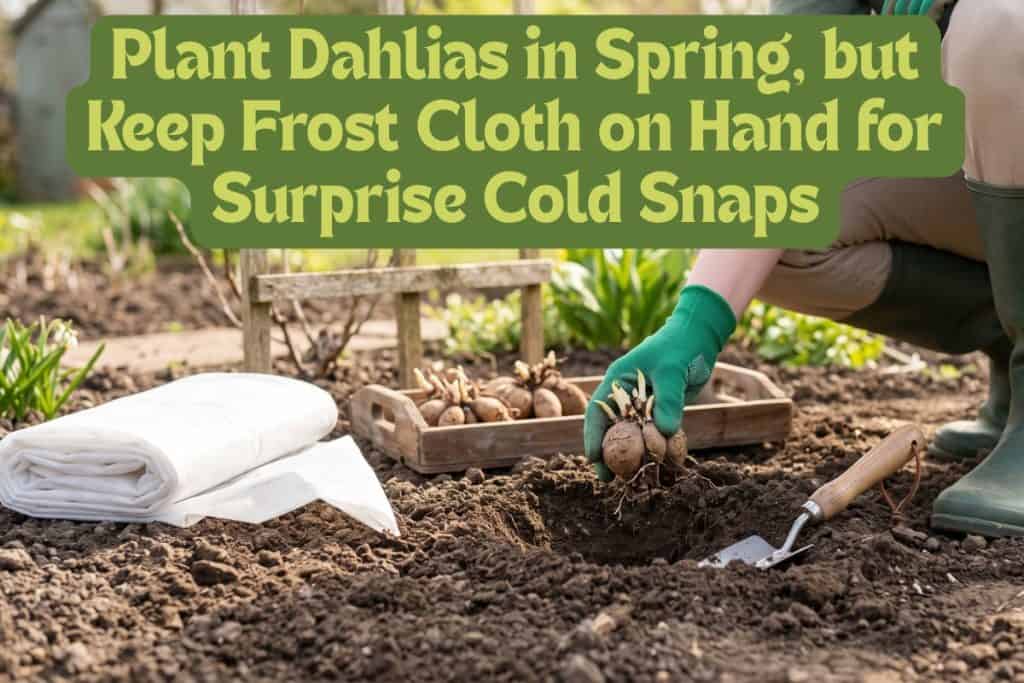
Cold, wet soil is the biggest enemy at planting time, as it will cause a dormant tuber to rot before it ever wakes up. Plant too early, and one hard freeze can take the whole planting. Instead, wait until the ground has warmed and frost danger has passed.
Think of dahlias as the opposite of tulips, which are planted in autumn and covered in our tulip growing guide here.
How to Time Planting and Blooms
- Plant in spring, after your last frost date and once the soil has warmed to about 60 degrees Fahrenheit. (April to May in most areas.)
- If you want earlier flowers, sprout tubers indoors 4 to 5 weeks before your frost date, then move them outdoors once it warms up.
- Expect your first blooms in about 75 to 120 days, depending on the cultivar and conditions. Giant types grow the slowest.
- Keep frost cloth handy in case a late cold snap threatens young shoots.
Getting an Earlier Start Indoors
Starting dahlia tubers in pots indoors buys you a head start. It can move your first flowers up by weeks, and doing this will let you know that a stored tuber has a live eye before it takes a spot in your garden.
A dormant tuber doesn’t use water, so barely-damp soil is all it needs. Once shoots do appear, the young growth is tender, so don’t rush taking it outside.
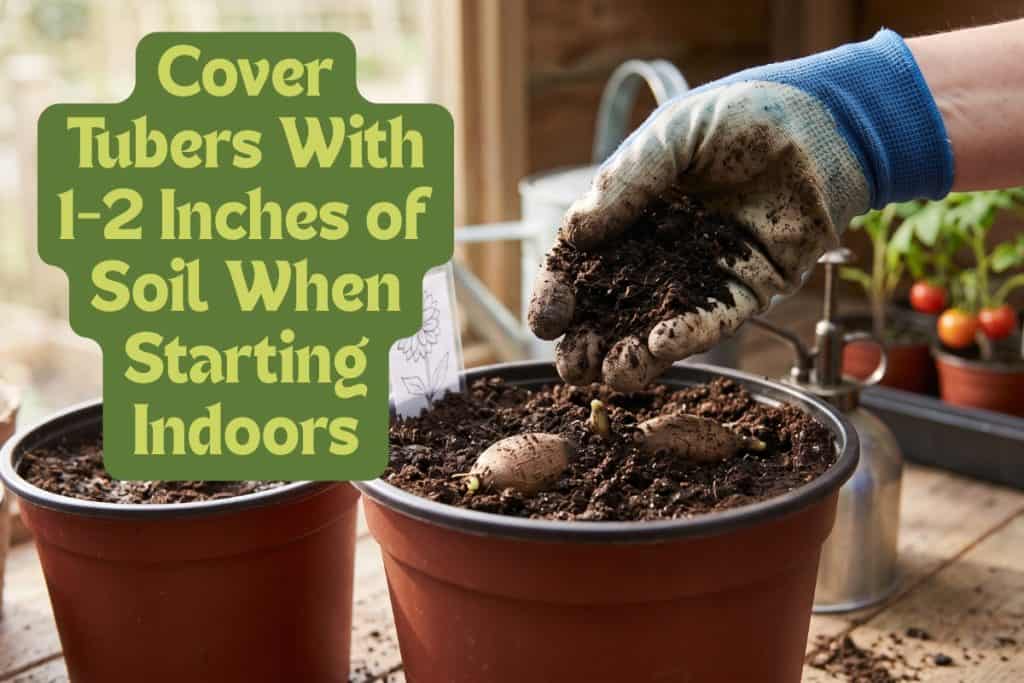
Potting Dahlias Indoors: 6 Steps
- Pot tubers about 4 to 6 weeks before your last frost in an 8-inch pot.
- Lay the tuber flat and cover it with 1 to 2 inches of potting mix.
- Keep the mix barely moist until shoots break the surface.
- Move the pot into bright light once it sprouts.
- Harden it off outdoors first, easing it into more sun and wind over a week or so.
- Set the tuber in the ground with the crown at the same level it sat at in the pot.
Planting Your Tubers
How you set the tubers’ depth and direction in the ground determines how fast they come up. A single tuber laid flat with its eye pointed up has the shortest path to the surface, while one stood on its end tends to hold water at its base and rot.
Spacing will also depend on the dahlia variety and how you’re growing it. If you’re only growing your plant for cut flowers, set plants as close as 12 inches apart to push long, straight cutting stems. For regular garden plants, plant 2 to 4 feet apart, with wider types spaced farther apart.
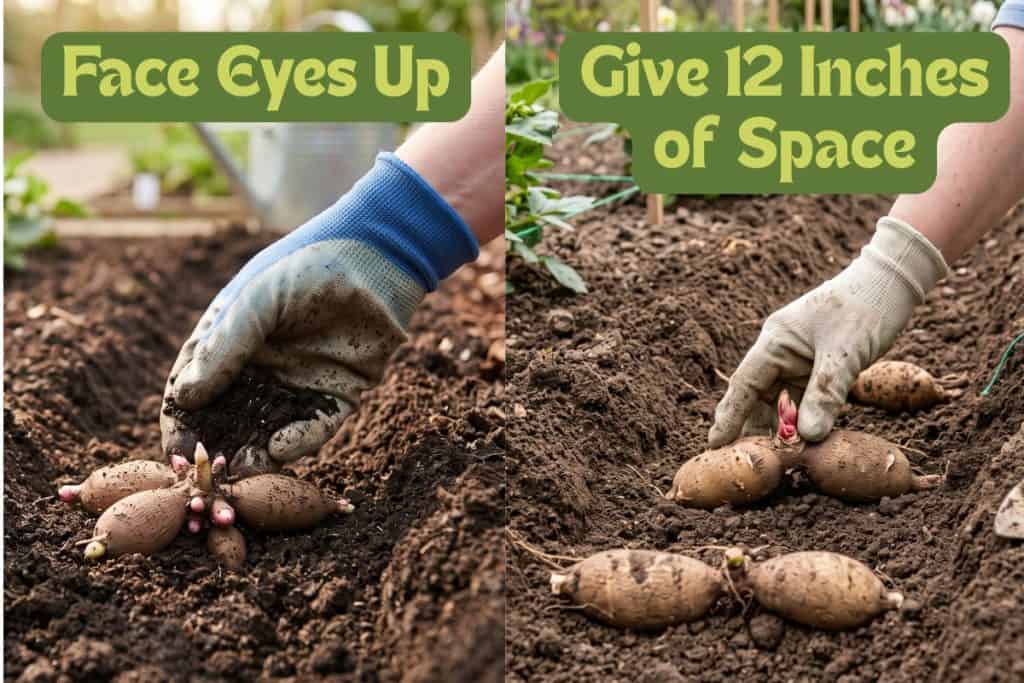
Tighter spacing gives more flowers per foot of bed, but it also means you’ll need to keep up with support and airflow.
Proper Planting in 5 Steps
- Place tubers eyes up, about 4 to 6 inches deep in loose soil or 2 inches deep in clay or tight soil.
- If you’re transplanting a clump, keep the old crown and stems up and the tubers pointing down.
- Firm the soil lightly to close air pockets that could dry the tuber out.
- Drive in everything you’ll need for support at planting.
- Once shoots appear, mulch 2 to 3 inches to hold moisture and slow weeds.
Staking and Adding Support
A dahlia in full bloom is already heavy. Add a summer storm or a strong gust of wind, and an unsupported plant can bend flat or snap. If you’re growing a tall variety, it’s far easier to set up support at the start than it is to prop up a plant that’s already leaning.
There are practical reasons to add support early, too. A stake added to a mature plant can hit the tubers below, which might damage them. Plus, once a young plant fills out, the support you added early on also holds stems apart and lets air move through instead of trapping dampness.
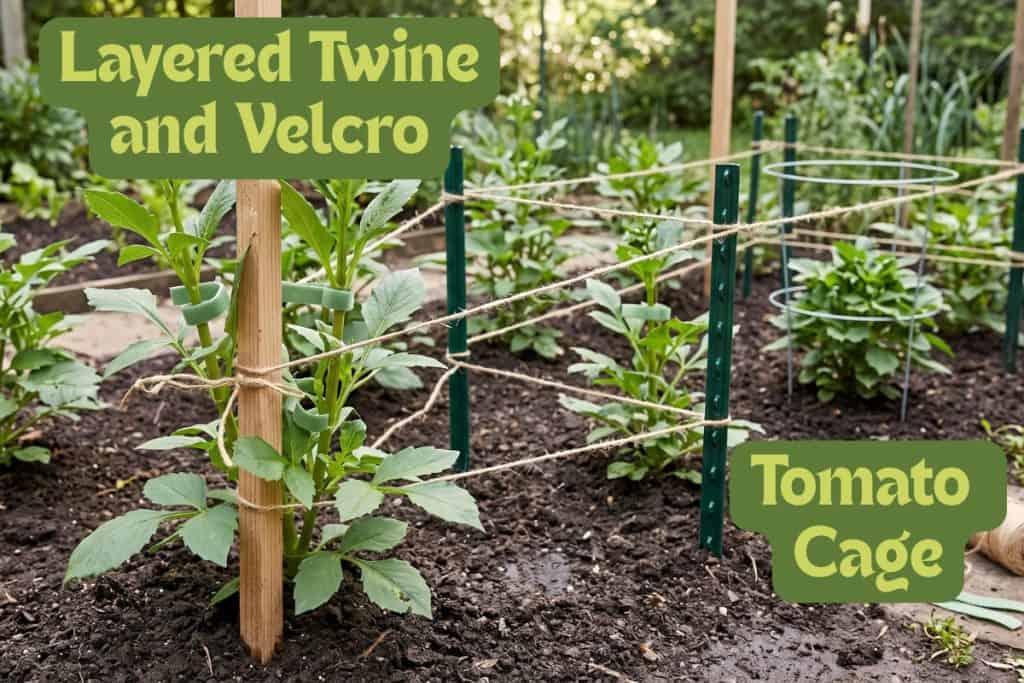
4 Steps to Keep Plants Upright
- Use one stake per plant for a few dahlias or T-posts and layered twine to corral a whole patch.
- Tie loosely with soft twine or Velcro so stems are held up but not pinched.
- Check supports about once a month as the plants climb.
- For shorter varieties, try a tomato cage or peony ring.
Watering Through the Seasons
Watering dahlias properly means changing your habits as the plant grows. A newly-planted tuber has no leaves, so it needs only slight moisture. However, once the plant fills out and summer heat sets in, a big, leafy dahlia uses a lot of water.
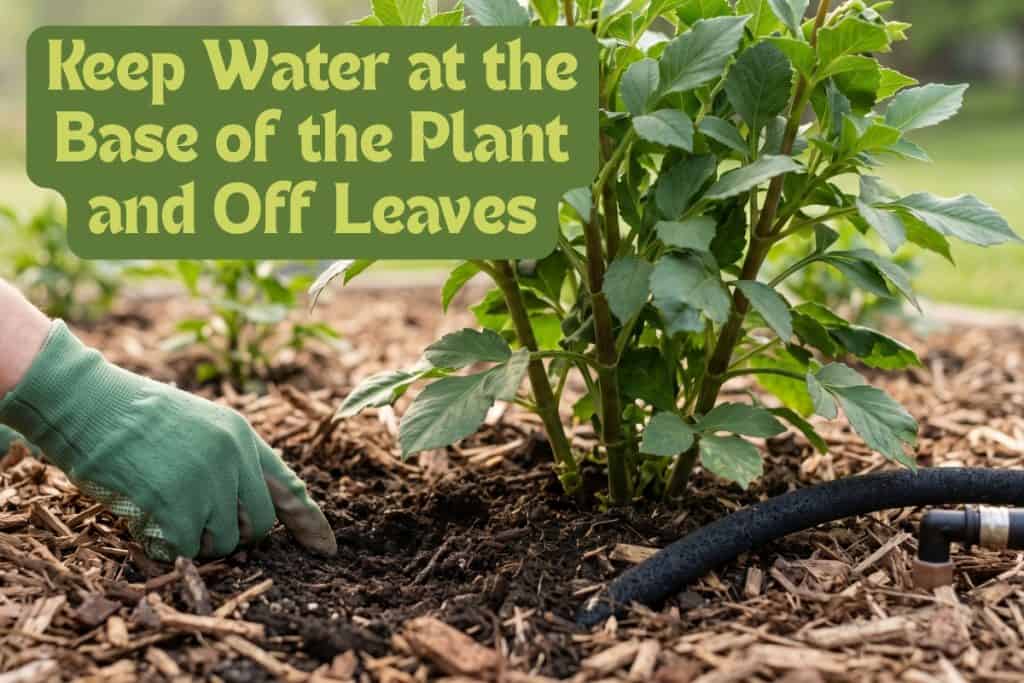
Because the roots need air, the rule is to water well and then let the soil dry down. A soaker hose or another soil-level system can help you avoid leaf diseases.
Watering by Stage
- Hold off on heavy watering until sprouts are about 4 inches tall.
- After that, soak deeply when the soil is dry, about 2 inches deep.
- In dry heat without mulch, you’ll need to water often. Check your plants every couple of days.
- Water at the base, keeping it off the leaves to limit mildew.
Pinch for More Flowers
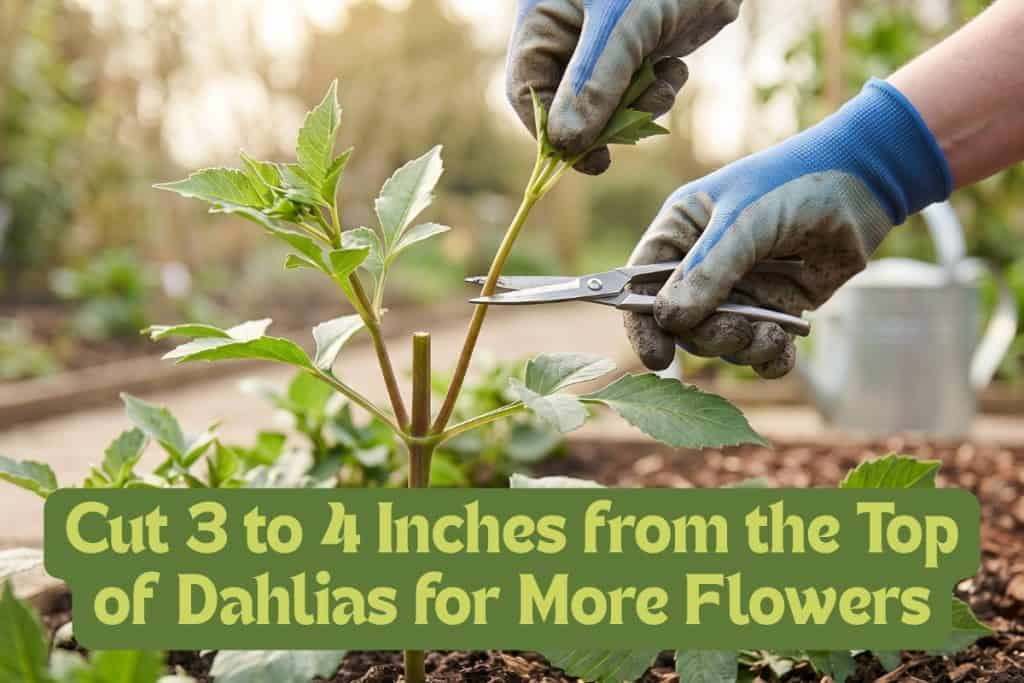
Pinching or trimming a dahlia can feel wrong because you’re cutting off healthy growth, but this practice pays off quickly. If you take out the main growing tip, the plant branches, and each of those branches becomes another flowering stem. You’re trading one tall stalk for a fuller, sturdier plant with more blooms.
Trimming low also serves another purpose. Mature tall stems are hollow, so when they’re cut, they can catch rainwater, which in turn can rot the crown.
How to Pinch in 3 Steps
- Wait until the plant is 8 to 12 inches tall with three or four pairs of leaves.
- Snip off the top 3 to 4 inches of the central stem, just above a pair of leaves.
- Use clean snips or clean fingers for a tidy cut.
Pinching can also increase blooms on other flowering plants, and you can learn how in our guide to chrysanthemums here.
Fertilizing Dahlias
Dahlias flower best with moderate feeding (or fertilizer application), but the nutrient ratio needs to be right.
For example, if you add too much nitrogen, you’ll build a big, leafy plant with weak tubers and few, if any, flowers. More fertilizer isn’t better regardless of the nutrients, so you shouldn’t feed more than the label rates.

When you fertilize dahlia plants matters as much as what you’re feeding with. Ease off fertilizer by late summer so the plant firms up and sets good tubers for overwintering. We don’t want to encourage plants to spend energy on soft growth that frost will take anyway.
Plus, if you mixed compost into the bed at planting, that will slowly supply nutrients through the season.
A Simple 3-Step Feeding Plan
- Use a balanced ratio, low-nitrogen fertilizer with equal numbers, such as 8-8-8.
- Follow the label rates for flowering perennials.
- Feed dahlias in mid-June and again in mid-July, then stop by the end of July.
Deadheading for Continued Blooming
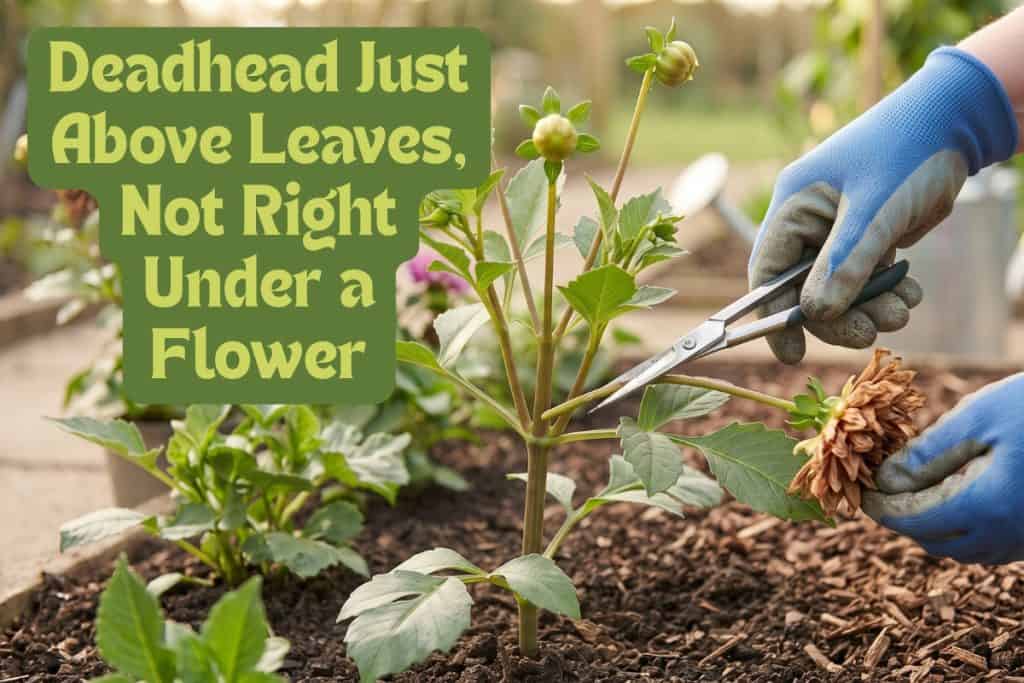
Plants are naturally programmed to invest their energy in reproduction, so removing spent dahlia blooms will result in more flower buds.
After flowering, the plant begins to set seed. Once it sets seed, the plant is triggered to slow bud production. Cut or deadhead often, and it’ll keep branching and flowering instead.
Dahlias start blooming in mid to late summer and continue doing so until the first hard frost, usually for 3 to 4 months. A midsummer stall in high heat is normal, not a warning sign of problems. Keep removing the spent flowers, and most plants come roaring back as the nights cool.
How to Cut for More Blooms
- Follow a spent flower’s stem down to the next set of leaves and cut just above them, not at the head.
- Cut long stems to encourage lower branching.
- For flowers that’ll live in a vase, cut in the cool of the morning when blooms are nearly fully open.
- Stand the cut stems in hot water, around 160 to 180 degrees Fahrenheit, and leave them for an hour until they cool to room temperature. (The heat clears air bubbles from the hollow stems.) Then, move them to a vase of fresh water.
- Expect flowers to last 5 days in a vase; dahlias barely open further once cut.
Growing Dahlias in Containers
A pot lets you grow dahlias on a patio, deck, or balcony and makes it easy to overwinter tubers. You can put the whole container into storage or easily remove the tuber.
The downside is that containers are a harsher home than open ground. Container soil heats up and dries out fast, and it can freeze from every side.
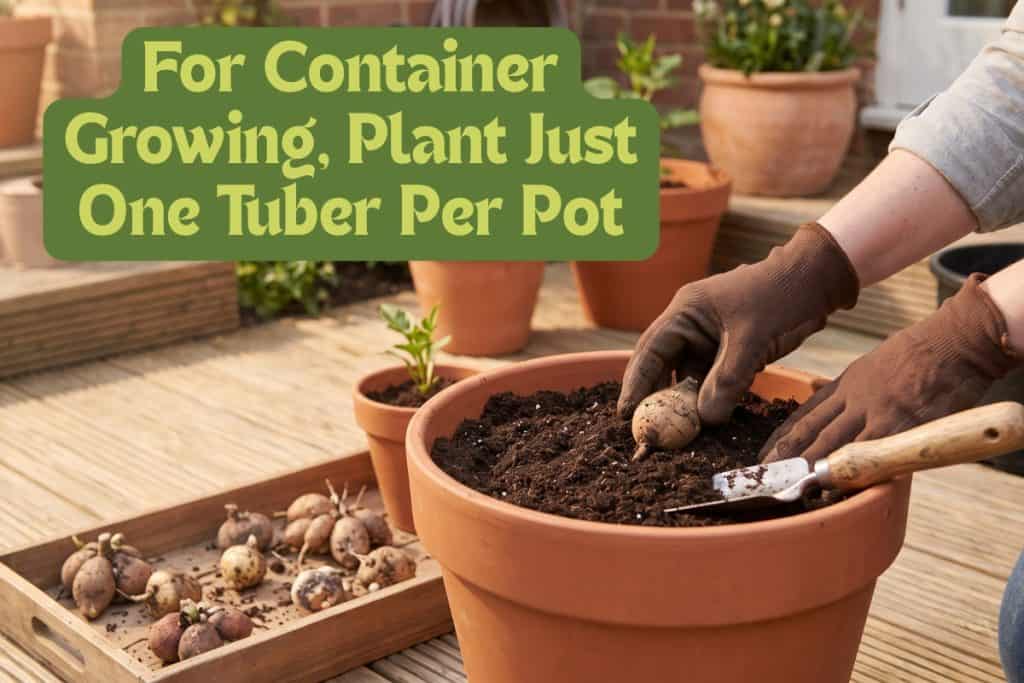
Pot size needs careful consideration, too. A large dahlia variety planted in a small pot dries out too quickly, while a tall one becomes top-heavy in a hurry. Plan on the tuber getting much larger, so give it room.
Container-Growing Basics
- Choose dwarf or border dahlia varieties that reach about 12 to 18 inches tall for the best results.
- Pick a pot about 10 to 12 inches wide for dwarfs or up to 18 to 20 inches for dinnerplates with drainage holes.
- Use a light, well-draining potting mix, never heavy garden soil.
- Plant one tuber per pot.
- Check the top 1 to 2 inches of soil and water deeply (which can mean daily in summer heat).
- Feed with a bloom-type fertilizer at label rates or use 3-month slow-release granules.
Dealing With Pests and Diseases
Dahlias are tough, and most problems are headed off with disease-free tubers and enough spacing for airflow. Any insect problems are usually manageable. The one issue to take seriously is a virus, because there’s no cure once a plant has it.
Your best defense is to perform a regular check of your plants, which catches aphids, mites, or mottled leaves before they spread.
How to Stay Ahead of Problems
- Look over plants weekly, checking stems, leaf undersides, and new growth.
- Hand-pick slugs and snails, which can be a problem on young shoots.
- Knock aphids back with a hose or by hand, since they can carry viruses.
- Watch for spider mites in hot, dry spells.
- Water at the base and give plants plenty of airflow to avoid mildew.
- Remove any heavily infected leaves or plants.
Dahlia Viruses to Watch Out For
Dahlias can fall victim to several viruses. The dahlia mosaic virus is a common concern; it causes pale, blotchy leaf discoloration or lightened veins along with stunted, weak growth.
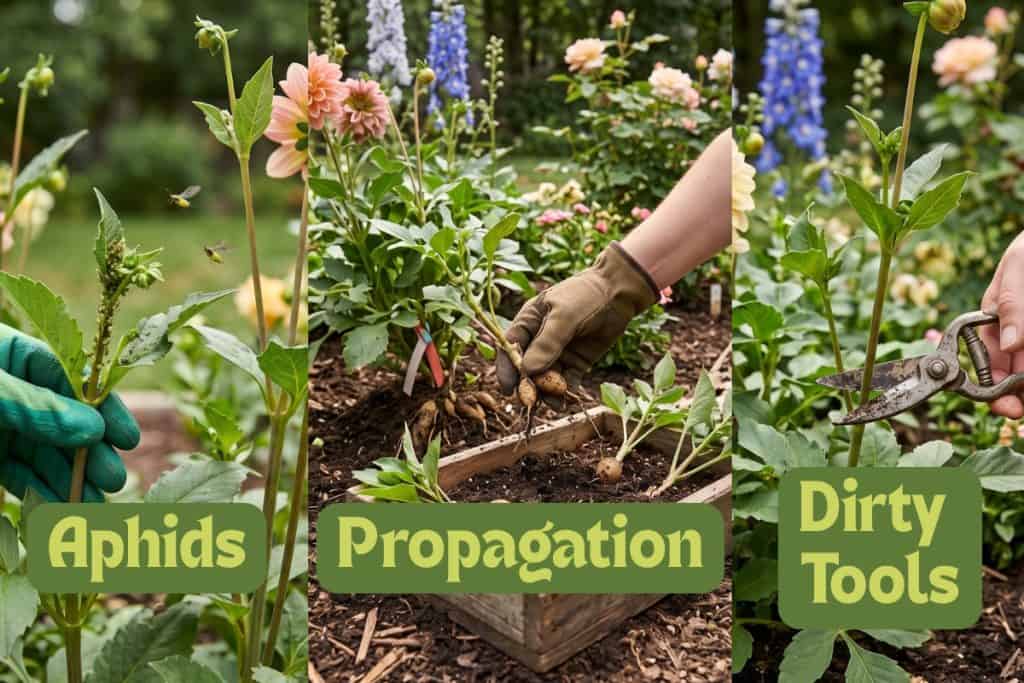
The virus lives in the tubers and spreads in three ways:
- Aphids.
- Propagation.
- Dirty tools.
Once it impacts your dahlias, the virus lives in the tubers and gets worse with each generation. The goal is to prevent it, which you can do by using virus-tested tubers and keeping aphids away.
If signs of virus do appear, remove plants immediately and use a 10 percent bleach solution to clean your tools between cuts, especially when dividing tubers.
To tell a virus from pests or weather damage, look at the newest top growth. If it comes in clean, the plant is fine; if it comes in twisted or mottled, dig it out immediately.
Digging, Dividing, and Storing Tubers
Stored tubers typically fail in two opposite ways, either rotting when they’re too wet or shriveling when they’re too dry, so the aim is somewhere in the middle.
In Zone 8 and warmer, dahlias can often stay in the ground year-round, though a wet winter can rot them. In colder zones, it’s best to dig them up — but don’t do so in a hurry. Tubers keep maturing right up to a freeze, and a well-cured one stores better, so digging a little late beats digging early.
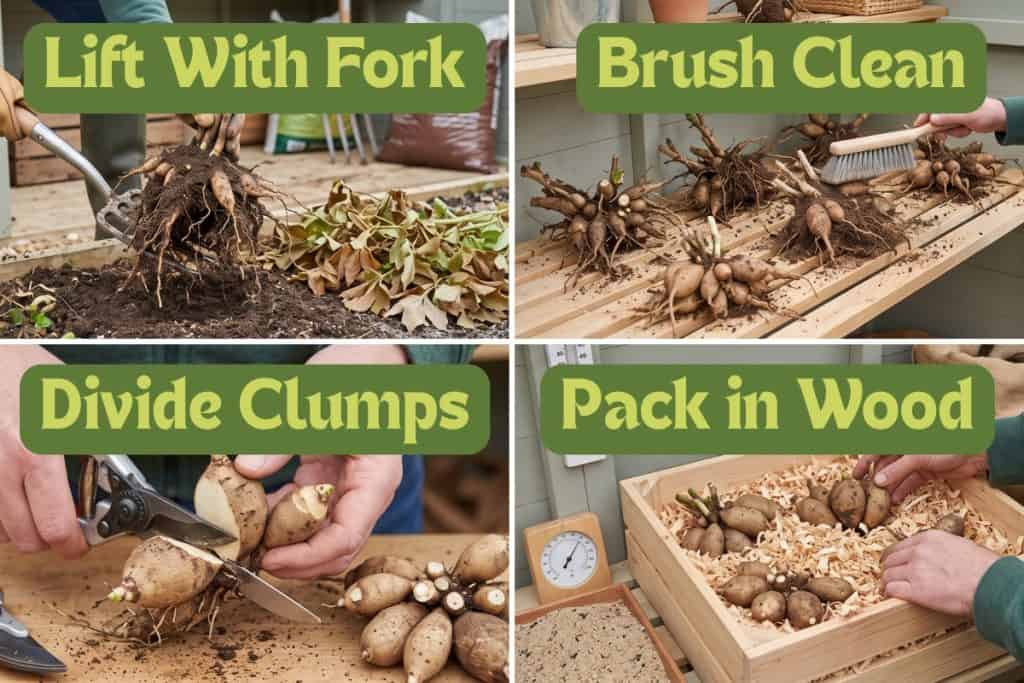
Digging and Storing: 6 Steps
- Allow the first light frost to collapse the tops, then dig before a hard freeze.
- Use a garden fork to lift gently from the outside so you don’t slice the tubers.
- Leave clumps to dry and cure in a protected, well-ventilated space for a few hours, then brush off soil rather than washing it.
- Pack tubers in sand or wood shavings so none of them touch.
- Store cool and frost-free, around 40 to 45 degrees Fahrenheit and about 50 percent humidity.
- Check monthly and toss anything that’s gone soft or moldy.
Dividing Dahlias
Every division must include a piece of crown with an eye. That’s the one rule that matters when you cut a clump apart. A tuber with no eye will never sprout.
Growers have split opinions on the best time to divide. Some believe the clumps store better when left whole and divided in spring, while others prefer to divide in fall after digging when the clumps are easier to cut.
I recommend dividing tubers in fall. A professional trick is to cut the tops off a few days before you dig. This causes the eyes to swell and makes them easier to see when dividing.
Like dahlias, ginger can be divided; learn how to do so in our guide to growing ginger here.
Growing from Seed
You can grow dahlias from seed, but the seedlings won’t match the parents. Dahlia genes are octoploid, which means they have eight sets of chromosomes instead of the usual two.
Each seed pulls from a huge pool of traits, so seedlings vary widely in color, bloom shape, height, and stem strength. That wide variability is why only tubers and divisions are recommended.
Final Advice
Don’t let this plant’s bad reputation scare you. Dahlias are mostly forgiving once they’re up and growing. Just be sure to start with certified virus-free tubers, plant and stake in a sunny spot once the soil is warm, and go easy on the water while the plant is small.
Get those details right, and the rest of your work will mostly focus on deadheading and enjoying the show of blooms.
If dahlias have gotten the better of you before, start over with one easy, well-branching variety and let it teach you how to care for it. Once you have the feel of a single plant, the next 10 will come easily — and by then you’ll be hooked.
6 thoughts on “How To Grow And Care For Dahlias From Tubers: Expert Tips for Success”
I’m a first time sweet potato and dahlia planter. Your instructions are the clearest and most complete than any others I came across.
I received a Dahlia tuber from someone, so I placed it in a pot so it wouldn’t die. It did great. Can I just bring the whole pot in for the winter or do I need to separate the tubers and let them dry? It’s just the first year for this particular plant
Do you have a couple of recommendations of green houses to purchase tubers from? When should I order my tubers? Just in time to plant in the spring or fall for storage until spring planting? I am located in Central Missouri in zone 6b
I don’t have a suggested greenhouse, but here is an answer to when to order and plant. Order your tubers in winter, roughly December through February. The good growers open pre-orders in late fall, and the popular named varieties sell out by late winter, so ordering early is really just reserving what you want. They ship in spring at the right planting time for your zone, so the tubers arrive close to when you’ll put them in the ground, not in the middle of winter.
That answers the spring-versus-fall question: you don’t buy in fall to store over winter. Bought tubers come to you in spring, rested and ready, so there’s nothing for you to hold onto. Storing tubers until spring is a separate job, and it’s only for the ones you dig out of your own garden after frost.
Can I bring the dahlia inside as a houseplant for the winter?
You can bring a dahlia indoors, but keeping a mature plant growing as a houseplant usually isn’t the best approach. Dahlias naturally slow down and enter dormancy as the days shorten. Indoors, they often struggle with low light and dry conditions, producing weak, stretched growth and becoming more susceptible to pests such as spider mites and aphids.
A better way to preserve your favorite dahlia is to store the tubers dormant. After frost kills the foliage, cut the stems back, lift the tubers, let them dry briefly, and store them in a cool, dark, frost-free location until spring.
Taking cuttings is another excellent option. Root small shoots before winter and grow them under strong lights. The cuttings take up much less space than a mature plant and can provide healthy new plants, or additional cuttings when the growing season approaches.