

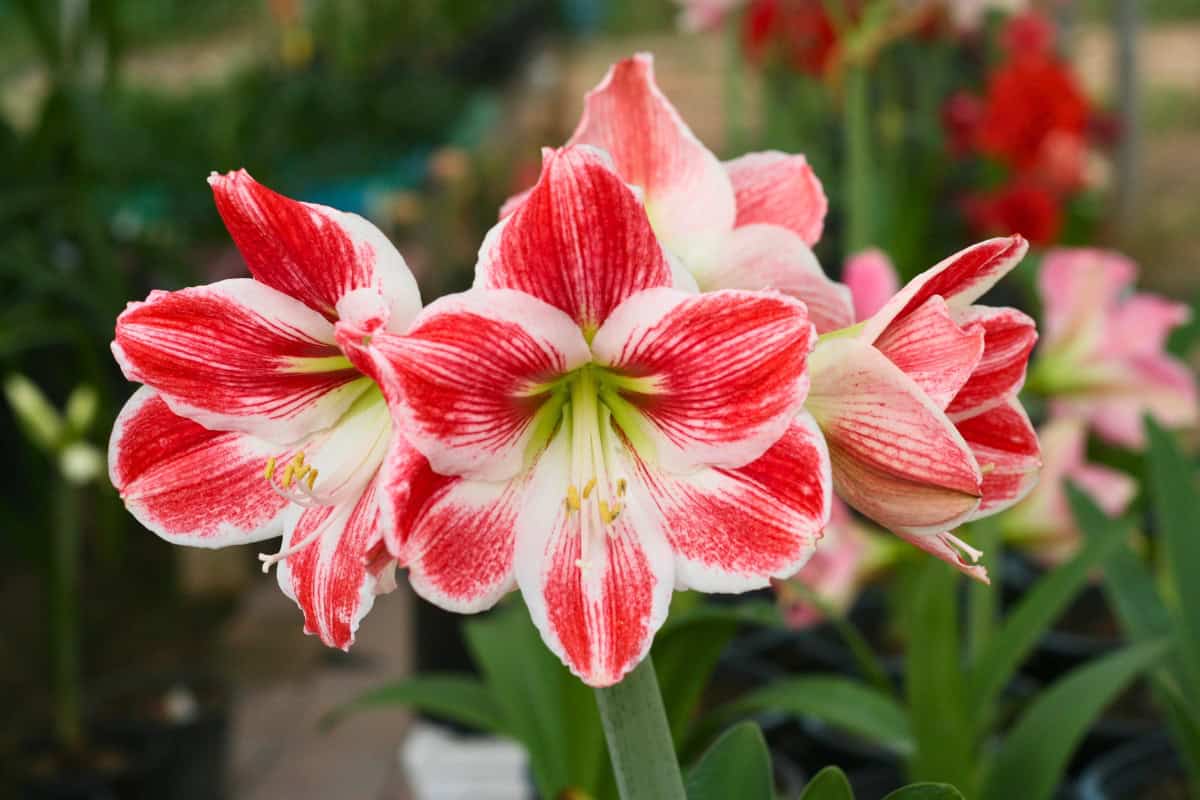
Few houseplants put on a show like an amaryllis.
Around Christmas, only poinsettias can rival it. A single bulb sends up a thick stalk and opens huge colorful flowers in the dead of winter.
While that first bloom is almost guaranteed, the real skill is getting the same bulb to flower again year after year, bigger and better each time. In this guide, you’ll learn:
- How to tell which type of amaryllis bulb you own.
- The growth cycle that decides whether a bulb will ever re-bloom.
- How to time the flowers to open the week you want them.
If you’ve picked up boxed amaryllis bulbs, you’ll learn exactly what you need to know to help them thrive and bloom again right here.
What to Know Before You Plant
The bulbs you buy in a holiday box might appear to be amaryllis plants, but these are rarely a true amaryllis.
Rather, they’re part of the genus Hippeastrum, a group of hybrids from South and Central America. The true amaryllis is a different single species from South Africa: the belladonna lily.
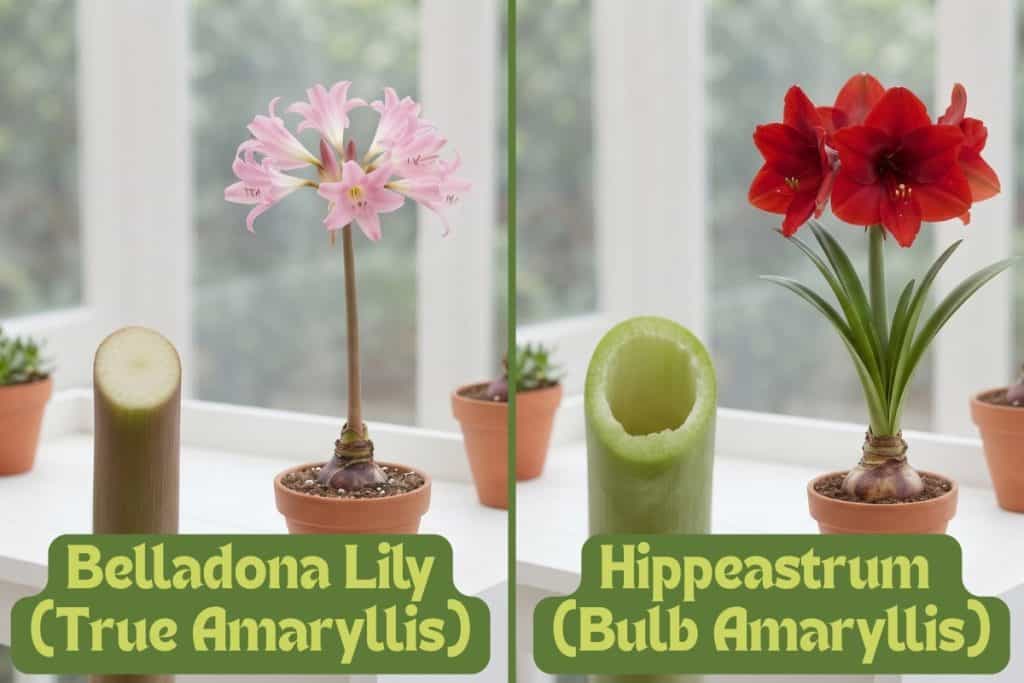
Even today, a lot of care advice blends the two plants together. However, the plants’ care needs aren’t the same, so the information out there can be confusing and conflicting.
In this guide, we’re covering the most popular type of amaryllis: the boxed bulbs that fall into the Hippeastrum genus. These are perennial herbaceous bulbs, and they are the same holiday bulbs that are often seen at Christmas.
4 Steps: Tell a True Amaryllis from a Holiday Bulb
- Feel the Flower Stalk: A Hippeastrum has a hollow stalk, while a belladonna lily (or “true” amaryllis) has a solid one.
- Watch for Leaves: A belladonna lily blooms on a bare stalk before its leaves appear.
- Bloom Time: A belladonna lily flowers outdoors in late summer, while the Hippeastrum bulb is forced into winter bloom indoors.
- Planting Depth: A belladonna lily is planted with its neck at soil level; the Hippeastrum bulb is planted with its neck above the soil.
You can learn about another popular holiday plant, the poinsettia, in our guide to growing poinsettias here.
How an Amaryllis Bulb Grows
What it takes for a Hippeastrum amaryllis bulb to re-bloom makes sense once you understand how this bulb builds a new flower. Inside, it grows in a repeating pattern: It makes four leaves, then a flower bud, then four more leaves, then another bud.
Each new bud takes months to form, and these buds only develop while the plant has healthy leaves.
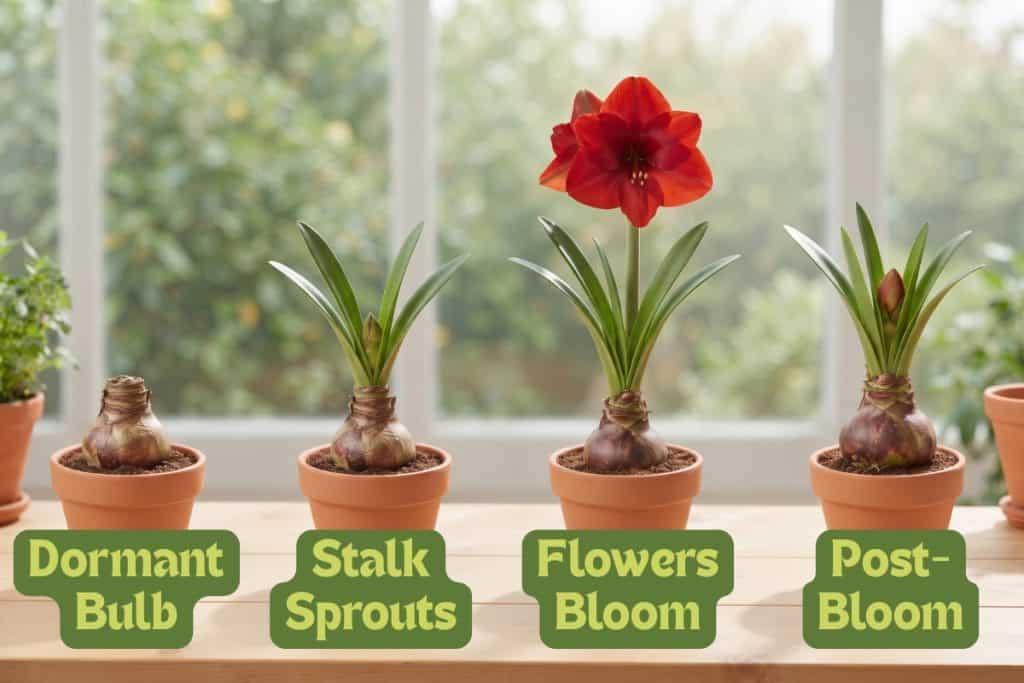
The flowers you get during the first winter were built by the grower last season, before the bulb was boxed. Every leaf an amaryllis plant carries after it blooms is quietly building next year’s flower underground.
What the Growth Cycle Means for Your Plant
- Expect flowers first from a fresh bulb, since the grower already “pre-loaded” them.
- A second stalk may follow the first.
- Think of the leaves as support for next year’s flowers, not leftover growth to cut off.
- Expect growth in bursts, with pauses in between.
- Some varieties drop all their leaves in winter; others hold a few.
- Watch the bulb widen a little each year as it stores more energy.
Choosing a Healthy Bulb
The bulb you start with determines the quality of the flowers.
A bigger bulb holds more stored energy, and that shows up as more flowers. A small or “bargain” bulb can only do so much, no matter how well you care for it.
5 Steps to Choose a Bulb that Will Perform
- Buy the largest bulb you can find, since size drives flower count.
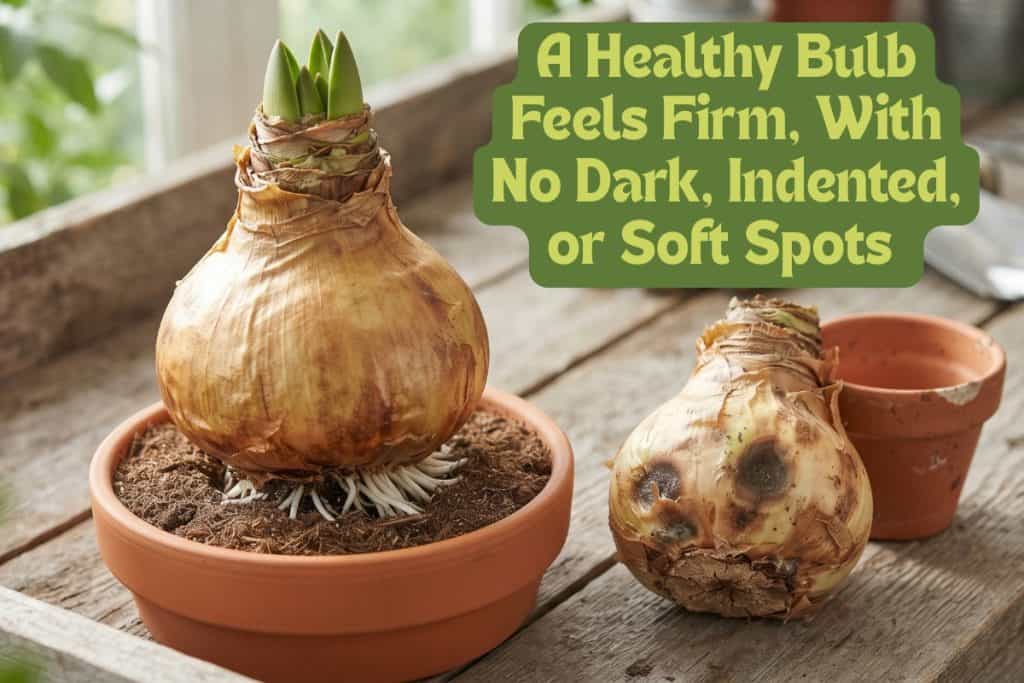
- Pick one that feels firm and heavy, with no soft, dark, or sunken areas.
- Look for a bulb about 12 inches in circumference, which usually produces 2 stalks with 3 to 4 flowers each. The largest bulbs can send up three stalks.
- Check where it was grown if you’re aiming for a specific bloom date.
- Avoid a waxed bulb unless you don’t plan to keep it.
When choosing an amaryllis bulb, firmness matters as much as size. Soft or damaged spots are usually the first sign of rot, which can spread once the bulb is warm and watered. Where the bulb was grown also changes the timing. Bulbs from the Southern Hemisphere are ready to bloom earlier, so reach for these if you want flowers by Christmas.
Common Types for Sale
Nearly every type of amaryllis wants the same care, so choose your bulb type based on blooms. Most big hybrids carry little or no scent, so don’t pick one expecting fragrance.
- Large-Flowered Singles: Most bulbs fall into this category of classic red or white blooms.
- Doubles: Includes types like ‘Aphrodite’ and ‘Dancing Queen’ that feature extra rows of petals.
- Miniatures: Smaller plants and flowers, such as ‘Baby Star’ or ‘Green Goddess’ types.
- Trumpet, Cybister, and Spider Types: Includes varieties like ‘Quito,’ with blooms that have flared trumpets or narrow, spidery petals.
- Size Classes on the Tag: Symphony is the largest; Sonata is medium; and Sonatini is compact.
How to Plant Your Amaryllis
Amaryllis bulbs flower better when crowded.
A snug pot keeps the roots tight and pushes the plant’s energy into the flower stalk instead of into filling a big pot with roots. A big pot also keeps extra wet soil around a bulb that hates sitting in water.
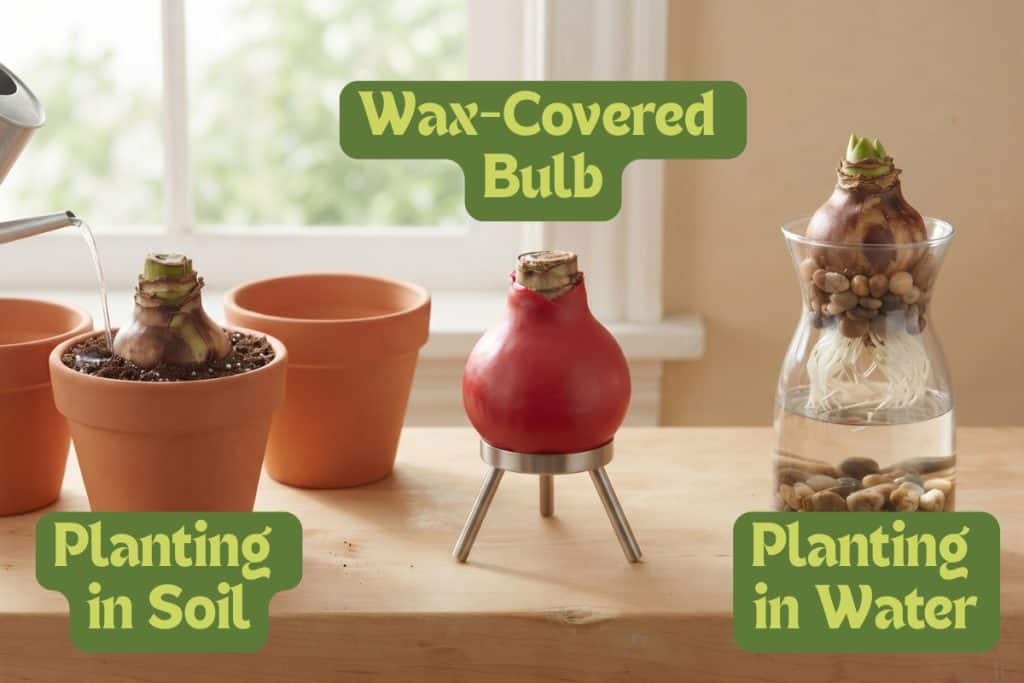
Planting depth protects the bulb by leaving the top of the bulb above the soil, keeping water off the neck and shoulders. This is where rot would start. Unlike tulips or daffodils, an amaryllis doesn’t need a cold period before it will bloom, so you can pot it and set it on a warm windowsill the same day.
How to Pot an Amaryllis Bulb
- Choose a pot about 1 inch wider than the bulb and roughly twice as tall, with at least one drainage hole.
- Fill the pot with a well-drained mix of equal parts potting soil, peat moss, and coarse sand or perlite (or a quality mix combined with 1/3 perlite).
- Set the bulb so the top 1/3 to 1/2 stands above the soil line.
- Leave about 1 inch between the soil and pot rim for watering.
- Pot in early to mid-November if you want flowers by Christmas.
- Water once to settle the mix, then wait about a week before watering again.
Waxed Bulbs
A waxed amaryllis is a bulb dipped in a thick coat of colored wax, usually set on a small metal base so it stands up on its own.
Its roots are trimmed off and tucked up inside the wax at the bottom. The wax seals the bulb’s moisture inside, so the bulb needs no soil, water, or light to flower. It runs entirely on its stored energy, sends up a stalk in 4 to 6 weeks, and blooms for up to 3 weeks.
Waxed bulbs are built for only one round of colorful blooms. Getting one to bloom a second year is possible but difficult, and I wouldn’t count on it happening.
Growing Bulbs Over Water
Growing an amaryllis bulb over water is a separate method; these bulbs don’t need a pot and have no wax covering. To grow one over water, rest the bulb in the neck of a special water vase or a jar of pebbles so its base sits above the waterline. The roots grow down to the water.
Like a waxed bulb, it lives mostly on its own reserves for a single showy season. Ultimately, the bulb empties its reserves without a way to rebuild them.
Master the planting and care of another bulb plant and read our guide to growing tulips here.
Light & Temperature Needs
Light is the biggest factor in getting an amaryllis to bloom a second time. Strong light after flowering keeps the leaves working, which pays for the next bloom. A plant kept in a dim room may look fine but never flower again.
Temperature works against your plant differently. A warm room speeds up stalk growth, but the plant tends to be taller and weaker, with fast-fading flowers. Cooler air once the buds show color slows everything down in a good way and extends the flowering time. Amaryllis has no tolerance for cold, though, so a frosty window will do real damage.
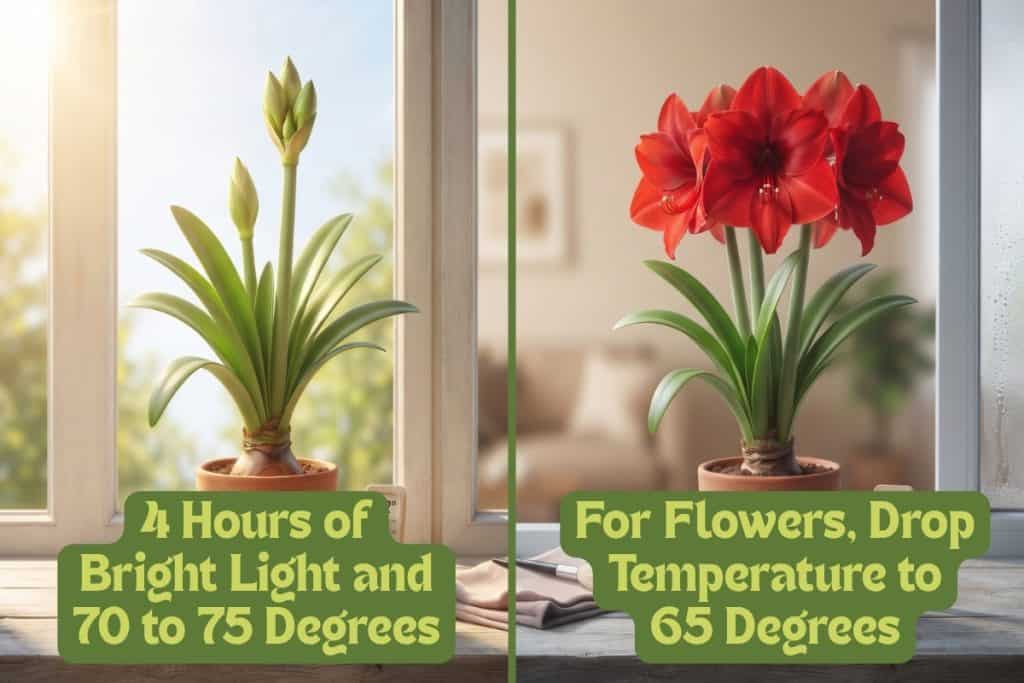
5 Steps to Get Light and Warmth Right
- Give the plant at least 4 hours of direct sun daily while it is growing.
- Turn the pot a little every few days so the stalk grows straight.
- Keep the room around 70 to 75 degrees Fahrenheit while the stalk is rising.
- Drop the temperature to around 65 degrees Fahrenheit once the buds start to color to prolong the flowers.
- Keep the plant away from frost, cold drafts, and hot air from vents.
Watering Without Rot
More amaryllis are killed by overwatering than by neglect. The main danger occurs right after planting, before the bulb has grown roots. Water sitting around a rootless bulb has nowhere to go, and the bulb starts to rot.
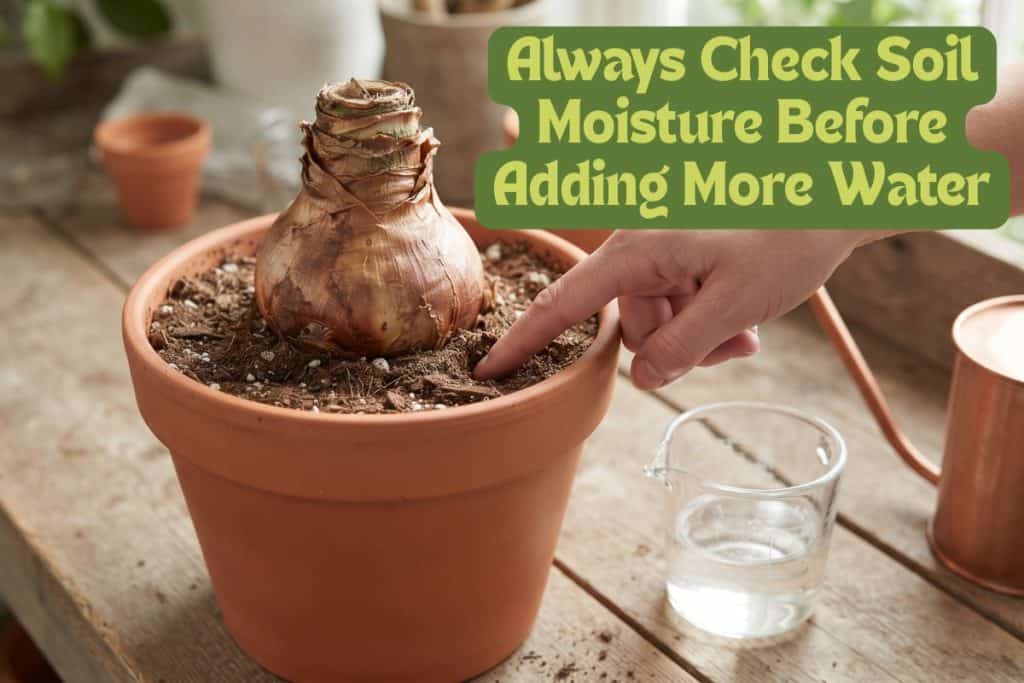
That’s exactly why we plant it sitting high in the pot. The safest habit is to water by feel, letting the plant tell you when it is ready for more.
How to Water Through the Seasons
- Keep the soil mix barely moist until the shoot is 2 to 3 inches tall.
- Let the top of the soil dry out between waterings.
- Water once or twice a week while the plant is in full bloom.
- Stop watering completely once the bulb enters its rest period.
Extending The Bloom
You can expect pre-forced amaryllis bulbs to bloom in about 3 to 6 weeks; standard bulbs take 6 to 8 weeks.
How long an amaryllis stays in bloom is partly up to you. Offering more sun while the buds open can deepen the flower color. But heat and direct sunlight are also what cut a display short. The same bulb can flower for a week in a hot, sunny room or much longer in a cool one.
The thick stalks of this plant are hollow and top-heavy, and a stalk in full bloom can tip the whole pot over or snap at the base. Adding a little support early can save the show.
Additionally, if you would rather enjoy the flowers up close, you can cut a stalk for a vase without robbing the bulb, since the leaves, not the stalk, are what feed it.
Make Blooms Last in 5 Steps
- Move the plant out of direct sun once the buds show color.
- Keep it in the coolest bright spot you have while it flowers.
- Stake a tall stalk with a chopstick or thin bamboo stake, or set the pot inside a heavier container so it cannot topple.
- Cut a whole stalk at the base for a vase if you want to display cut flowers.
- Each flower lasts about 2 weeks; a full stalk stays showy for 3 to 4, and a second stalk can stretch the display past a month.
Like amaryllis, orchids can also be coaxed into blooming again with the right combination of light, temperature, and care. Learn how to do this in our guide to growing orchids here.
After-Flower Care
When an amaryllis plant’s flowers are gone, the leaves take over to restock the bulb. Now’s the time to perform a little maintenance, too.
You can remove the flower stalk once it yellows, but every leaf needs to stay. Fertilizing matters just as much now because the bulb spends months replenishing its energy reserves.
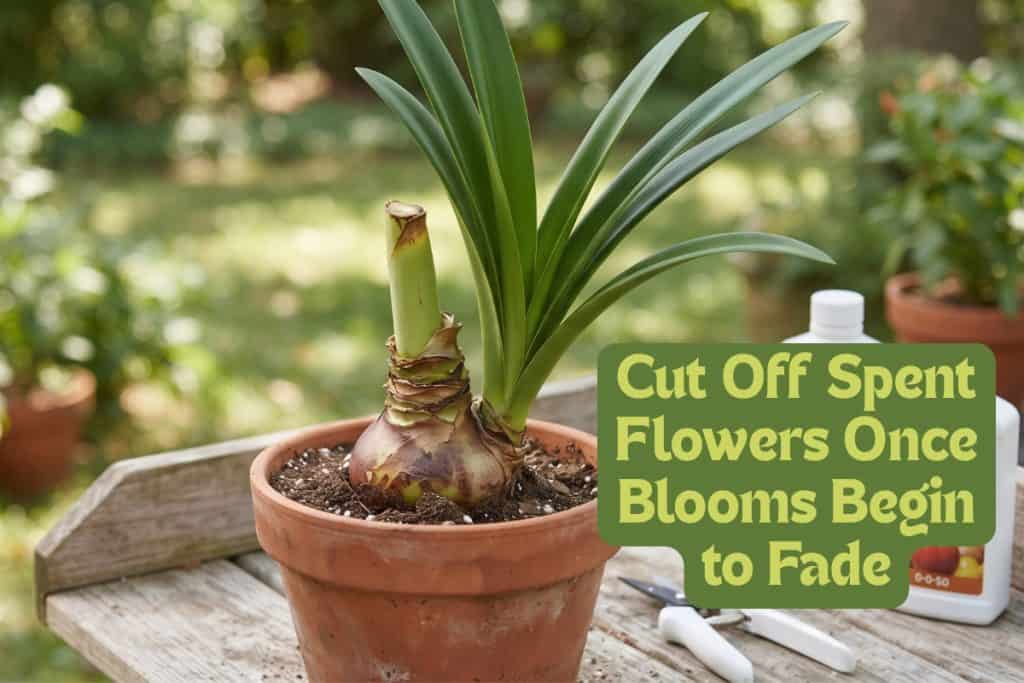
After flowering, the plant is building leaves and wants steady, balanced food. By late summer, the plant shifts from growing leaves to storing energy and strengthening the bulb, so that’s when you should switch to a fertilizer that supports bulb development.
How to Care for the Bulb after Blooming
- Cut off each spent flower and remove the stalk once it turns yellow to keep the plant from wasting energy on seed pods.
- Keep every leaf and let the plant grow.
- Fertilize only after growth appears. Then, use a balanced houseplant fertilizer at half strength every 2 to 4 weeks.
- Switch to a high-potassium, tomato-type formula (low nitrogen and high potassium, around 5-5-10) in late summer.
- Move the pot outdoors once all danger of frost has passed.
Rest Periods And Reblooming
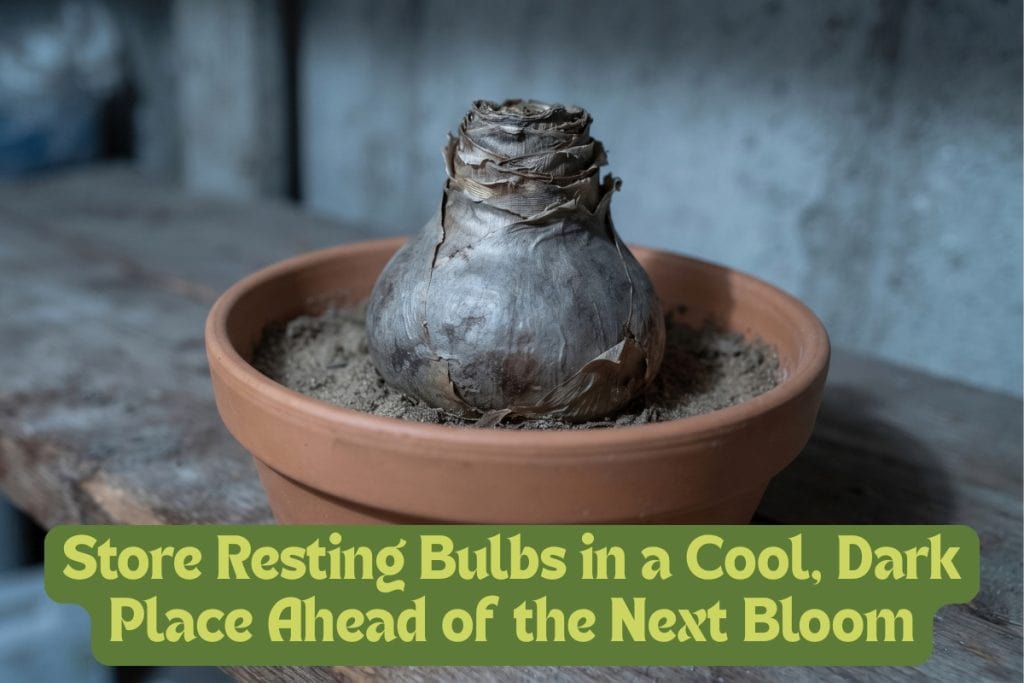
For an amaryllis, the rest period is more of a scheduling tool than a strict rule. Modern hybrids will often re-bloom if you keep them growing in good light, but a controlled rest lets you decide when the flowers open.
Forcing an amaryllis means guiding the plant through a cycle of growth, rest, then a wake-up so the bloom shows up when you want it. Warmth after the rest speeds the bloom along, while cooler conditions slow it down and give you a longer flower display.
How to Rest and Restart the Bulb
- Count back about 8 to 10 weeks from when you want flowers, plus 2 weeks for the bloom itself.
- Start drying the bulb off in early September for December flowers.
- Store it somewhere cool, dark, and dry, ideally around 50 to 55 degrees Fahrenheit.
- Repot or top off the mix, then move it back into warmth and light. Water again when it’s time to activate.
- Expect the new stalk in about 4 to 6 weeks.
- Getting leaves but no flower usually means too little light, too short a growing season, or a rest that stayed too warm.
Christmas cactus is another popular holiday plant where manipulating light and timing can help trigger flowers. Learn how to plant and care for it in our guide to Christmas cacti here.
Repotting and Offsets
An amaryllis likes to be left alone in its pot, so it’s rare that it’ll need repotting. Because this plant flowers best when kept snug, disturbing the roots too often sets it back.
The main reason to repot one is to deal with the small bulbs, called offsets, that form alongside the mother over time. Splitting those off is the easiest way to turn one plant into several, and each should flower within a couple of years. These plants are hybrids, so the seeds will not grow true to the parent, and it takes years for the offshoots to reach flowering size.
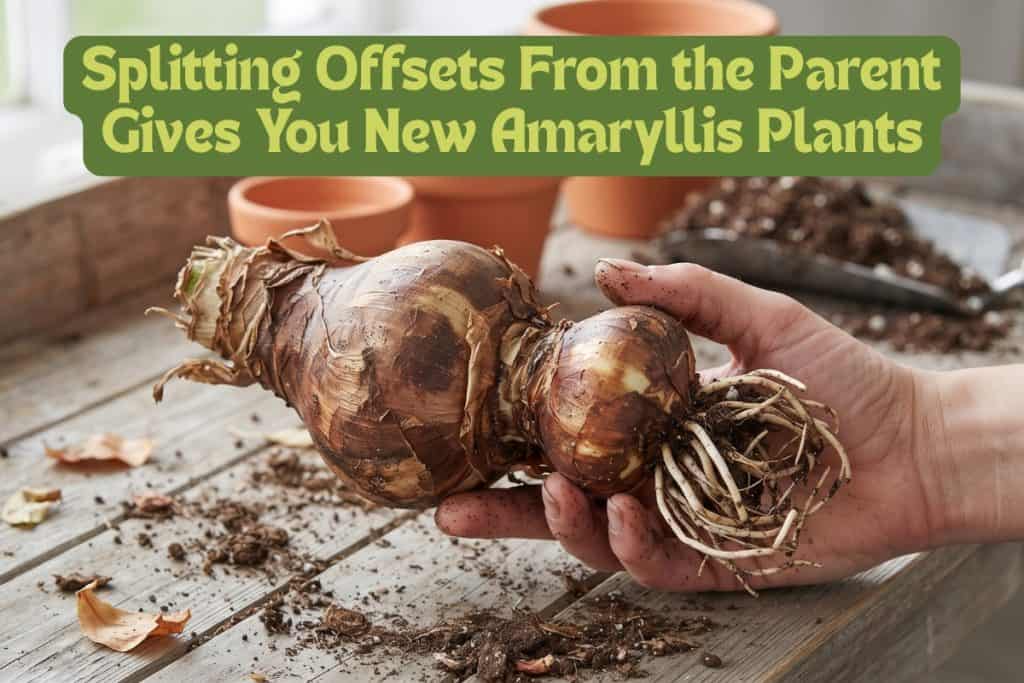
You can use twin-scaling, a process of cutting the bulb into small pieces, to create more plants, but it is also a multi-year process.
5 Steps: Repot and Divide Offsets
- Repot only every 3 or 4 years, after the plant’s rest period.
- Lift the bulb and look for the biggest offsets, about 1/3 or 1/4 the size of the mother.
- Separate offsets that have their own roots, keeping those roots intact.
- Pot each one with its top 1/3 exposed (the same as a full-size bulb).
- Expect a separated offset to bloom in about 2 years.
Growing Amaryllis Outdoors
In the deep South, these holiday hybrids can go straight into the ground and bloom repeatedly for years, though they’ll bloom in spring instead of mid-winter.
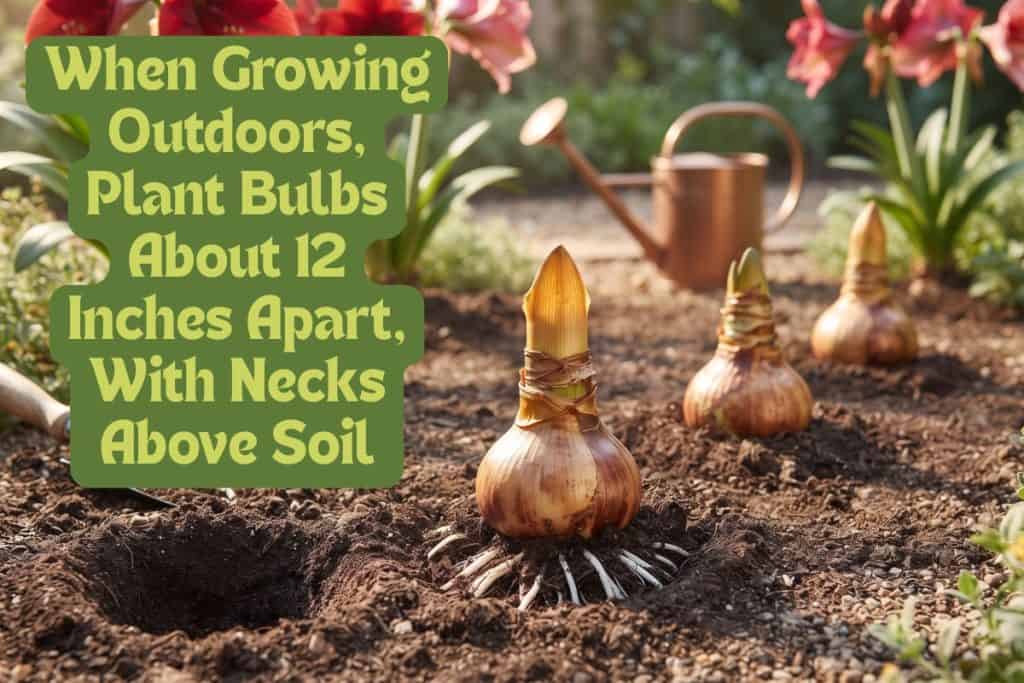
Amaryllis bulbs are hardy in the warm zones but risky in other places, so growing outside depends on where you live. Where they overwinter outside, the bulbs multiply and can bloom in the same spot for a decade or longer. Outdoor planting and care rules are similar to indoor ones.
Planting Amaryllis Outdoors
- Grow hybrids in the ground in Zone 8 and warmer, treating Zone 7 as a gamble.
- Choose a well-drained spot in sun to light shade.
- Set bulbs about 1 foot apart with the neck at or just above the soil surface.
- Hold off on heavy mulch until the plant goes dormant in fall.
- Feed in-ground plants with a low-nitrogen fertilizer such as 5-10-10 or 6-12-12.
Pests, Diseases, and Pet Safety
When grown indoors, an amaryllis plant is usually trouble-free. Bulbs kept as houseplants year-round rarely encounter pests, but they are at greater risk of rot.
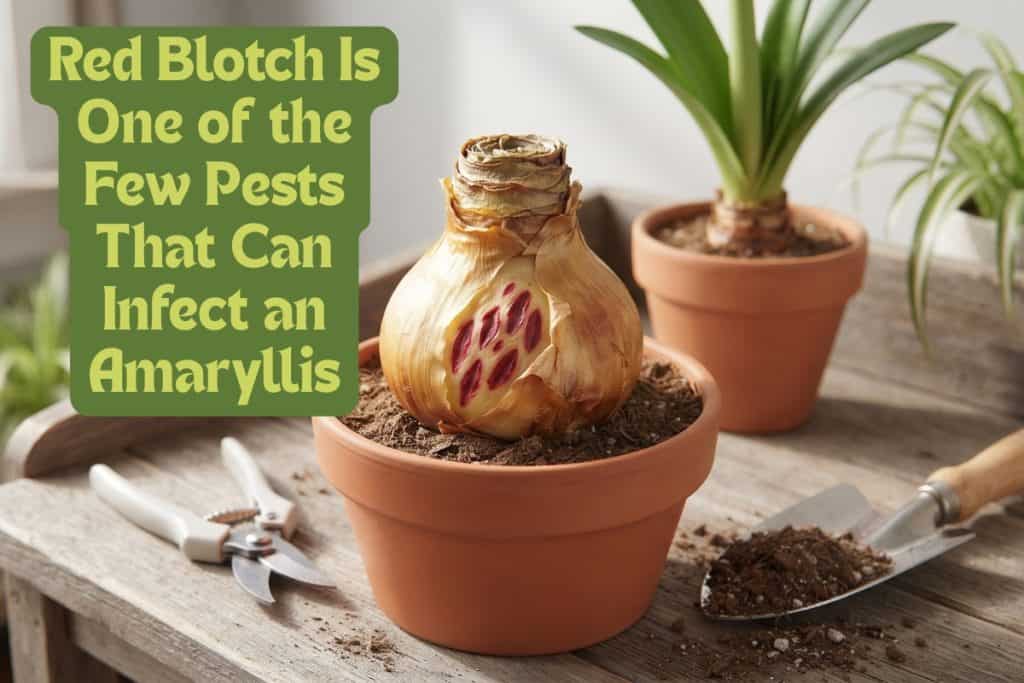
The real problems show up on bulbs that spend the summer outside. You’ll want to watch for a fungal disease that scars the leaves and stalks, and a fly whose larva tunnels into the bulb from below.
4 Problems to Watch For
- Red Blotch: These sunken red marks on leaves and stalks make a stalk bend. To treat, toss badly infected bulbs, skip overhead watering, and encourage airflow.
- Narcissus Bulb Fly: A grub that tunnels in from the base and leaves the bulb soft by fall. It affects bulbs summered outdoors, so inspect plants before bringing them in.
- Mealybugs: Appear as small white fuzz on leaves and bulb. Wipe them off when you see them.
- Bulb Rot: These soft, dark, foul areas form when soil stays wet. Cut away the bad tissue, let it dry, and repot the plant in fresh mix.
Is Amaryllis Toxic to Pets?
Amaryllis is toxic to cats, dogs, and horses, and to people if eaten in any quantity. The bulb holds the most toxin. Ingesting it in a large dose can cause vomiting, stomach pain, or worse.
Keep plants up high and out of the way of pets and kids in your household.
Final Advice
Even after its Christmas blooms fade, amaryllis can still be an exciting and rewarding plant. An amaryllis bulb that you care for year-round can return with more flowers for a decade or more. Just let the leaves grow, feed the bulb at the right time, and give it a real rest before waking it up.
Start with the biggest bulb you can find, keep it in your brightest window, and let nature do the work. When a plant seems to have an issue, check the bulb before you water. A firm bulb is a healthy bulb. This one habit should keep your bulb healthy through the years.
Happy growing!
10 thoughts on “All About Amaryllis: How to Grow, Care for, and Get This Plant Blooming”
I have an Amaryllis Marquis, from a box last year. I’ve kept it in a southeast window with regular watering and feeding. Leaves are long and bright green. Now it’s November 10, and it sounds like from what you’re saying that it’s time to give it a rest so it can re-bloom. My garage is cool and dark, so a good place to rest it. Question ~ ~ should I cut off the leaves before it rests? Thank you.
Hi, no don’t cut the leaves. They need to die back naturally with all the energy going down into the bulb. Put it in the cool. Check it after a few weeks and when the leaves are flat and yellow and turning brown, you can cut them off.
I let my 2025 Christmas amaryllis bloom, stay nice and green for a long time, then die back. I cut the leaves off and placed it outside under plants where it got no sun. I noticed a few weeks ago (October 1) that it started growing leaves. I watered it. They are now 2 feet tall!! There are no flower spikes. Should I bring it inside and let the green leaves grow and when they die again, cut them off and not put it outside this time but in a closet? Confused. Thank you.
Well, you probaby won’t have flowers for Christmas, but the bulb can keep getting bigger and stronger.
What to do right now: yes, bring it inside, but not to just any indoor spot. Put it in the brightest, sunniest window you have and leave it there. It needs to photosynthesize hard this winter to rebuild. Check that the bulb still feels firm while you’re at it. I would not expect flowers this winter. There’s no spike, and you can’t force a bloom that the bulb didn’t build. This season is about recharging, not blooming.
About the closet: a cool, dark, dry rest in a closet is a real and useful step, but only as a timing tool after the bulb has had a good season of light. The rest doesn’t make the flower. Light and feeding during the growing season make the flower. The rest just decides when it opens. If you give a light-starved bulb a closet rest, you’ll get the same leaves-no-flower result next time.
So the fix is the opposite of what the shady spot did. Here’s the simple path to a bloom next Christmas:
Now through spring: brightest window indoors, let every leaf grow, feed lightly once it’s actively growing (a balanced houseplant food at half strength, every few weeks).
Next summer: move it outdoors into real sun, four to six hours of direct light, not under other plants. Keep feeding. This is the part that builds the flower.
Early fall: let it dry off and go dormant, then give it that cool, dark, dry rest, eight to ten weeks. The closet is fine for this.
About eight weeks before you want flowers: bring it back into warmth and bright light and water again. That’s when a spike should come.
You didn’t do anything wrong in the die-back-and-rest instinct. The one thing to change is light. Give it sun next season and that same bulb should reward you.
I have several potted amaryllis I’ve gotten to re-blooom after a rest period. However in my zone 9b I would like to plant them outside. Will gophers eat them?
Yes there is a high risk of gophers eating them. Then comes voles, then comes moles also a risk. Then you also have all the critters that tend to dig them up including skunks, armadillos, and raccoons.
Where can I buy large unwaxed bulls. I’ve heard bulbs that are more than 3 years old Blum very dramatic with many large flowers They will also rebloom and come back the following year
I don’t have a specific company to recommend. Just do some online research and check their years in business and reviews. Most independent garden centers have quality bulbs.
Can I propagate bulbs from the seeds in the flower stem after flowering?
Yes! Amaryllis can be grown from seeds that develop in the seed pods after flowering, but there is one important distinction: the seeds develop inside pods, not directly in the flower stem.
After the flowers fade, if the blooms were pollinated, seed pods may form at their base. Allow the pods to mature and turn yellow or begin splitting before collecting the seeds.
Plant fresh seeds in a well-draining potting mix and keep them lightly moist. They can germinate in a few weeks under warm conditions.
Keep in mind that seed-grown amaryllis can take 3–5 years or longer to flower, and the new plants may not look exactly like the parent. If you want a quicker way to produce flowering-size plants, separating offsets (small bulbs growing beside the mother bulb) is usually the better choice. Best wishes.