
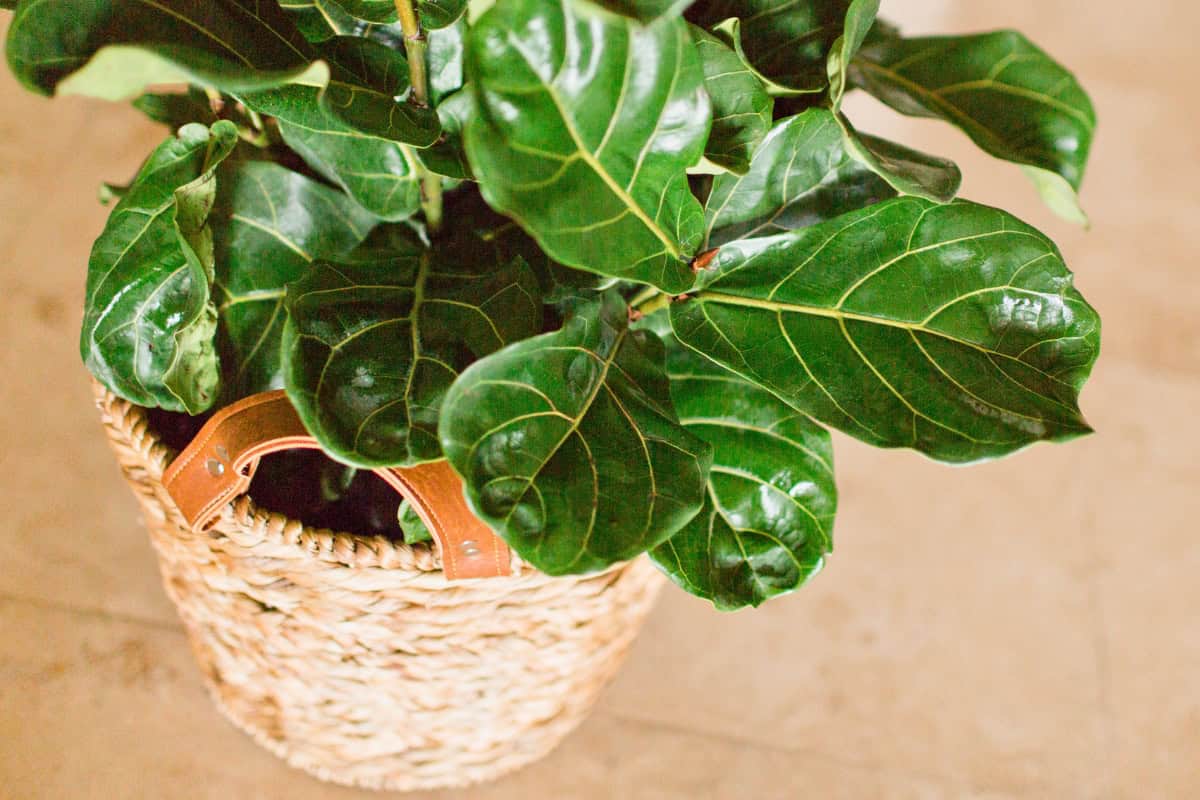
The fiddle leaf fig is a plant that marches to its own beat. Its violin-shaped leaves look the part, and like any string instrument, the plant only seems right when everything is in tune.
Too little light, one heavy watering, or a hot draft, and it hits a sour note fast.
Here, you’ll learn:
- Why the plant you pick is so important for long-term success.
- What yellow, brown, or red marks on leaves mean.
- How pruning or notching can turn a bare stem into a full, branching tree.
Get the conditions right, and Ficus lyrata is one of the most striking indoor plants you can grow.
A Safety Note On Toxicity
Fiddle leaf figs are toxic to people, cats, and dogs if chewed.
The leaves and stems hold tiny calcium oxalate crystals that can irritate the mouth and throat and cause drooling, burning, and sometimes vomiting. The milky sap can irritate skin, too. None of this makes a fiddle leaf fig dangerous to own.
However, it does mean you’ll want to set it out of reach of curious pets and small kids — and wear gloves when you cut it.
#1. Choose Your Fiddle Leaf Fig Type and Size
Before you decide to buy the first fiddle leaf fig you see, think about the job you need it to do in your home.
For example, a single-trunk tree gives you that classic statement-making look, but the whole plant depends on one stem. If it rots or breaks, there’s no backup. Alternatively, a multi-stem plant has a different look and spreads the risk out. Lose one stem, and the rest keep growing.
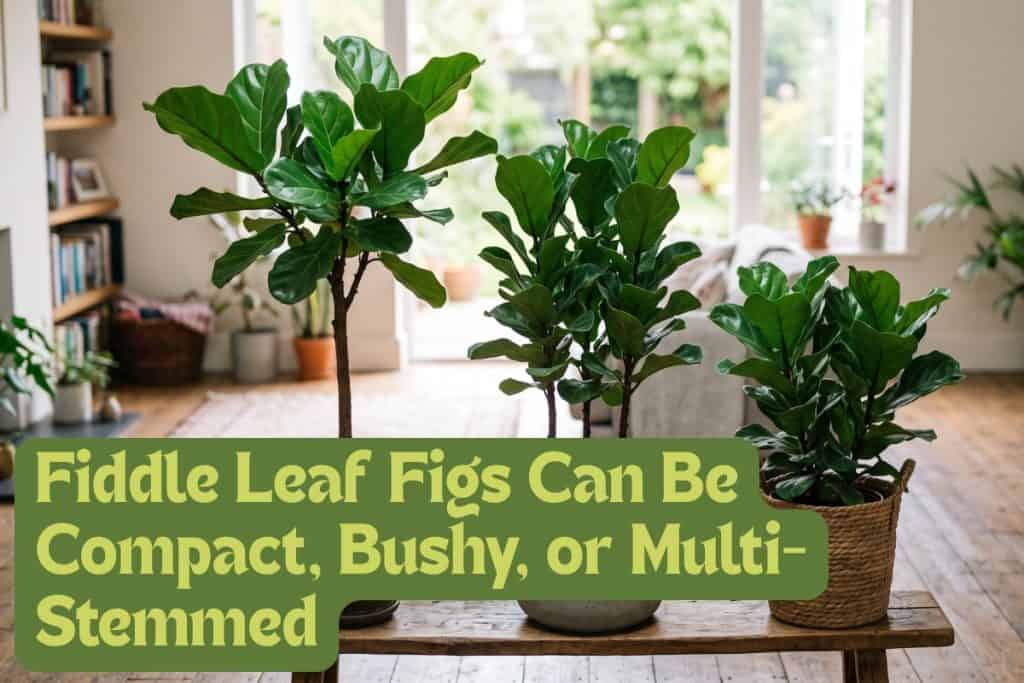
Additionally, the shape you choose now shapes your fiddle leaf fig plant for years.
Common Fiddle Leaf Fig Varieties
There are three main kinds of fiddle leaf figs you’re likely to find at a nursery:
- Compact or Bushy: Figs that feature several stems close together.
- Column: Multiple upright trunks in one pot, which provide height and little spread.
- Single-Trunk Trees: Figs with one main stem and a classic, tall tree shape.
Lesser-Known Fiddle Leaf Fig Varieties
- ‘Bambino’: A dwarf plant that will grow just a few feet tall.
- ‘Compacta’: A smaller-leaf plant that reaches about 5 feet tall.
- ‘Little Sunshine’: A small plant with bright, violin-shaped leaves.
- ‘Variegata’: A fig with green and cream leaves.
#2. Inspect the Plant Carefully Before Buying
Starting with a healthy plant is half the battle when you’re raising a fiddle leaf fig.
If a plant is already over-watered, sunburned, or carrying pests, it’ll need to recover while also trying to adjust to your home. That’s often more stress than it can handle.

Avoid these bad signs on stems:
- Soft or squishy brown patches
- Dark black rot near soil line
- Cracks that leak sticky sap
- Stems that lean or droop badly
Don’t let a few spotted leaves scare you off, though. What matters is whether the problem is active. A plant with firm leaves, clean new growth, and solid stems is healthy, even if a lower leaf might look rough. Active pests or soft, yellow stems are reasons to leave a plant behind.
Try to avoid purchasing a fiddle leaf fig when temperatures are below 50 degrees Fahrenheit. The time spent in the cold getting in and out of a car can shock the plant and make it much harder to adjust to its new location.
5 Things to Check Before Choosing a Fiddle Leaf Fig
- Leaves should be firm and upright, not limp or drooping.
- Foliage should be mostly clean, without widespread spots or browning.
- New leaves are a sign that the plant is actively growing.
- Stems should be firm, not yellow, soft, or soggy.
- Leaf joints and undersides should be clean, without white, cottony specks or webbing.
Aloe vera plants are another toxic plant that should be placed out of reach, and you can learn more in our guide.
#3. Let Your New Plant Settle In
Fiddle leaf figs are especially sensitive to changes in their environment.
Even a ride home in the back of a truck can be incredibly stressful for this plant.
The light, air movement, humidity, and watering it gets in your living room will probably be different from what it got at the store, so it’s important to let your plant settle in before adding more stress.
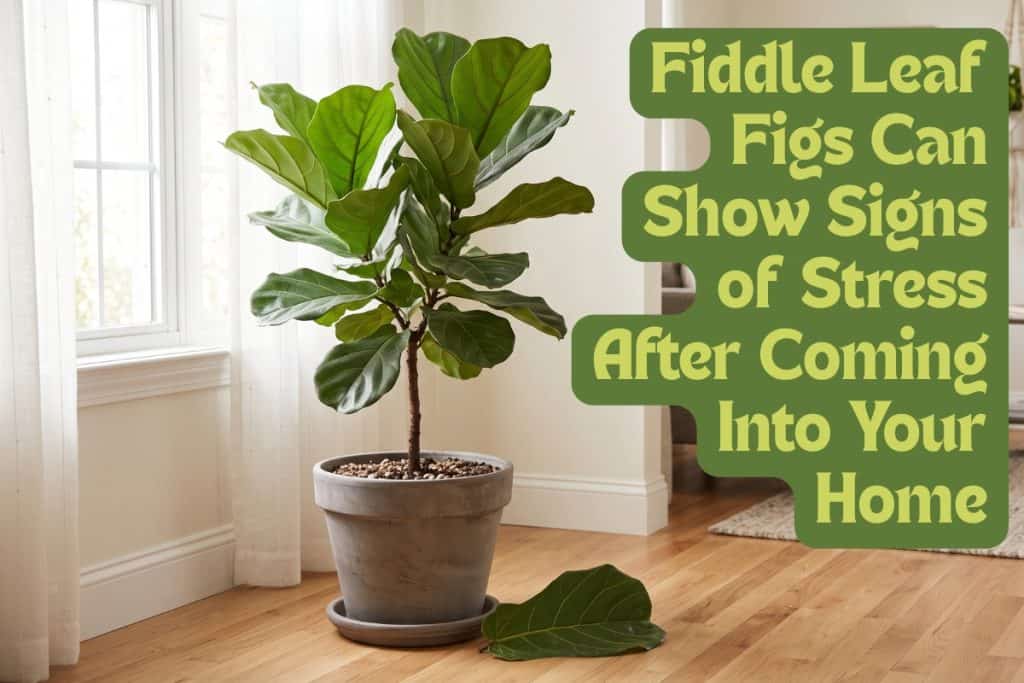
Prevent stress with these basic tips:
- Drafts: Keep away from cold AC vents
- Moving: Do not move pot around home
- Pruning: Avoid cutting leaves early
- Feeding: Skip adding plant foods
- Watering: Wait until upper soil dries
A dropped leaf or two during the first couple of weeks after a move is normal. Give your fiddle leaf fig a suitable spot and let it adjust on its own time. The patience you show in the first two weeks will set it up for success.
5 Steps for the First Few Weeks
- Set your fiddle leaf fig in its permanent spot and leave it there.
- Don’t repot or fertilize.
- Water only if the soil is truly dry below the surface.
- Expect a lost leaf or two.
- Take a photo so you can compare it week to week.
#4. Get the Lighting Right
Light is key for fiddle leaf figs, as it determines leaf size, fosters new growth, shapes whether the plant ever branches, and impacts how fast the pot dries out.
A plant placed in a dim corner will grow weak and leggy, lean toward the nearest window, and use water so slowly that the soil stays wet and roots turn to mush. On the other hand, too much afternoon sun will scorch the leaves, and those burned patches will never turn green.

Spot light issues with these signs:
- Leaves turn pale or bleached white
- Stems grow very thin and tall
- Brown scorched spots on top leaf
- Soil takes weeks to dry completely
The Best Location for Fiddle Leaf Figs
You’ll want to place your plant near:
- East-Facing Windows: These offer gentler morning sun and are a safe year-round location.
- South- or West-Facing Windows: These provide strong afternoon sun (just keep the plant away from the glass).
Don’t Forget to Dust the Leaves
Fiddle leaf fig leaves are like solar panels; they’re necessary to make energy. So, when dust collects on them, it reduces the amount of light the plant can absorb. (Plus, it makes your plant look dull.)
Wipe the leaves every week or two with a soft, damp cloth. Hold each leaf from underneath while you work so you don’t bend it.
Leaf polish, including using “hacks” like mayonnaise, harms plants by coating the leaves and clogging the tiny pores (or stomata) they use to breathe. When those pores are blocked, the plant can’t breathe well or release extra moisture (a process called transpiration). That makes it harder to make food and move water and nutrients from its roots upward.
4 Steps: How to Place and Turn a Fiddle Leaf Fig
- Provide bright, indirect light for 6 to 8 hours a day.
- Keep direct afternoon sun off the leaves.
- Turn the pot a quarter turn clockwise every two weeks.
- Use a grow light positioned a few feet above the plant for 10 to 12 hours if you don’t have an ideal window.
Like fiddle leaf figs, pothos plants also need regular cleaning; learn how to do this in our guide here.
#5. Water Your Fiddle Leaf Fig by Feel
Fiddle leaf figs tend to die when given too much water, not too little.
So, watering this plant isn’t as easy as setting a schedule because the perfect timing shifts with the seasons, light, pot size, and soil mix.
You also have to account for any “extras” that trap water, such as a decorative outer pot with no drainage holes or a saucer that isn’t emptied after watering. If a plant sits in leftover water, the roots never get air, and rot occurs.

Avoid these big soil water errors:
- Schedules: Water on a fixed calendar
- Saucers: Leave full standing water
- Pours: Splash water on main leaves
- Cold: Use ice cold tap water
To properly water a fiddle leaf fig, you don’t just need to remember to water; you also have to decide if the plant even needs it.
In a bright spot, your plant could need water weekly. In lower light, watering every two to three weeks should be fine. Just remember to always use room-temperature water, never icy or hot water.
How to Water the Right Way
- Push a finger about 2 inches into the soil. Water only if it’s dry.
- Water slowly across the entire soil surface.
- Stop once water runs from the pot’s drainage holes.
- Empty the saucer after about 15 minutes.
- Cut back on water in fall and winter when growth is slow.
#6. Keep Temperature and Humidity Steady
The fiddle leaf fig is a tropical plant, and it likes the consistent temperatures most homes already have.
Sudden changes, like a cold draft from a door or a blast from a heat vent, can trigger stress (and that might look like a watering problem, causing you to water when you shouldn’t).

Watch out for these climate risks:
- Rapid temperature swings daily
- Dry indoor air during winter
- Blasts from hot furnace vents
- Frigid window glass contact
Consistent humidity is another piece of the puzzle. Dry indoor air, especially in winter, can brown the leaf tips and invite pests like mites.
Depending on where you live, you may need to increase the humidity by grouping plants or placing your fig on a pebble tray. Raising the humidity helps the plant look its best, but it never replaces proper watering. Wet air and wet soil are two different things.
5 Steps to Keep Fiddle Leaf Figs Comfortable
- Aim for normal room temperatures around 65 to 80 degrees Fahrenheit.
- Keep the plant away from door drafts and vents.
- Shoot for humidity in the 40 to 65 percent range. Use an inexpensive hygrometer to monitor your humidity.
- Run a humidifier in dry rooms, or mist lightly toward the leaf undersides.
- If you set your plants outside in the summer, bring them indoors before temperatures fall below 55 degrees Fahrenheit.
#7. Master Soil Mix and Fertilizer
Soil is where over-watering can become a problem.
Fiddle leaf fig roots need air as much as they need moisture, so the goal is to use a mix that absorbs water, then allows for air exchange while drying before the next watering.
You can start with an indoor potting mix as your soil base, then add amendments to improve drainage. Just make sure to never use soil from outside; it can carry diseases, insects, and it compacts easily.

Follow these key repotting tips:
- Timing: Repot only in spring season
- Sizing: Go up just two inches larger
- Roots: Gently untangle outer roots
- Drain: Keep bottom drain holes clear
When it comes to fertilizer, feeding matters — but it’s not the main thing that keeps a fiddle leaf fig healthy.
Fertilizer can help a healthy plant grow during spring and summer, but it won’t fix problems caused by too little light, poor watering, or the wrong soil. Plus, too much fertilizer can also burn the leaf edges brown, so it’s best to think of it as a small health booster, not a cure for a struggling plant.
The Best Soil and Fertilizer Approach
- Start with an organic potting mix.
- Add perlite and bark or coarse sand for drainage.
- Always pot in a container with drainage holes.
- Feed every 2 to 4 weeks during spring and summer.
- Use a fertilizer with a 3-1-2 NPK ratio (or tropical houseplant formula) diluted to half strength.
- Stop fertilizer in fall and winter.
When to Repot Fiddle Leaf Fig Plants
Fiddle leaf figs actually like being a little tight in their pots, so repotting isn’t something you need to do on a schedule.
Repotting is a stressful event for this plant, so it’s important to make the best choices possible.
The most common repotting mistake is using a too-large pot. All of the extra soil around a small root ball will stay wet after the roots have absorbed what they can use.
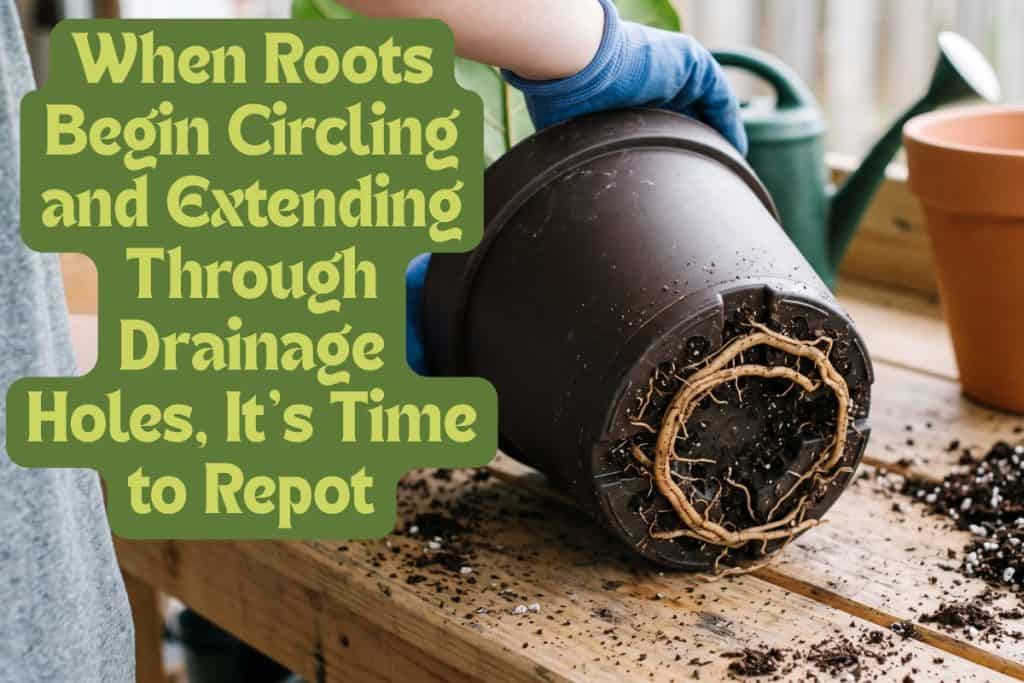
Look for these signs to repot:
- Roots poke out of drain holes
- Roots coil around top soil
- Water drains out too quickly
- Top-heavy pot tips over easily
Your plant will tell you when it genuinely needs more room: You’ll see roots growing out of the drainage holes or circling the soil surface.
If you’re considering repotting because your fiddle leaf fig has become top-heavy, consider pruning to encourage branching. You can also set your current pot into a larger, heavier pot to add stability.
Repot a Fiddle Leaf Fig in 7 Steps
- Pick a well-draining pot about 2 inches wider than the old one.
- Skip rocks or clay balls at the bottom. They create a perched water table that holds water higher in the root zone, increasing rot risk.
- Add fresh, fast-draining soil mix.
- Ease the plant out of its current pot and loosen a few outer roots.
- Look for any mushy or black roots. Cut off anything unhealthy.
- Set the crown at the same depth as before, then fill in the sides and firm.
- Water gently, making sure the crown depth doesn’t change.
Like fiddle leaf figs, snake plants also like to be a bit snug in their pots, and you can learn about their repotting needs here.
What to Do About Spots, Browning, and Scorch
Fiddle leaf leaves are the best indicator of the health of your plant.
But there’s a catch: One symptom can point to more than one cause.
For example, the worst thing you can do is glance at a discolored leaf and reach for the watering can.
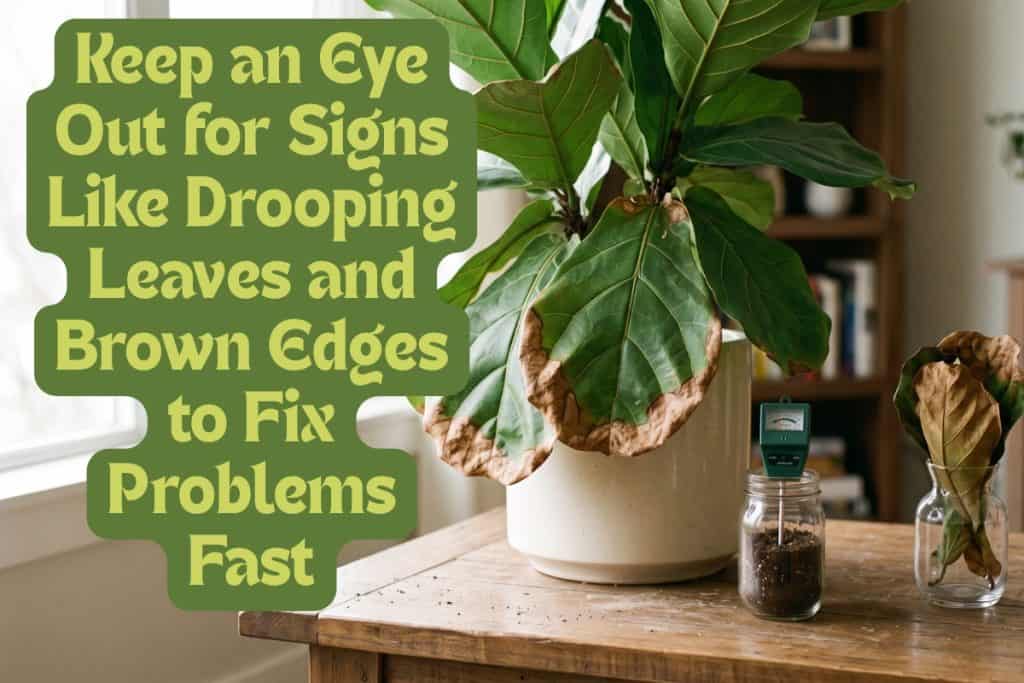
Assess these spot causes first:
- Heat: Check for nearby vents
- Water: Check moisture down deep
- Light: Measure daily light hours
- Air: Test room humidity levels
- Pests: Look under leaf surfaces
Browning can mean your plant is getting too little water or too little light, and adding water to a light problem could make it worse.
Before you fix anything, look at the complete picture. How wet is the soil? How much light does the plant typically get? How dry is the winter air? Has anything changed recently? The leaves will tell you something’s off, but the rest of the plant will point to the cause.
9 Fiddle Leaf Signs and What They Might Mean
- Drooping, Sagging Leaves: Light is low, and you should monitor for over- or under-watering.
- Yellow Leaves That Drop: You’re over-watering; inspect the roots.
- Brown Edges or Centers: Your plant needs more water or light. Check the soil moisture.
- Orange or Bleached Patches: This is sun scorch, so move the plant back. Unfortunately, that damage won’t heal.
- Red or Brown Speckles on New Leaves: This is edema, caused by cells swelling and bursting. It’s harmless and fades as the leaf matures.
- Dark Spots: This is caused by temperature swings or a root problem.
- Tiny White or Yellow Dots: The leaf is stippled from spider mites.
- Silvery Scratch Marks: You have thrips.
- Small Brown Bumps on Stems and Leaf Undersides: You have scale insects.
Catch Root Rot Early
Root rot kills fiddle leaf figs, and it’s caused by roots staying wet too long.
This can happen with over-watering, water sitting in a saucer, or soil that never dries out.
The good news: Catching root rot early gives the plant a shot at recovery, since a fiddle leaf fig can regrow roots once you stop the source of the wetness.
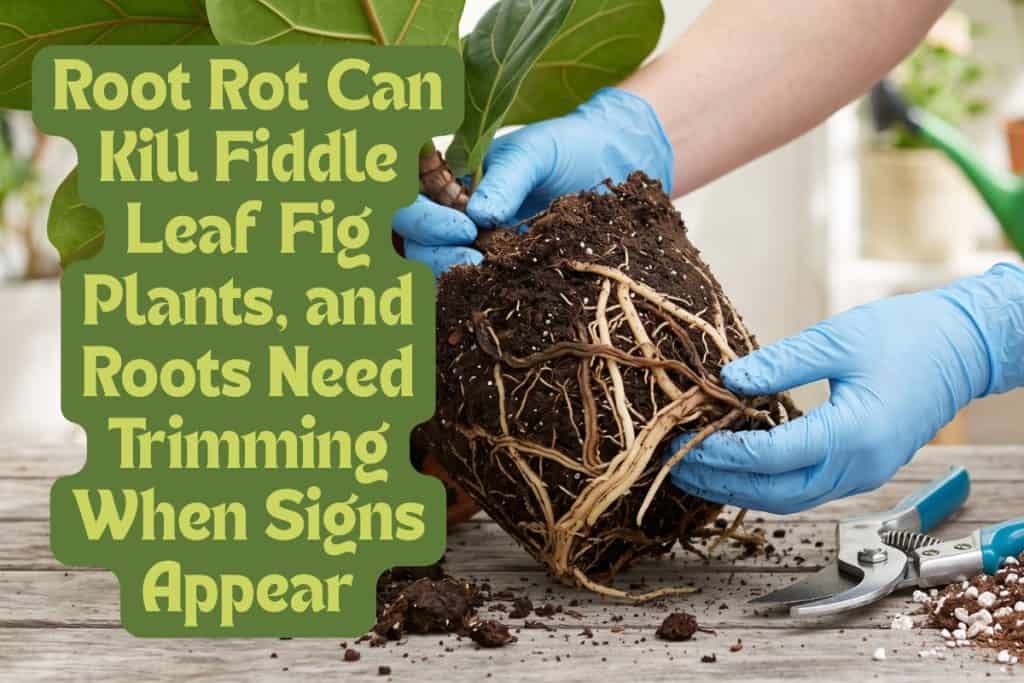
The trick is knowing what you’re looking at when you slide the plant out. Healthy roots are pale and firm, with a little give, like a half-cooked noodle. Rotten roots are brown or black, soft, and mushy.
How to Treat Root Rot
- Slide the plant out and look over the whole root ball.
- Clean your scissors or pruners.
- Cut every soft, brown, or black root back to firm tissue.
- Shake off the soggy old soil clinging to the roots.
- Replant in a fresh, better-draining mix (you can use the same pot).
- Wait about 2 weeks before watering again.
Prune or Notch for a Fuller Plant
You might prune because your plant was grown as a shrub rather than a tree, or because fiddle leaf figs grow fast and turn tall, spindly, and top-heavy.
Either way, a traditional tree form with a straight trunk and a full head of leaves takes some notching or pruning.
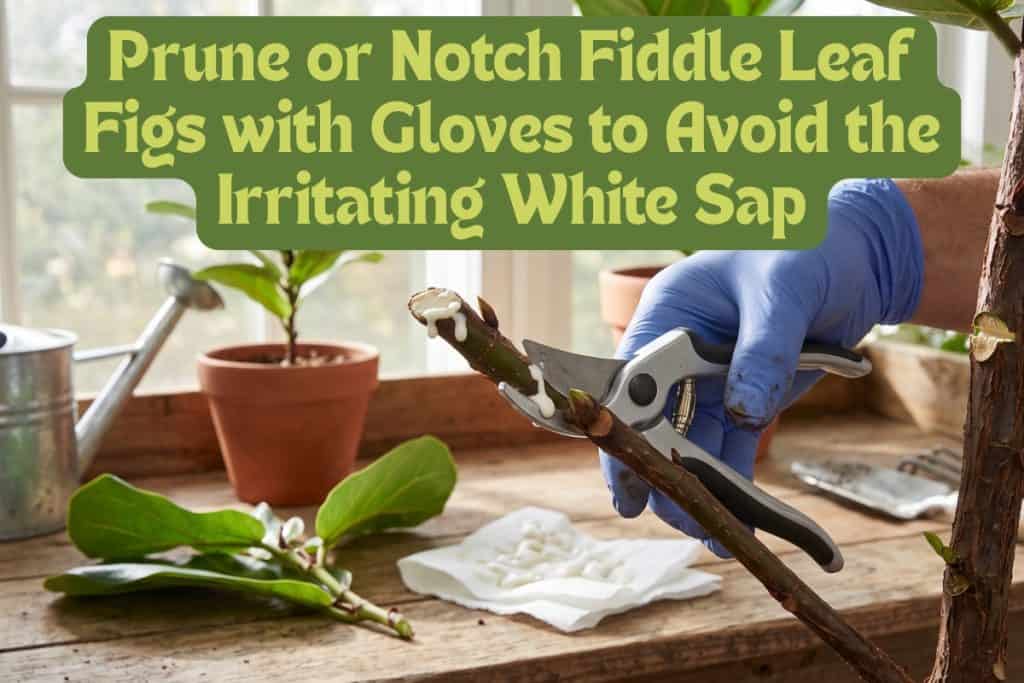
Follow these key pruning rules:
- Shears: Use sharp clean pruners
- Gloves: Wear gloves for sap
- Season: Cut in spring or summer
- Node: Cut right above a node
- Light: Give bright light after
Pruning a fiddle leaf fig is less about neatness and more about steering growth. When you cut the top off a healthy stem, you cut off the hormone that’s concentrated in the stem, interrupting the plant’s upward growth.
That allows the hormone to reach buds under the cut, signaling them to activate and branch so a single stalk slowly becomes a branching tree.
Notching works similarly. Instead of removing the top of a stem, cut a small notch into the stem, which prompts a branch to form just below the notch.
Must-Haves for Successful Pruning or Notching
- A healthy stem on a healthy plant
- Bright light and fertilizer for added energy.
- A woody (not green) stem.
- A cut deep enough to interrupt the flow of hormones (you should see white sap).
Timing separates a good cut from a bad one, too. An actively growing plant in spring or summer responds with new buds breaking. For the fastest response, give it a month of increased light and regular feeding before making a cut.
6 Ways to Shape a Fiddle Leaf Fig Plant
- Cut the top of a green stem with clean shears to force branching below the cut.
- Cut about 1 inch above the bud you want to branch.
- You can snap off (or pinch) a new bud that has emerged if that’s where you want the tree to branch.
- Remove a bad leaf by pushing its stem down, leaving no stub.
- Notch about 1/8 inch into the stem, just above a node, to draw out a branch.
- Guide leaning stems with soft ties, and loosen them as the plant grows.
- A gentle weekly shake of the trunk helps build a sturdier trunk.
Propagate Your Fiddle Leaf Fig Plant
There’s another perk to pruning: The top you cut off turns into a free second plant.
Once you’ve made cuts, rooting those fiddle leaf fig cuttings in water is the easiest way to start. You can see when the cutting has roots, which takes the guesswork out of knowing when it’s rooted.
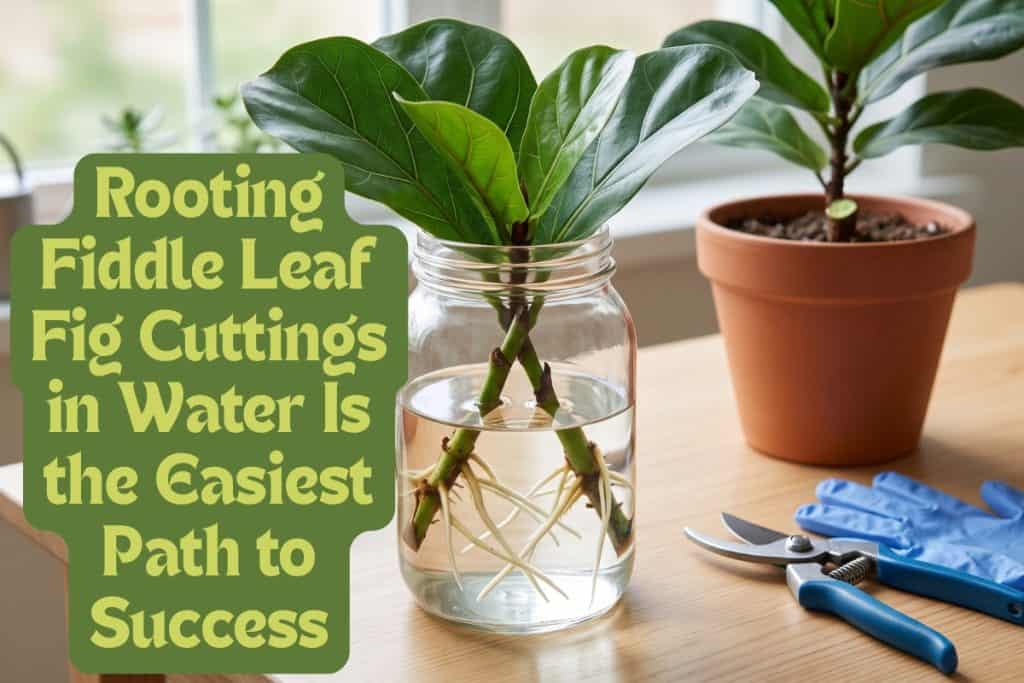
The only real concern is the sap. Fiddle leaf figs bleed a milky sap when cut, which irritates skin, so you’ll want to wear gloves.
Beyond that, rooting a cutting simply takes time. If you want a more shrub-like plant, you can put the rooted cutting back into the parent plant pot for a fuller look.
How to Root a Cutting in Water
- Take a cutting from a green stem that’s just starting to mature.
- Make a clean cut with shears that have been dipped in 10 percent bleach, 90 percent water.
- Set the cutting in room-temperature water in a clear glass or jar.
- Wait for roots to grow 4 to 6 inches long.
- Plant the cutting in a small pot so it can fill with roots in 2 to 3 months.
Air Layering for a Bigger Plant
Air layering gives you better odds at successful propagation than a bare cutting. You can make the stem grow roots while it’s still attached to the parent, feeding off the whole plant the entire time.
That makes this method the better bet for a thick, woody, or tall section that would struggle on its own. You’ll end up with a large, already-rooted plant rather than a small starter.
- Pick a spot 12 to 18 inches below the tip and remove the leaves there.
- Cut a ring of bark all the way around, down to the woody core.
- Dust the wound with rooting hormone.
- Pack it in damp sphagnum moss, then wrap it in clear plastic sealed at the top and bottom.
- Keep the moss moist; roots will show through the plastic in a few weeks.
- Cut below the new roots and pot it once they’re a few inches long.
Spider plants use similar propagation methods, which you can learn about in our guide.
Final Advice
If caring for your fiddle leaf fig feels overwhelming, focus on three things: bright indirect light, watering by soil dryness, and fast-draining soil. Most problems trace back to one of those three issues. Get them in tune, and the plant will settle into a simple rhythm.
Most of all, learn what your own plant looks like when it’s happy. Once you recognize its healthy leaves, the weight of a dry pot, and see steady new growth, spotting trouble early is easy. Give it consistency, and it will stay fit as a fiddle, rewarding you with years of bold, glossy leaves.
Happy growing!